
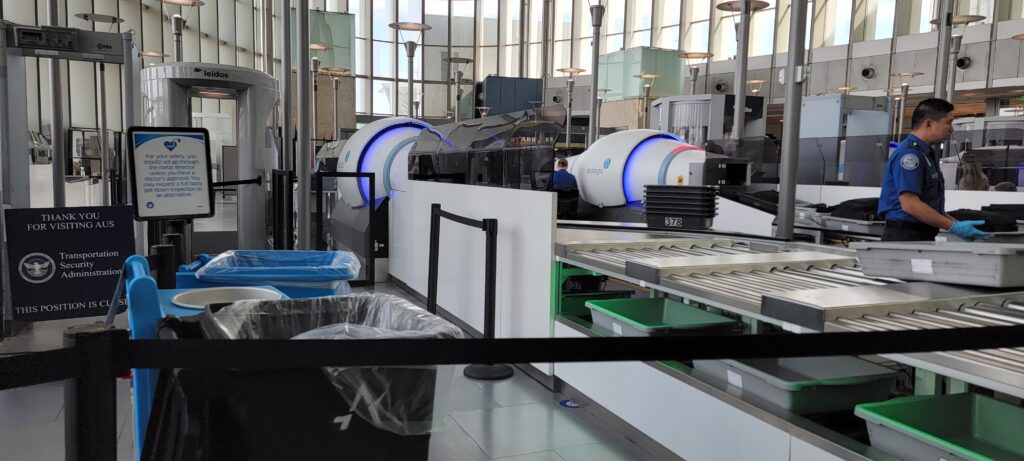
TSA plans to bring a new PreCheck screening setup to seven airports within six weeks, promising twice the passenger throughput. It’s also suggesting passengers will be allowed to bring additional items through security. TSA already spends too much effort screening passengers it has vetted as low risk, so it’s odd that the agency is talking about buying more scanners and heightening the scrutiny of PreCheck passengers even as it may relax liquid rules. And PreCheck should be free to enroll, because it helps the agency focus its screening resources on the greatest threats as well as reduce checkpoint staffing, actually saving money. According to remarks by TSA administrator David Cummins, the plan involves e-gates, body scanners and automated bag screening. What Changes At The Checkpoint There are several planned changes: An electronic gate checks your identity. TSA’s checkpoint planning guide outlines self-service identity verification using facial matching and a gate that controls access. That reduces the need for a document checker to validate each passenger. A body scanner screens you. Advanced Imaging Technology is TSA’s term for body scanning. PreCheck has generally used walk-through metal detectors, but they are looking to require PreCheck passengers to go through scanners. That benefits the device manufacturers. Software decides which bag images need an officer’s attention. TSA’s “image on alarm” uses automated threat detection to flag screeners to review specific images instead of examining every bag image. Image flagging software has already been tested in Nashville and in Las Vegas. For passengers, automating the identity check could be faster or slower. The key issue is going to be error handling. There are thousands of people a day who don’t get identified properly even though that’s just tenths of a percent of passengers. With millions of customers screened daily, there are always going to be outliers. TSA Could End The War On Water The TSA Administrator didn’t say specifically what additional items travelers would be allowed to bring through the checkpoint. Water is the most-discussed, and certain blades that TSA has viewed as not a threat in the past, and wanted to make permissible, were subsequently blocked by law. Last month I wrote about TSA’s consideration of allowing PreCheck passengers to bring full water bottles through checkpoints equipped with suitable scanners. TSA Should Make PreCheck Free Cummins puts the equipment package at $4 million per, with a projected three-year payback from operating savings and enrollment revenue. He wants 20 million additional members over three years. Staffing would shrink through attrition, not layoffs. This gets it backwards. TSA should be trying to get as many eligible travelers vetted as possible because that lets the agency focus its screening on actual threats, and because each vetted passenger saves the agency money. PreCheck lets TSA devote fewer screening resources to low-risk passengers. Charging for enrollment discourages people from enrolling. A family that flies once a year may decide the application cost and hassle aren’t worth it. TSA then keeps putting them through the more labor-intensive process. A family’s financial decision costs the agency more. Topics on this page
TSA PreCheck Passengers Will Have To Go Through Body Scanners—New Lanes Coming To 7 Airports Within 6 Weeks
Full Article
Original Source
Read the full article at Viewfromthewing →KhanList aggregates and links to publicly available news content. We do not host full articles from third-party sources. Always verify important information with original sources.