
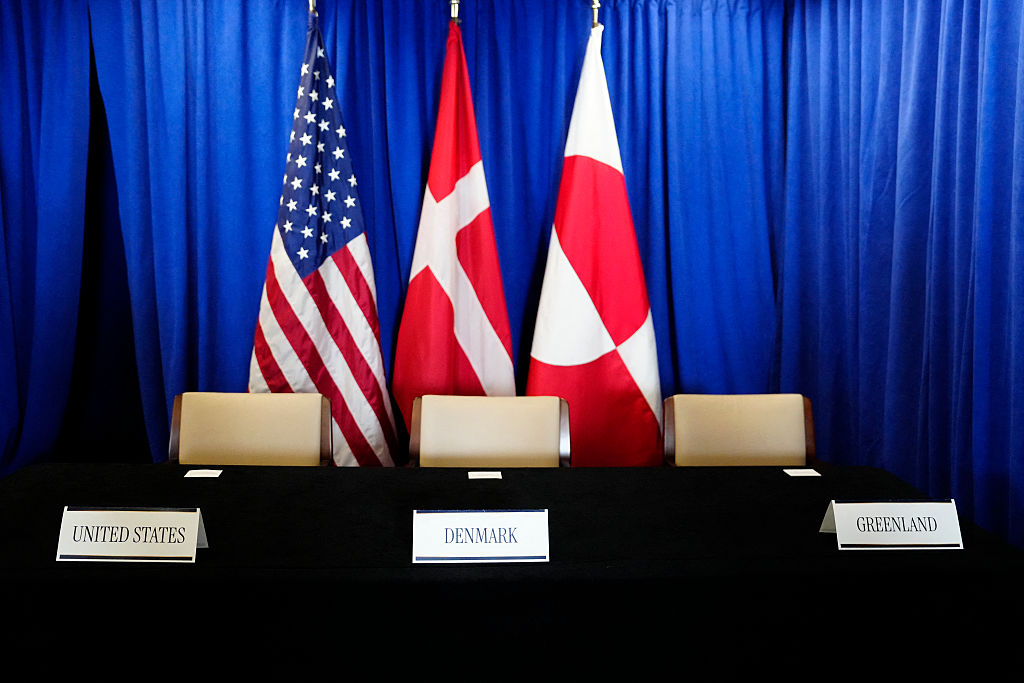
“A dream come true.” That is how President Donald Trump described an agreement the United States, Denmark and Greenland signed on Sept. 22. He says it will guarantee America’s “permanent control over security” of the Danish territory. In reality, the deal largely restates defense arrangements already in place. Its modest gains could have been secured through respectful diplomacy with an ally rather than coercion better suited to an adversary – and without damaging NATO cohesion just as Russian aggression is intensifying. Why Washington has guarded Greenland since 1951 Greenland has long been central to transatlantic security. That is why the United States and Denmark agreed in 1951 to permit Washington to retain troops on the island and take steps to defend it. U.S. military assets in Greenland play an important role in helping to detect and deter Russian aggression. U.S. military radar and surveillance sites also provide valuable early warning of Russian ballistic missile attacks against North America. Given Greenland’s strategic value, Washington is right to worry about potential Russian and Chinese activity around the island. NATO launched the Arctic Sentry initiative in February in response to increased Russian military activity in the Arctic. Recently, 13 European nations called for an enlarged Arctic presence due to increased Russian threats. Russia, for example, has been rehearsing attacks on allied undersea cables. China, for its part, describes itself as a “near-Arctic” state, a laughable claim when one looks at a map and considers its distance from the Arctic. Nonetheless, China has become increasingly active in the high north, seeking access to mineral deposits and shipping lanes. While the U.S. military presence in Greenland is vital to American defense, Trump’s aggressive approach was both unnecessary and damaging. By threatening the territorial integrity and sovereignty of a NATO ally that fought and bled alongside Americans in Afghanistan and Iraq, the president sowed costly tension and division within the alliance, undermining American security and opening fissures Moscow seeks to exploit. Denmark already granted the United States broad basing access in Greenland in the 1951 agreement and subsequent arrangements, and Copenhagen has consistently offered to strengthen U.S. presence on the territory. What the US, Greenland and Denmark deal adds The new deal reaffirms those broad basing and access rights but goes further, specifying that Washington can “modernize and expand its activities” at Pituffik Space Base, a key part of America’s missile warning and space surveillance systems. The agreement also allows the United States “to establish an additional Defense Area at Narsarsuaq and Mestersvig” and provides a process for adding more sites. Finally, it recognizes shared interests in establishing Washington’s Golden Dome missile-defense initiative. The deal also explicitly prohibits military installations by non-NATO states. That obviously includes Moscow and Beijing. But such installations were highly unlikely, as Russia is Denmark’s leading adversary. And Copenhagen showed a shrewd awareness of Beijing’s objectives in 2016, apparently blocking a Chinese firm from purchasing an abandoned naval base in Greenland over security concerns and relations with the United States. Further demonstrating Denmark’s goodwill and long-standing alignment with the United States, the deal blocks Russian and Chinese control of critical infrastructure or resources on Greenland. Those U.S. basing provisions and checks on the ambitions of Moscow and Beijing are welcome, but they came at a cost. Trump severely damaged trust among America’s European allies and created strains in the NATO alliance to the delight of the Kremlin. That damage could not have come at a worse time. Moscow has dramatically expanded its cooperation with China, Iran and North Korea and continued Russian President Vladimir Putin’s war of naked aggression against Ukraine. It has also waged an increasingly brazen hybrid campaign against Europe, including sabotage and drone incursions. Meanwhile, Washington has hastily reduced America’s military force posture in Europe, likely emboldening the Kremlin further. The new deal hopefully ends the damaging transatlantic drama over Greenland and may contribute to American security. But the price was steep and entirely avoidable. Trump calls it a dream come true. Washington could have had it without all the threats. Bradley Bowman is senior director of the Center on Military and Political Power at the Foundation for Defense of Democracies, where Cameron McMillan is a senior research analyst.
Trump’s US, Greenland deal changes less than it seems
Full Article
Original Source
Read the full article at Fdd →KhanList aggregates and links to publicly available news content. We do not host full articles from third-party sources. Always verify important information with original sources.