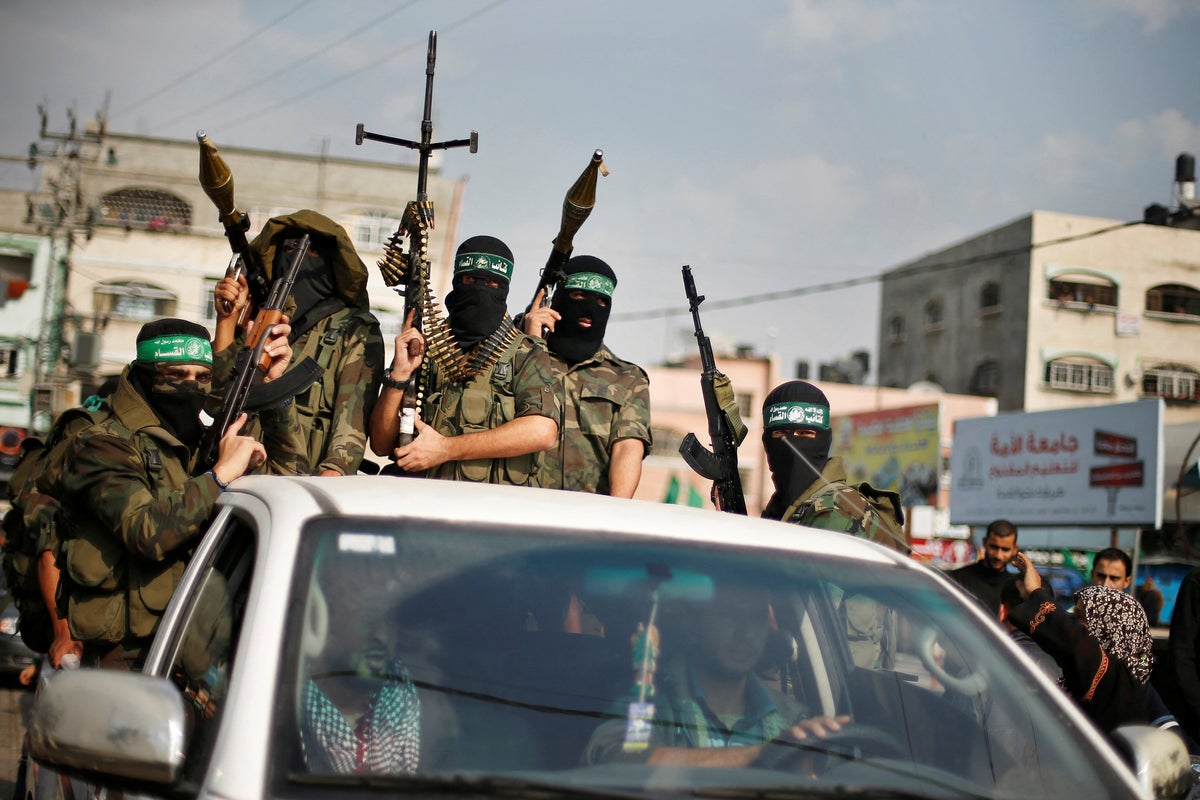
Hamas says it has agreed to disarm in a historic agreement that could transform the structure of power in Gaza if it holds - but Israel is yet to respond. A peace deal put forward by the US last year would see Hamas relinquish its weapons, Israeli forces withdraw from Gaza as the disarmament progresses, and an international stabilisation force work with a new Palestinian police force until a new Palestinian government takes over in Gaza.Egypt, which is mediating discussions between Israel and Hamas, said on Friday that both sides had agreed to a new 15-point roadmap and that a future meeting would be held in Cairo “to discuss implementation mechanisms”. Trump thanked Egypt, Qatar and Turkey for mediating the agreement and called the deal “historic”. However, a senior Hamas negotiator said the group’s disarmament is conditional on Israel fulfilling its commitments under the agreement, including withdrawing from Gaza and allowing the establishment of a national committee and reconstruction efforts.Senior Hamas official Ghazi Hamad said: “The agreement contains a clear provision stating that Israel must commit to and implement its obligations. If Israel does not implement the agreement, neither will we.”The Independent looks at what has been agreed between Israel and Hamas - and what key issues remain. Hamas militants in Gaza (Reuters)What was in phase one of Trump’s peace deal? Trump unveiled a 20-point peace plan at the White House on 29 September, 2025 alongside Israeli prime minister Benjamin Netanyahu. What followed was phase one of the agreement, which involved the return of all hostages and the exchange of Palestinian prisoners. On 6 July, Hamas announced it had dissolved its government in Gaza after over 20 years of rule, with power to be transferred to a UN-backed committee. Shortly after, reports suggested that Trump and his son-in-law Jared Kushner’s vision for a Gaza reconstruction had been extraordinarily reduced from a vision of luxury apartments and coastal tourism to portable cabins in a small area near Rafah. On 21 July, Hamas’ top negotiator Khalil Al-Hayya was appointed the new leader of the group. However, concerns have been raised that Israel’s yellow line is moving further into Gaza, following Netanyahu’s order that 70 per cent of the strip be taken under Israeli control. US President Donald Trump holds up a resolution document that he signed during the inaugural meeting of the "Board of Peace" at the US Institute of Peace in Washington, DC, on February 19, 2026 (AFP/Getty)The disarmament of Hamas is a key sticking point in peace talks, with the militant group insisting that it would not disarm as long as Israel remained in Gaza.Israel has not yet responded to Trump’s Truth Social post and has previously said it will not withdraw from the Strip. Earlier this week, Netanyahu told his cabinet that he would not agree to requests from the US to withdraw troops from locations in Syria, Lebanon, and Gaza, according to Channel 13. Sources told the broadcaster that Netanyahu said he would “stand on my own two feet and resist” amid growing pressure from the Israeli far-right for the military campaign to continue. Israel has justified its continued activity in the enclave by pointing to Hamas’ previous refusal to disarm. Previous attempts to reach an agreement have foundered amid mutual suspicion and each side's insistence that the other must move first.Palestinians walk past a concrete block marking the 'Yellow Line' drawn by the Israeli military (AFP/Getty)How could Hamas give up its weapons? A source told The Jerusalem Post that there would be no Israeli withdrawal from the Gaza Strip until it is demilitarised. According to the newspaper, the 15-point roadmap being discussed establishes a process for eliminating all tunnels, weapons depots, and weapons production facilities throughout the Strip. All of Hamas’ weapons would be given to the National Committee for the Administration of Gaza (NCAG), the technocratic body set up to run the enclave. They would be supported by the International Stabilization Force (ISF). The deal also reportedly calls on Hamas to halt the recruitment of new operatives.The NCAG, issued a statement welcoming "the progress announced yesterday regarding the roadmap and the opening of a path toward beginning its implementation". It said it was ready to assume its responsibilities, while Germany, a major donor, said it would do its part to help the agreement.
Trump’s peace plan for Gaza in full after Hamas agrees to disarm in ‘major milestone’
Full Article
Original Source
Read the full article at Independent →KhanList aggregates and links to publicly available news content. We do not host full articles from third-party sources. Always verify important information with original sources.