
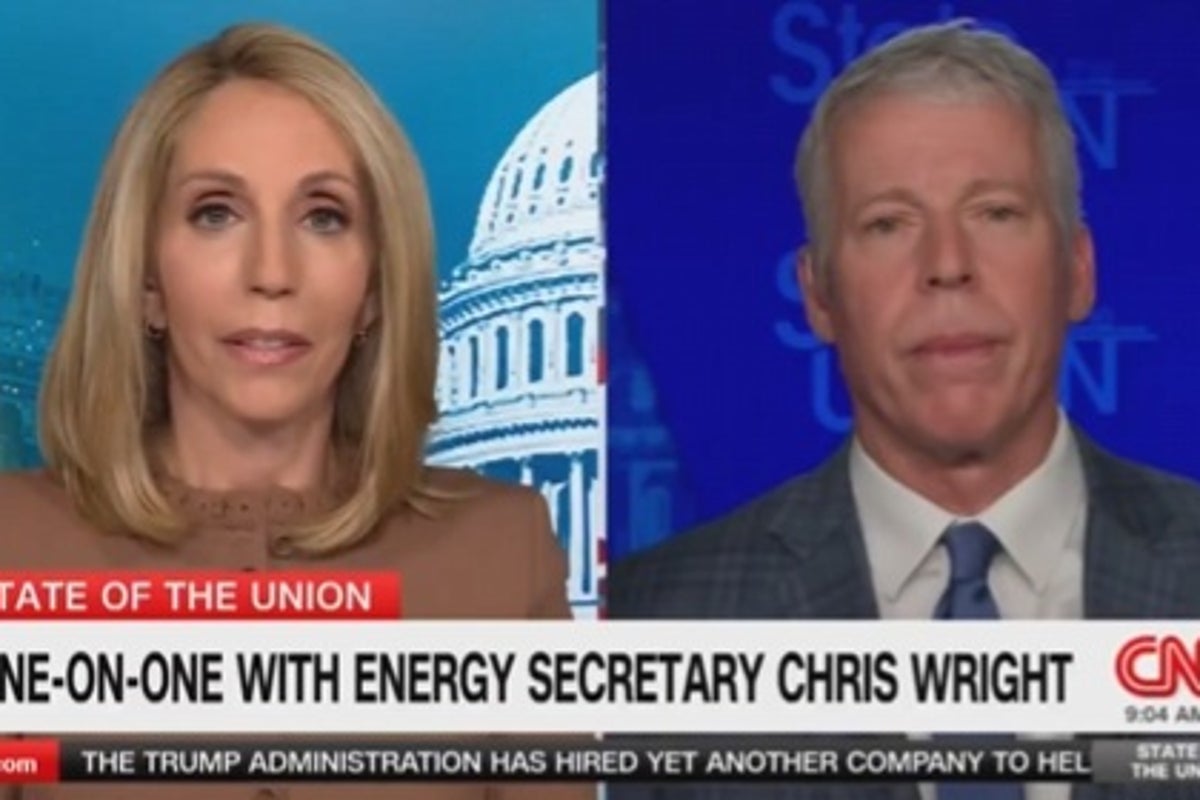
Donald Trump’s energy chief hesitated to say whether gas prices would go up or down, with the midterms only two months away.Then, he cautiously said he thought they would go down, after saying that he “didn’t want to have an opinion” on whether the national average fuel price would continue to hover around $4 a gallon for the fall.“Look, I don't want to have an opinion on that, but if you look at the futures market right now, what can you buy gasoline for two months in advance from where we are today, it’s down more than 30 cents a gallon from where it is today,” Secretary Chris Wright said Sunday.Wright spoke to CNN’s Dana Bash on State of the Union and claimed that the end of the summer travel season would decrease demand enough to lower gas prices around the country, or at least in states where elected officials are following the administration’s lead and loosening gasoline blending requirements. Right now, AAA reports that the average price of gas is $4.147 per gallon in the United States. Gas prices have been more than a dollar higher on average since the beginning of the year, when the president launched a war with Iran that has become increasingly unpopular with even his own voters.Trump has repeatedly insisted that Americans are buying gas for well below that amount as he seeks to prevent a Republican electoral bloodbath in the midterm elections.Energy Secretary Chris Wright declined to say when he thought gas prices would begin to drop on Sunday (CNN - State of the Union)In the same interview, Wright could not say that the actual cause of higher gas prices — the Iranian seizure and attacks on commercial vessels in the Strait of Hormuz — was no longer an issue.Asked by CNN whether merchant ships traversing the strait were safe, Wright contended that any who coordinated with the U.S. Navy would be able to safely cross the waterway. A majority of the world’s oil supply moves through the Strait of Hormuz. The Navy has been escorting a limited number of vessels through the strait for weeks, using a channel close to the Omani coastline.“I’m not trying to force Iran to the bargaining table,” Trump wrote on Truth Social last week, signaling that negotiations between Washington and Tehran were not taking place. “I couldn’t care less if they sign a worthless, to them, agreement.”“I like our position now much better, with almost total control of the Hormuz Strait, and their economy totally collapsing,” the president added. “They are just playing out the inevitable.”The restrictions on free transit continue to reduce the number of tankers able to cross the strait every day, meaning that pressures on the global energy market remain in place as long as only partial use of the waterway is feasible. Some companies are still refusing to coordinate with the U.S. Navy, and even more view the risks as untenable even with U.S. support, citing deadly drone and mine attacks on vessels. Several have been struck by mines or drones even while traveling the Omani passage with U.S. escorts.Vessels awaiting transit through the Strait of Hormuz, which has become the focal point of the Iran war (Reuters)Bash, noting that August was the deadliest month for commercial shipping crews operating in the Strait of Hormuz since shortly after the conflict began, asked Wright if he could guarantee that merchant vessels would soon be able to travel the strait safely.“We’re working cooperatively with fleets that do want to transit,” Wright claimed, while admitting the strait’s traffic was not at “pre-conflict levels.” More than a dozen civilians have died on attacks against merchant vessels and ports since the conflict began in February. He was then pressed by Bash to answer the question, and said: “Well, if they want to work with the U.S. Navy, I think they can. Look, we're trying to end a 47 year conflict, as Iran dashes to develop nuclear weapons, and wreak havoc on their neighbors, and threaten the world economy.”Vice President JD Vance said at a press briefing this past week that the administration hadn’t seen any evidence to suggest that Iran was reconstituting its nuclear program after strikes the U.S. launched in late February and early March. Experts have questioned whether Iran even attempted to do so after U.S. strikes hit those same sites last year.
Trump’s Energy secretary embarrassingly says he no opinion on future of gas prices - then makes his best guess
Full Article
Original Source
Read the full article at Independent →KhanList aggregates and links to publicly available news content. We do not host full articles from third-party sources. Always verify important information with original sources.