As soon as Michigan detected the first sign of cyclosporiasis cases in late June, health officials swung into action, notifying federal agencies and releasing a notice on 1 July ahead of the holiday weekend alerting home cooks and commercial kitchens alike to the risks of potentially contaminated produce. They worked through the holiday weekend and haven’t had a day off since.Even so, cyclosporiasis can take weeks to appear, which means officials in Michigan can’t tell yet whether their warnings have helped.And the outbreak is spiraling amid sharp funding cuts to state and local public health departments after decades of chronic underinvestment.State and local health departments have suffered layoffs and hiring freezes amid funding delays, cuts and uncertainty, while federal agencies like the US Centers for Disease Control and Prevention (CDC) have hemorrhaged staff and expertise under the second Trump administration.Millions of people have also lost their health insurance through Medicaid and Affordable Care Act coverage, making it more difficult to track the true prevalence and spread of the parasite. Cases in five states – Indiana, Kentucky, Michigan, Ohio and West Virginia – have been linked by the CDC, but the parasite, which can cause weeks of explosive diarrhea and vomiting, is also spreading in other states.On Friday, Michigan reported more than 5,000 cases – a 1,300-case increase from Wednesday – and 102 hospitalizations. In a typical year, Michigan gets between 40 and 50 cases of cyclosporiasis.“If we ignore the other states and just look at the Michigan numbers, already this is probably the biggest outbreak of cyclosporiasis in US history,” said Natasha Bagdasarian, Michigan’s chief medical executive.The outbreak comes after the Trump administration cut $12bn in public health funding in March 2025, including laboratory capacity, disease monitoring and outbreak investigation. Half of US states joined a lawsuit to claw the funding back, but the states not included in the lawsuit did not receive the funds – and the funds were delayed in being disbursed, leading to layoffs, furloughs and uncertainty.Michigan, for example, lost an entire regional laboratory and 23 employees working in the state bureau of infectious diseases, while local health departments in the state lost 123 staff due to cuts in federal funding.“If you’re down one member of the soccer team, you might not be able to trace that back to every goal you lost, but you’re going to see an impact,” said Susan Kansagra, chief medical officer at the Association of State and Territorial Health Officials (Astho). “It’s going to catch up with you over time, and I think that is what we are starting to see now as we face multiple public health threats on a strained workforce and a strained funding climate.”The CDC has lost about one-third of its staff, and the majority of permanent leadership positions are empty.“This has been a tough year for them as well as for us,” Bagdasarian said of staff at federal agencies.The losses and uncertainties amid mounting health threats appear to have affected the federal response to cyclospora.“Communication has been somewhat less than we have experienced in previous outbreaks,” Bagdasarian said. “In previous outbreaks, we have received additional assistance from CDC, and we have not in this particular outbreak.”Public communications from health agencies have also lagged. The CDC issued a health advisory notice to providers on Tuesday, two weeks after the first signals began emerging. Robert F Kennedy Jr, secretary of the US Department of Health and Human Services (HHS), made his first public comments about cyclospora on Friday.“There are cyclospora outbreaks every summer,” Kennedy said on a Tampa-based podcast, without clarifying that the number of cases is dramatically higher than usual. “Now that we know the probable culprit, I think it’s going to be much easier for people to make healthy choices. And one other thing. There’s been a rumor, fake news, in the press that CDC cut one of the pro–surveillance programs, and that’s definitely not true.”An HHS spokesperson did not respond by publication time about the effects of funding cuts to state and local health departments that form the basis of the CDC’s surveillance networks.In 2025, the administration made cyclospora and several other pathogens optional for reporting to FoodNet, a national foodborne-illness tracker. These cuts will make it harder to identify trends and risk factors in foodborne illnesses over time, said Melanie Firestone, assistant professor at the University of Minnesota School of Public Health, and co-author of an analysis showing that states participating in federal food safety surveillance do a better job identifying and tracking outbreaks.But FoodNet “is not the primary pathway for how we identify outbreaks in this country”, she said.“FoodNet has gotten a lot of attention as being related to all of this, and really it’s much more related to how much funding states and local health departments are getting to be able to do this kind of work,” Firestone added. “And then CDC, of course, plays an important role in coordinating multi-stage outbreaks and aggregating information. So any funding that has limited their ability to do that would be a factor.”Staff in Michigan’s public health department have spent more than 1,000 hours conducting interviews with patients, on top of the time spent coordinating the response. There are four staffers specializing in stomach illnesses, and dozens more who have been pulled into the state’s cyclospora response – and away from other projects.“We have to prioritize and do the best we can,” Bagdasarian said. “There is only so much bandwidth. There’s only so much that we can pull from before other consequences are seen.”Public health workers are simultaneously tracking several other potential threats with increasingly limited resources. Every day, for instance, between 100 and 150 travelers to the US are being screened and monitored by local public health departments.“That work has to continue,” Bagdasarian said. “We are monitoring and have seen outbreaks of measles, mumps, pertussis, and that work has to continue. Michigan right now is seeing heatwaves this summer. We’re experiencing devastating wildfire smoke from Canadian wildfires that are leading to poor air quality.”Michigan has about 2,000 samples that have been sequenced or are waiting to be sequenced – but at $122 per test, the lab has already “far exceeded” its cyclospora budget, Bagdasarian said.Tests at the doctor’s office to diagnose cyclosporiasis cost several hundred dollars and insurance may not cover all or any of it, leading to undertesting, Bagdasarian said.“Even people with insurance have been declining testing because of high copays, and then of course we know that there are many folks who are uninsured or underinsured because of federal cuts to Medicaid,” Bagdasarian said. “There will be more people falling off Medicaid coverage, and so it’s going to be harder for us to even know how many cases are out there.”Lettuce from Taylor Farms is probably linked to the outbreak, according to reports from the Washington Post and Bloomberg News. Taylor Farms, which is based in California but also has locations in Mexico, was linked to a cyclospora outbreak at Olive Garden and Red Lobster locations in 2013 and the E coli outbreak clustered around slivered onions in McDonald’s quarter pounders last fall.In this outbreak, the CDC pointed to a shredded iceberg supplier in Mexico, naming Taco Bell as an affected restaurant without naming the producer, on Friday.The outbreak probably goes beyond one restaurant chain, Bagdasarian said.“As we look at where people could have come into contact with this contaminated material, there is no one single place that has jumped out at us,” she said. “It’s more about ‘where did contamination occur upstream?’ – and many of these producers will supply not only restaurants and fast-food chains but also grocery stores.”
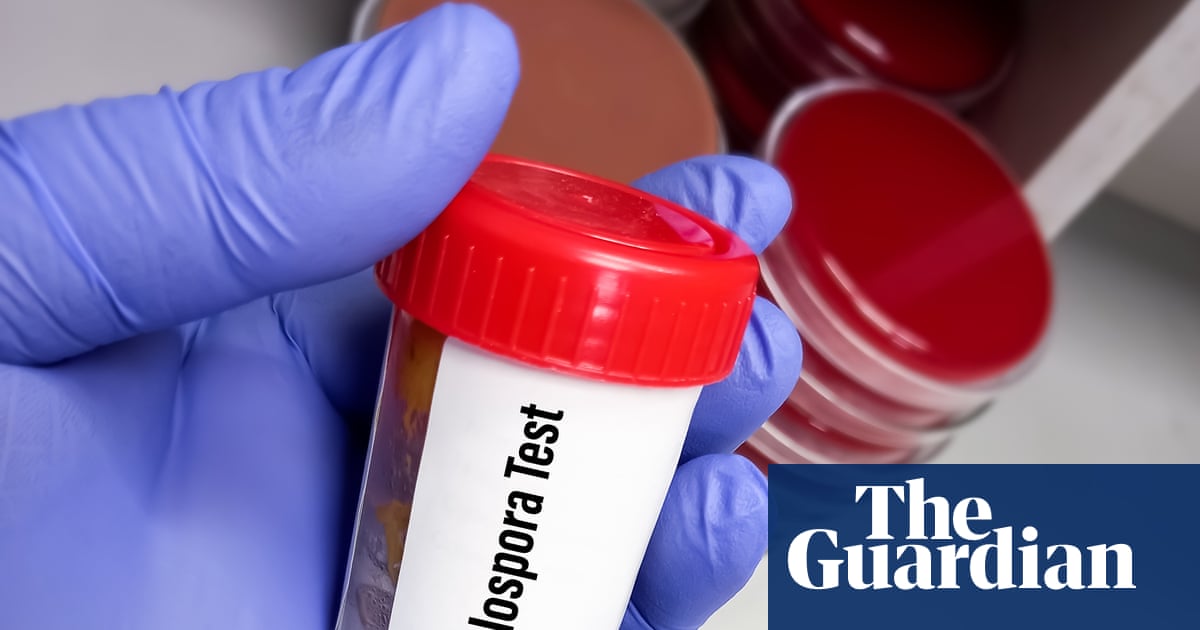
Trump’s deep public health cuts hinder response to record US cyclosporiasis outbreak
Full Article
📰 Original Source
Read full article at Theguardian →KhanList aggregates and links to publicly available news content. We do not host full articles from third-party sources. Always verify important information with original sources.