
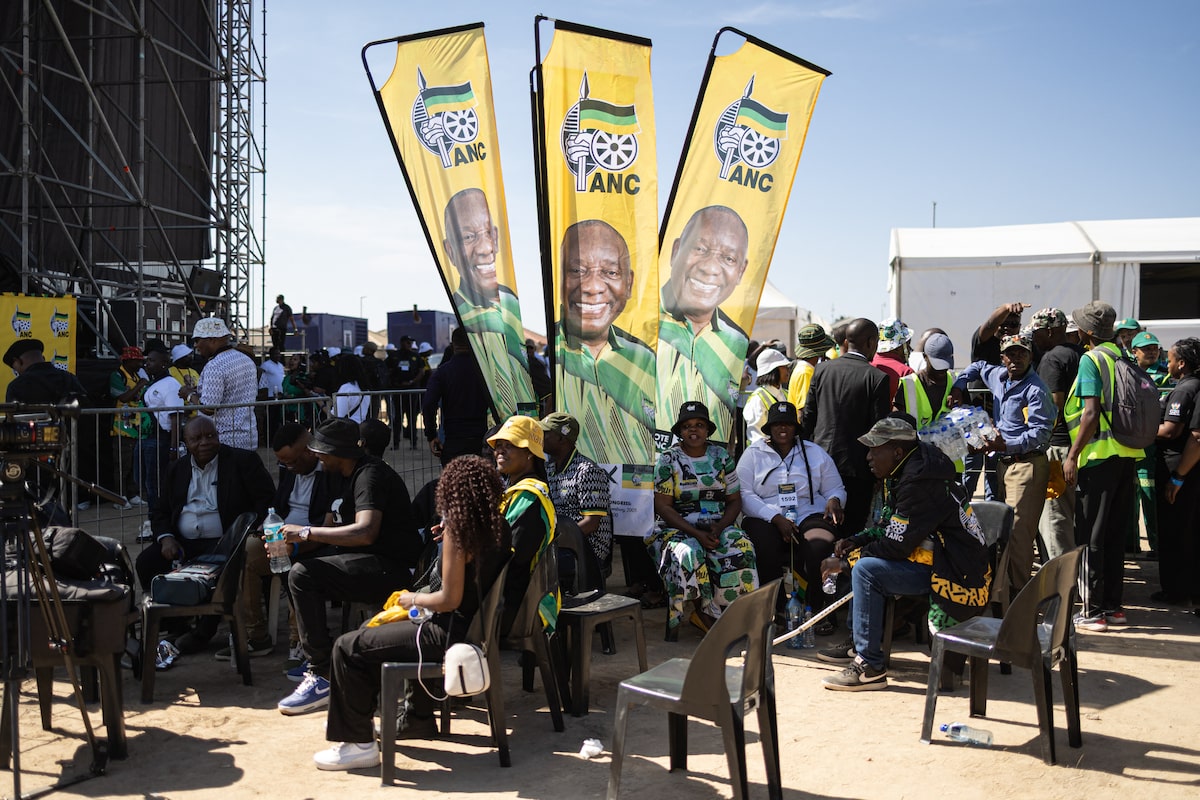
Open this photo in gallery:Supporters sit next to banners depicting South African President Cyril Ramaphosa during the African National Congress's (ANC) 2026 local government election manifesto launch in Diepsloot near Johannesburg, on Aug. 23.EMMANUEL CROSET/AFP/Getty ImagesNew U.S. sanctions against South African leaders, coupled with the threat of harsh future measures, are a political windfall for the long-ruling African National Congress as it heads into an electoral season, analysts say.The sanctions announced this week, in the form of travel bans, are the latest in an 18-month campaign against South Africa by U.S. President Donald Trump. They are “severe” and “only the first step in a series of escalatory measures,” U.S. Ambassador Brent Bozell warned.But the South African government has refused to abandon the policies the Trump administration has targeted – and its staunch resistance is expected to benefit the ANC in local elections in November.The clash with the Trump administration is a “vote-winner for the ANC,” South African political analyst Dawie Scholtz said in a social media post. He called it “an electoral lifeline for the ANC in the midst of what to date has been the weakest ANC campaign in living memory.”The Trump administration is demanding five policy changes from the South African government: A foreign policy shift away from Iran and other U.S. adversaries; the cancellation of a land expropriation law; greater protection for farmers facing violent crime; steps against the alleged use of “hate speech” in politics; and the elimination of an affirmative-action program that provides equity stakes for black-owned businesses to redress the injustices of the apartheid era.Mr. Bozell reportedly repeated these five demands in a meeting with South African President Cyril Ramaphosa on Aug. 26. But he said on Wednesday that the time for “endless ‘dialogue’” is now over.Mr. Trump issued his first executive order against South Africa within weeks of his inauguration in January, 2025. He escalated the rhetoric by accusing the country of “genocide” against its white minority – a false allegation that has been ridiculed by many white South Africans.Mr. Trump reinforced his complaints with a lengthy series of targeted measures against South Africa: Higher tariffs on its goods; the expulsion of its ambassador in Washington; a cut off of all U.S. aid, including life-saving medicine for people with HIV; barring South Africa from G20 meetings; and a “refugee” program allowing thousands of white South Africans to get fast-tracked entry into the United States.Open this photo in gallery:South African President Cyril Ramaphosa addresses supporters during the local government election manifesto launch. Analysts say the Trump administration's attacks on South Africa are 'an electoral lifeline for the ANC.'EMMANUEL CROSET/AFP/Getty ImagesWhen his administration eliminated all HIV funding to South Africa in June, it said the move was prompted by “South Africa’s failure to make demonstrable progress on policy requests by the administration.” But the government did not budge.On Wednesday, U.S. Secretary of State Marco Rubio ramped up the campaign again by announcing visa restrictions against South Africans who enable the laws the Trump administration dislikes. He did not disclose the names of those who are banned – they will instead learn their status when they apply for visas.Mr. Rubio alleged that the South African government is “destroying its economy through an obsessive pursuit of racial grievance against the Afrikaner minority.” But the government swiftly rejected the accusation, which it described as a falsehood created by “fringe groups” that wrongly pose as representatives of minorities.“It is our sovereign right to put in place laws that address the nation’s concern over centuries of racial injustice,” said Ronald Lamola, South African’s Minister of International Relations and Cooperation.“Legislation in the democratic era is intended to improve the plight of the people who had been excluded for centuries,” he said in a statement. “This is consistent with other countries who have a similar experience to South Africa.”The ANC lost its majority in the last national election in 2024, but it remains the biggest political party and has kept control of the foreign relations portfolio in the coalition government.Big trouble in South Africa’s motor cityDespite the U.S. pressure, South Africa has refused to compromise on its foreign policy priorities, remaining an active member of the BRICS alliance, of which Iran is a member, and declining to withdraw its case against Israel at the International Court of Justice.The attacks by the Trump administration have allowed the ANC to position itself as the defender of South African independence and sovereignty. Even the main opposition parties are unwilling to support Mr. Trump’s campaign against the country.The pro-business Democratic Alliance, the second-biggest party and a long-standing critic of the ANC’s expropriation and affirmative action policies, emphasized this week that it “respects the sovereignty of nations in foreign affairs and the right of democratic countries to determine their own laws.”Pieter du Toit, a South African media commentator, said the Trump sanctions will only “harden attitudes and resolve” on the issues of racial redress in South Africa. The U.S. intervention is a gift for the ANC, making it easier for the party to mobilize its supporters in the election, he wrote Thursday.
Trump’s attacks on South Africa are a gift to the ruling ANC ahead of an election
Full Article
Original Source
Read the full article at Theglobeandmail →KhanList aggregates and links to publicly available news content. We do not host full articles from third-party sources. Always verify important information with original sources.