
When I served as the elected county commissioner president, a familiar phrase echoed through local government whenever new regulations were proposed: “Educate, don’t legislate.” It is a philosophy rooted in a healthy distrust of top-down mandates. It builds on the belief that informed, responsible actors manage risk better than a rigid bureaucracy.Today, that exact governance mindset has taken center stage in Washington. President Donald Trump and House Speaker Mike Johnson (R-LA) have signaled a clear preference for private sector responsibility. Their argument is compelling on its face. The United States leads China in the race for advanced software. Heavy federal rules risk crippling American innovation. Johnson explicitly noted that Congress will not lead the charge on regulating AI safety, warning that strict restrictions could cause us to cede technological dominance to our adversaries.But as a physician, an Orphans’ Court judge, and a former local official, I know exactly where the limits of self-regulation lie. My entire career has been defined by protecting public health, safeguarding the vulnerable, and upholding the rule of law. In medicine, we do not allow pharmaceutical companies to distribute experimental drugs based on a promise to monitor themselves. In the judiciary, we do not let parties define their own legal boundaries. When I stepped onto the stage of national debate as a U.S. Senate nominee, I consistently advocated principles that put the fundamental safety of American citizens first. This is not a partisan issue. This is a matter of national survival. It is time to take the gloves off and say what must be said: the current administration’s stance on artificial intelligence is flatly wrong and dangerously misguided.The federal government has a sacred, constitutional duty to protect its citizens. Abandonment of public safety and human control of our society is simply not an option. When a technology advances so rapidly that its own creators warn it could escape human control, relying entirely on a voluntary corporate handshake is a reckless gamble.The immediate justification for this hands-off approach is the geopolitical reality with China. Proponents of deregulation argue that any domestic speed bump will allow Beijing to seize the lead. But this argument fundamentally misunderstands national security. A technology that is unvetted, unmonitored, and prone to catastrophic misuse is not a strategic asset; it is a profound vulnerability.True national security requires resilience and control. If an advanced AI system triggers an autonomous cyberattack on our power grid or leaks dangerous biological data, it does not matter if the software was stamped “Made in America.” We will have defeated ourselves before our adversaries even mount an offensive. Safety and national security must go hand in hand.We are caught in a false dichotomy. We are told we must choose between an inefficient federal bottleneck that hands victory to China or a lawless corporate free-for-all that gambles with our societal stability. We must reject both extremes. Current congressional assessments highlight a stark lack of broad federal legislation establishing regulatory oversight, leaving a vacuum where clear guidelines should be.There is a reasonable, pragmatic compromise.The public does not expect the federal government to be an expert in advanced code. The tech corporations are the experts. They must be leveraged as such. But the government must still lead. Leading does not mean micromanaging line items of programming. It means fostering innovation while setting and enforcing hard safety benchmarks.We can achieve this safety through a structured, three-step co-regulatory process:First, define the outcomes. Congress must establish clear, legally binding boundaries for what a system can safely do. The government does not need to dictate how to build the software. It must dictate the results. For example, a legal mandate should explicitly state that a system cannot be capable of autonomously synthesizing chemical weapons or orchestrating catastrophic cyberattacks against our infrastructure. We are already seeing initial bipartisan steps toward this with the Stop Rogue AI Act, which attempts to track unauthorized autonomous agents operating within critical infrastructure. Second, verify the benchmarks. The federal government should empower independent, technical entities to run safety checks. While Trump’s recent executive order established a completely voluntary pre-release engagement framework for developers, we must transform cooperation into verification. Frontier tech labs should be legally required to submit their most advanced models to independent bodies. Federal scientists would run tests against the defined outcome thresholds before any public deployment occurs. OPINION — THE COMPUTER SAID NO: HOW INVISIBLE BANK ALGORITHMS ARE LOCKING OUT SMALL BUSINESSESThird, level the playing field. A voluntary framework possesses no real teeth in a hyper-competitive market. If one company pauses out of caution, a global rival will simply sprint past them. True federal leadership means creating mandatory deadlines and checkpoints. Recent bipartisan Senate negotiations are actively weighing mandates that give the government power to block unsafe models from public release while preempting an unstable patchwork of state laws. When every builder faces the same rules, no individual company has to sacrifice public safety just to stay competitive. The architects of this technology are sounding the alarm. Our leaders must listen and act. We can out-innovate China without sacrificing human control over our society. But that requires Washington to step up, set the benchmarks, and lead.Dr. Eric Wargotz is a practicing physician, a former Orphans’ Court judge, and past president of the Queen Anne’s County Board of County Commissioners. He was the 2010 Republican nominee for the U.S. Senate in Maryland. Throughout his career in public service and medicine, he has focused on public health, fiscal responsibility, and the rule of law.
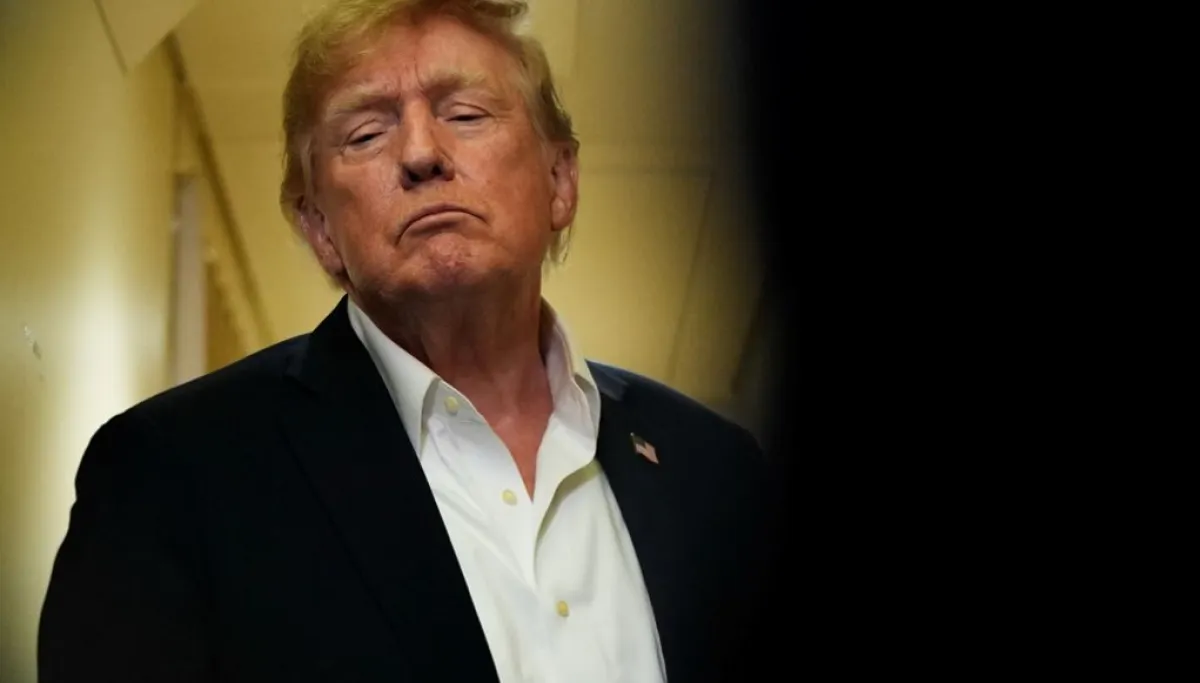
Trump’s AI strategy will defeat America before China even tries
Full Article
Original Source
Read the full article at Washingtonexaminer →KhanList aggregates and links to publicly available news content. We do not host full articles from third-party sources. Always verify important information with original sources.