
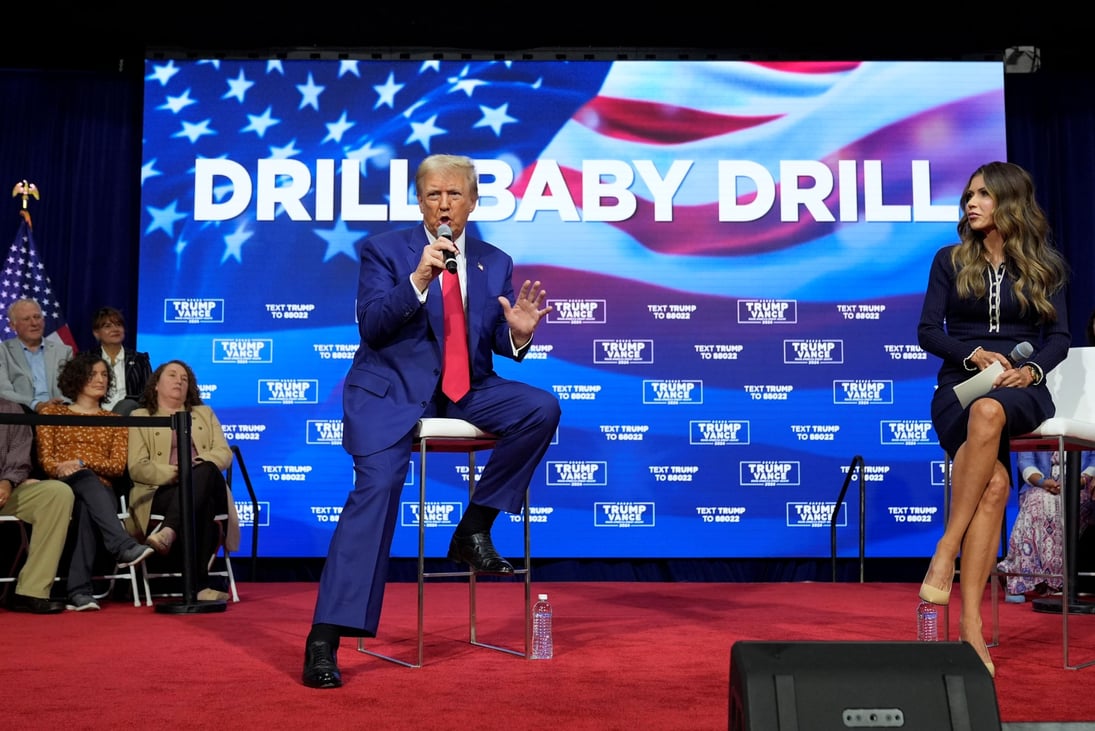
The states claim Trump's executive order is a pretext to skirt environmental reviews.SEATTLE (CN) — In a federal court hearing in Washington state Tuesday, a coalition of 15 states defended its lawsuit challenging President Donald Trump’s energy emergency procedures, while the government argued the states don’t have standing to sue and can’t prove they have been injured.“They’re saying that somewhere, somehow there’s a procedural violation out there in the world that could cause them harm,” argued Jeffrey Hughes, an attorney with the Justice Department.The states claim Trump’s day one executive order is a pretext for federal agencies to unlawfully bypass or shorten reviews mandated by the Clean Water Act, the Endangered Species Act and the National Historic Preservation Act for energy projects. Those landmark conservation laws are imperative to environmental and public health, and there is no energy emergency, the states say in the complaint.The states contend the emergency procedures Trump directed federal agencies to use sidestep important checks required under permitting processes that are designed to avoid or minimize environmental impacts.Trump issued the executive order in January 2025 and the states sued the Army Corps of Engineers, the Advisory Council on Historic Preservation and the Department of the Interior in May 2025.At Tuesday’s hearing, U.S. District Judge Jamal Whitehead noted those expecting an “explosive hearing” over whether there is a legitimate energy emergency were in for a disappointment, as the motion is largely focused on procedural elements.The Trump administration argued the states fell short of proving they had been deprived of any rights owed to them, that they neglected to identify any reviewable final agency actions and that they can’t raise their claims because they haven’t yet been negatively affected by the challenged procedures.The government also argued that Trump’s order expressly authorizes the Army Corps of Engineers, for example, to skip Endangered Species Act consultations that are required under regular circumstances.“Skipping that consultation right, isn’t that some sort of recognition that there’s a reasonable probability of harm over the listed species that may be at issue?” Whitehead, a Joe Biden appointee, asked.The government argued the states didn’t identify specific instances where the defendants failed to engage in consultation when it was required and led to harm.“Just because a permit falls within the terms of an executive order, doesn’t tell you what particular procedures the agencies did or did not use in that case,” Hughes said.Whitehead questioned why the states had to wait until they were harmed to raise their challenge, as the federal defendants had argued.“These cases all require reasonable probability that that particular action where the procedure has been omitted could cause the plaintiffs harm,” Hughes said. “They’re alleging future, separate procedural injury with respect to permits not before this court.”But the states argued the use of emergency procedures creates a reasonably probable risk that environmental consequences are overlooked, which would harm the states’ interests.“The states are not here to quarrel about energy policies; we’re here because three agencies made decisions to fundamentally sidestep safeguards Congress wrote into our most bedrock environmental statutes in order to advance presidential policy,” said Caitlin Soden with the Washington Attorney General’s Office.Skipping environmental review entirely creates a real risk of injury, the states argued.“We are not alleging individual project-by-project violations or some hypothetical future permit or some hypothetical future harm,” Soden said. “We are challenging the adoption of emergency procedures which fundamentally strip out procedural protections.”The states argued the Trump administration was essentially creating new rules that completely omit established environmental reviews.The federal defendants argued the states weren’t entitled to normal procedures across the board and that the states continued to fail to point to specific permits.“So it’s not only not the case that they’ve been denied any particular procedures through this process, but they can only be denied of any procedures, even allegedly, in the context of a particular permit,” Hughes said.Whitehead indicated he would return a decision within the next two weeks.Subscribe to our free newslettersOur weekly newsletter Closing Arguments offers the latest about ongoing trials, major litigation and rulings in courthouses around the U.S. and the world, while the monthly Under the Lights dishes the legal dirt from Hollywood, sports, Big Tech and the arts.Additional Reads
Trump seeks dismissal of lawsuit challenging energy emergency procedures
Full Article
Original Source
Read the full article at Courthousenews →KhanList aggregates and links to publicly available news content. We do not host full articles from third-party sources. Always verify important information with original sources.