
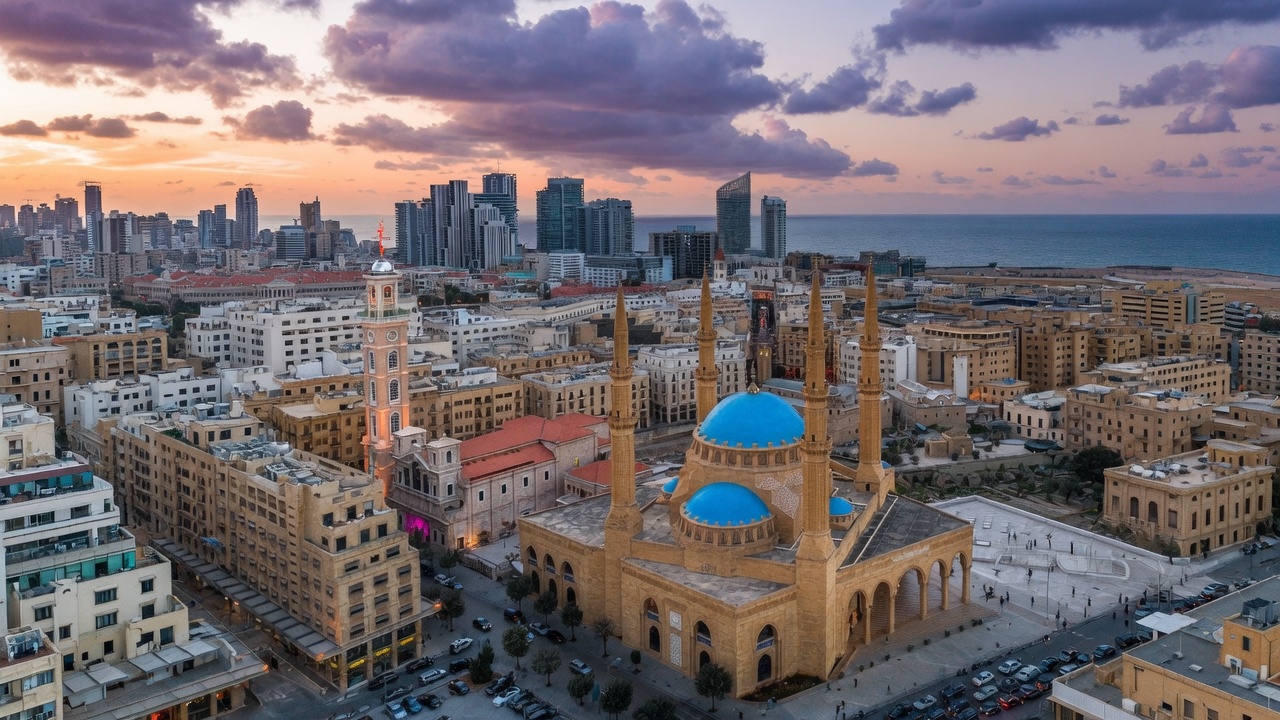
President Trump has declared that U.S. airlines will allow U.S. airlines to fly non-stop to Lebanon. Transportation Secretary Sean Duffy quickly responded, “You got it, Mr. President.” You got it, Mr. President 🫡 pic.twitter.com/lzcv9kgdPG — Secretary Sean Duffy (@SecDuffy) July 21, 2026 No U.S. airline is clamoring to fly to Beirut. However, the first step would be lifting the ban. What Duffy may not realize is that he’s not the one with the action item on this! President Reagan issued Presidential Determination 85-14 following the hijacking of TWA flight 847 in 1985, concluding that Lebanon was acting inconsistently with the Hague Convention against aircraft hijacking due to its failure to take the hijackers into custody or prosecute them, failure to restore control of the aircraft, and the lack of effective governmental control and security at Beirut airport. That order suspended the authority of U.S. airlines to provide transportation to or from Lebanon, including direct operations (and initially even interlining, this restriction was lifted by President Clinton in 1998). The President has the authority under 49 U.S.C. §40106(b) to suspend airline authority when a country fails to comply with the anti-hijacking convention or shelters organizations using aircraft hijacking as a policy instrument. That suspension lasts as long as the president considers necessary. So what has to happen is a presidential determination amending or revoking the 1985 suspension and directing DOT to implement it. It’s the President’s action item (and that of his staff), not the DOT Secretary’s. Credit: SCHW via Wikimedia Commons There Are Safety Issues Flying To Beirut The U.S. government doesn’t even rate the safety of Lebanese aviation. EASA, Europe’s regulator, issued a bulletin on July 8 covering the Beirut Flight Information Region at every altitude indicating that Lebanon has not demonstrated effective proactive airspace deconfliction. It characterizes the risk to civil aircraft as high, and recommends that airlines not enter Lebanese airspace at all. The current bulletin runs through August 31, 2026. That doesn’t ban U.S. airlines from flying to Lebanon, but none are going to do it because the safety issues are real, because they have insurers, and because their pilots will object. Beirut was once known as the Paris of the Mideast. It was one of the last trips I cancelled going into the pandemic, home to extraordinary food, history, a gorgeous seaside setting and worthwhile archaeological sites. Did you know that its flag carrier Middle East Airlines was recruiting female pilots in 1993? Its economy has been in collapse since 2019. The Lebanese banking system is insolvent. Its currency has lost 98% of its value. Hezbollah remains armed and politically powerful. While the Lebanese government is formally pursuing its disarmament as part of a U.S.-brokered framework (hence the President’s pronouncement about bringing back air travel), they remain a threat. Lebanon controls the Beirut Flight Information Region and its air traffic control system, but Hezbollah places aircraft at risk and doesn’t give the government a heads up when they’re going to fire rockets. Beirus Is A Tiny Market Beirut airport had only 1,890 transit passengers all last year. This is not a connecting hub. While the airport saw 7 million passengers in 2025, there were only 2 million in the first half of this year. They may end up the year with fewer passengers than Boise. The latest U.S. census lists 685,672 people as Lebanese. That’s concentrated mostly in Detroit and Dearborn, Michigan. There’s basically zero corporate demand. There’s potentially visiting friends and relatives (‘VFR’) traffic, which will cluster around summer and the major holidays. It will be economy cabin heavy, and carry a lot of checked bags. Who Would Fly There If They Had To? The existing market is well-served on a one-stop basis by carriers like Turkish and Emirates. However, if a U.S. airline were to try this market under pressure from the President or Secretary of Transportation, I’d expect a three times-weekly Boeing 787-8 from Newark (United) or Detroit (Delta). Detroit has the largest local market, though it’s not large. While passengers do not much connect in Beirut, Delta does has a SkyTeam partner based there. United’s Scott Kirby has been most willing to stroke the ego of the administration. Like Delta, United gave $1 million to President Trump’s inauguration. But Kirby spoke in defense of tariffs, blamed the Democrats for last fall’s government shutdown, and went on the Deputy White House Chief of Staff’s wife’s podcast. United is also most willing to try new oddball routes. However, there’s little question they could do better with an aircraft elsewhere. The good news for airlines is that this is likely one of those situations where either the President doesn’t actually mean what he posted, or he’ll quickly forget he posted it. U.S. carriers don’t actually have to offer Beirut service, unless Sean Duffy reminds Trump he encouraged it. Topics on this page
Trump Says U.S. Airlines Can Fly To Lebanon Again — Now Find One Willing To Do It
Full Article
Original Source
Read the full article at Viewfromthewing →KhanList aggregates and links to publicly available news content. We do not host full articles from third-party sources. Always verify important information with original sources.