
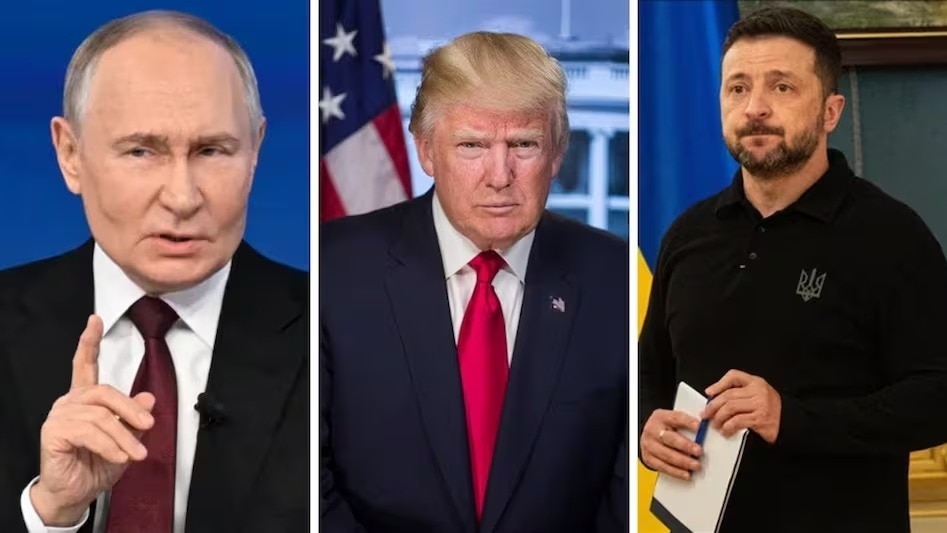
Trump said Russia will supply diesel to the US and global markets after a call with Putin. Zelensky said the move would fund Moscow's war as Washington tries to curb soaring fuel prices.Putin, Trump and ZelenskyUS President Donald Trump said on Friday that Russia had agreed to immediately supply more than 300,000 metric tons of diesel to the United States and global markets, as his administration seeks to ease soaring fuel prices ahead of the November 3 midterm elections.Trump announced the agreement after what he described as a “highly successful” conversation with Russian President Vladimir Putin. He, in a social media post on Truth Social, said Moscow would provide another 500,000 metric tons in November, followed by a further 1 million metric tons “immediately thereafter”.Ukrainian President Volodymyr Zelensky criticised the arrangement, calling it “an investment in a war that must be ended, not prolonged”. He argued that allowing Moscow to sell petroleum products would give Russia additional funds to sustain its war against Ukraine.Peace never comes through weakness. Today, representatives of the U.S. Congress were in Kyiv – a bipartisan delegation – and I am grateful to them for visiting Ukraine at such a difficult time. They asked: what is needed to end the war? The answer must be strong. There must be sanctions under the Lindsey Graham bill, there must be support for Ukraine in protecting lives, and there must be pressure on Russia for its war. And today, there was a conversation between the leaders of America and Russia. A conversation that leads to something different. Recently, there was a European decision to lift sanctions on Russian oligarchs. Since then, Russian strikes and the torment of people have only increased. This past week alone, there was a brutal Russian missile strike on a residential building in Pryluky, aerial bombs were dropped on Kramatorsk – on ordinary city buses – and there have been constant attacks on Kyiv’s energy infrastructure and on the life-sustaining infrastructure in Dnipro, Kharkiv, Odesa, and our other cities. Dozens of people have been killed and hundreds wounded. The Russians are compensating for their inability to achieve their objectives on the battlefield with this kind of terror. This year, Russia is weaker on the battlefield than at any other point in the war. That is why Putin is relying on terror. That is why he is relying on attempts to strike backroom deals to secure some form of pressure relief for Russia, in order to buy more time and more opportunities for war. Any easing of sanctions against Russia without a clear and lasting de-escalation agreement with Russia is an obvious weakness. It plays into Russia’s hands – allowing it to kill more, wage war for longer, have even less respect for America, and inflict even greater losses and damage on the world. Ukraine is ready to take symmetrical de-escalatory steps, and the American team knows our position. Our strikes on Russian oil refineries and other oil facilities are a response to Russia’s years-long campaign of terror against Ukraine’s energy sector. Ukraine will not set Russian oil refineries on fire if Russia does not destroy our energy infrastructure. This is the kind of agreement we are proposing to America, and we believe the United States has enough power to achieve such a compromise. Gifts to Putin will not bring peace or any benefit to the civilized world. Russia will “repay” the diesel with further terror and perfidy. Allowing Russia to sell petroleum products is an investment in a war that must be ended, not prolonged. What is needed is real de-escalation with Russia on a reciprocal basis. We count on America’s fair support for our defense of life, for our defense of people in Ukraine – and on the United States having a correspondingly strong conversation with Russia. A strong one, not a weak one.— Volodymyr Zelenskyy / (@ZelenskyyUa) October 9, 2026The agreement was announced as a Ukrainian delegation was in the US for discussions on efforts to resolve the conflict with Russia, which began its full-scale invasion of Ukraine in February 2022. “Gifts to Putin will not bring peace or any benefit to the civilised world,” Zelensky wrote on X.“Russia will ‘repay’ the diesel with further terror and perfidy,” he added, calling for genuine de-escalation on a reciprocal basis. Speaking to reporters later on WhatsApp, Zelensky said the arrangement would provide Moscow with additional resources to continue the war and undermine efforts to reach a settlement.“I believe our team is simply being used as a front. And that is certainly not fair, nor is it how partners should treat each other,” he said, describing the agreement as “a weak decision on the part of strong partners”.TRUMP SAYS LOWER FUEL PRICES ARE PRIORITYTrump said the Russian supplies would help bring down fuel costs for American consumers, particularly farmers, ranchers and truckers, as diesel prices remain elevated.“Lower prices for Americans, especially our Great Farmers, Ranchers, and Truckers, is my Greatest Priority,” he wrote on social media.The US Treasury Department issued a general licence on Friday permitting imports of Russian diesel until April 7. The move comes despite Washington's sanctions on Russian energy companies over the war in Ukraine.Kirill Dmitriev, an envoy for Putin, also welcomed US-Russia cooperation on diesel and energy in a post on X following the leaders' conversation.President Putin and President Trump just had a successful call. Russia-US energy and economic cooperation will continue and benefit global markets and the world. https://t.co/oSkGhMRry0— Kirill Dmitriev (@kadmitriev) October 9, 2026The initial 300,000 metric tons of diesel would amount to approximately 2.25 million barrels, while the US exports around 1.5 million barrels of diesel each day.ANALYSTS QUESTION IMPACT ON DIESEL PRICESAnalysts cautioned that the proposed Russian supplies were unlikely to bring about a substantial or sustained reduction in fuel prices.“I cannot overstate how much of a nothing burger this is,” oil market researcher Rory Johnston, founder of CommodityContext.com, said on X. He noted that Russia typically exports significantly more diesel when its refineries are not under attack.Jim Mitchell, an analyst at consultancy Wood Mackenzie, said the arrangement could provide some additional supply to a market already facing tight conditions.“It's clearly not a fix, but another stream to aid a very tight diesel market,” Mitchell said.US diesel prices have climbed around 70% since the United States and Israel launched their war against Iran on February 28. The conflict, alongside the war in Ukraine, has intensified pressure on global fuel supplies.The average US diesel price reached $6.28 per gallon on Thursday, according to motoring group AAA. Prices have risen despite recent efforts by Trump to increase availability, including pressing allies to release emergency reserves and expanding access to tax-exempt red-dyed diesel, typically used in farm equipment.Following news of the agreement, US diesel futures fell sharply, trading at $4.64 per gallon, down more than 4.8%.The administration is also considering further measures to contain domestic fuel costs. Three industry sources told Reuters on Friday that Trump was expected to direct some department heads to explore ways to control diesel prices.The proposed directive could take the form of a presidential memo, urging officials to address state and local regulations that restrict energy production and consider using the Cold War-era Defense Production Act to boost domestic oil and fuel output.The law gives the president powers to support manufacturing through government-backed loans and loan guarantees and to prioritise government contracts for essential goods.The White House has been weighing ways to expand refining capacity as the war with Iran exposes US vulnerability to supply disruptions and price spikes. Refining executives told administration officials last month that improving existing refineries or expanding current facilities would be more practical than building new plants, which could take years to complete.- EndsWith inputs from Reuters
Trump says Russia to supply diesel to US, Zelensky calls deal investment in war
Full Article
Original Source
Read the full article at Indiatoday →KhanList aggregates and links to publicly available news content. We do not host full articles from third-party sources. Always verify important information with original sources.