
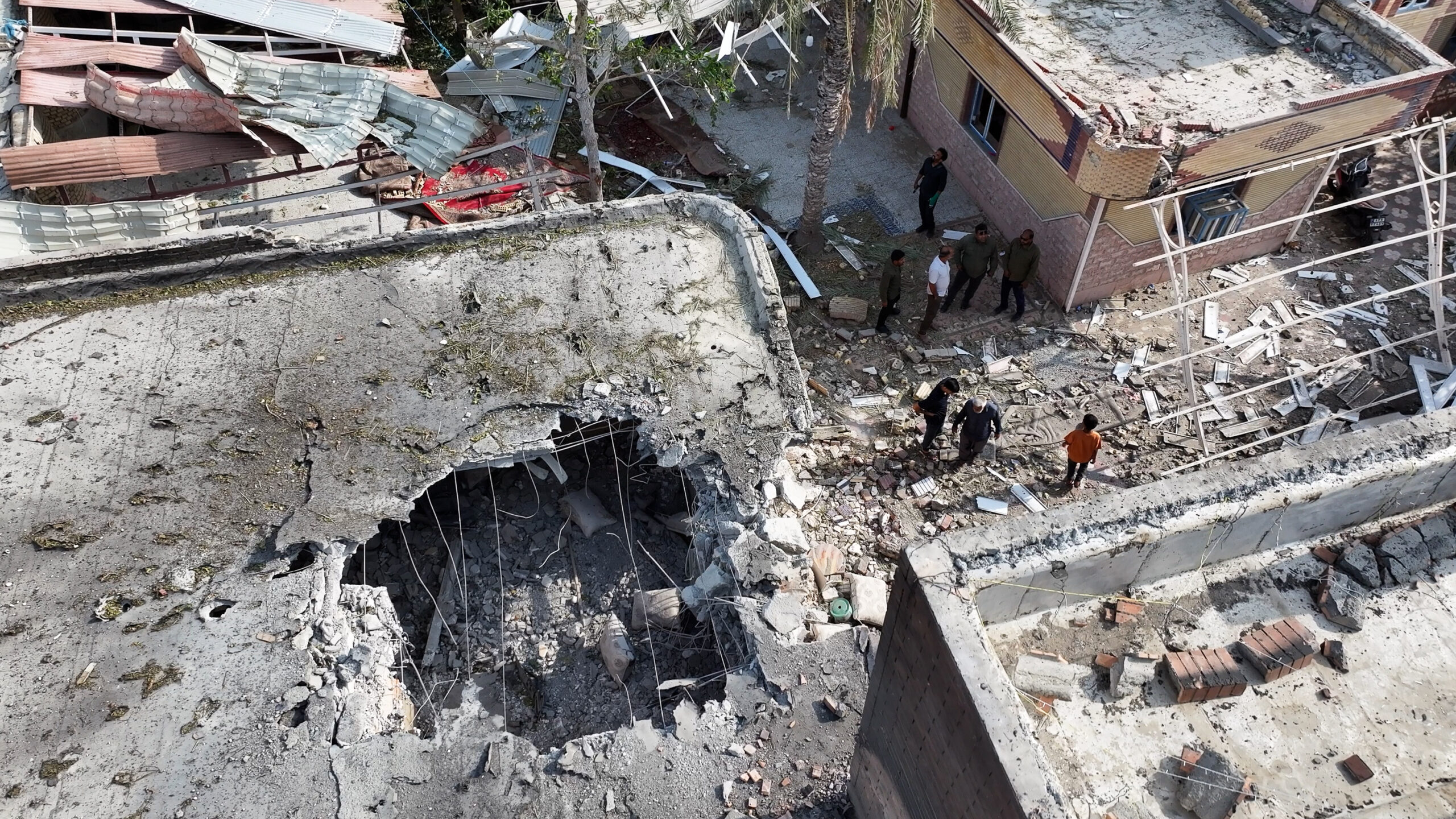
President Donald Trump said renewed attacks on Iran would likely be short-lived, reiterating his claim that the US controls the crucial Strait of Hormuz after fresh fighting spiked energy prices and rekindled fears of an open-ended war. Asked on Wednesday how long the bombing campaign could last, Trump told reporters, “I don’t think too long.” Brent crude slipped 0.6% to $95.10 a barrel after the comments. The US military carried out a second round of strikes in three days overnight, targeting radar systems and mine-laying capabilities along Iran’s southern coast. Iran retaliated with drone and missile volleys on US bases across the Middle East, in line with a pattern used throughout the six-month war. “We took out all of the new equipment that they tried to build along the Strait of Hormuz — some defensive, some offensive,” Trump said. “It was a very heavy attack last night, and we’re prepared to do another one any time we want.” Tehran accused the US of hitting a wedding ceremony in the southern coastal city of Sirik,with the Iranian Red Crescent Society saying at least four people died and about 67 were injured. The organization, which had previously put the number of fatalities at five, said the total may rise. “The US military never targets civilians,” said US Navy Captain Tim Hawkins, a spokesperson for US Central Command, which oversees American forces in the Middle East. The skyline of Bandar Abbas, Iran, bordering the Strait of Hormuz on Aug. 10, 2026. Iranian officials likened the incident to a strike on an elementary school in the city of Minab during the early days of the conflict. That attack killed an estimated120 children and is under investigation by the US military. “This cruelty cannot be separated from the chain of atrocities that preceded it in Minab,” Iran’s Foreign Ministry spokesman Esmail Baghaei posted on X. “Iran will respond to these savage crimes with firmness.” The resumption of hostilities brought an abrupt end to a month of subdued military activity, during which oil shipments through the Strait of Hormuz recovered to roughly half of prewar levels. The improvement in flows risks being curtailed, affecting supplies of oil, gas and other commodities and boosting energy prices and inflation. Brent crude had surged with the renewed fighting, trading as high as $97 a barrel. The international benchmark contract is up around 58% this year, raising fears about the knock-on effect as the northern winter approaches. Natural gas prices also climbed, while US diesel pump costs rose to their highest since hitting a peak in April during the initial phase of the war. “Fighting drags on with no end — and no winner — in sight,” Bloomberg economists including Dina Esfandiary said in a note Wednesday. “The wider Middle East is now an arena for war. And surging oil prices are taxing the global economy.” Iran’s foreign ministry called on regional countries to stop letting the US use their facilities and territory to carry out attacks. The American strikes hit telecommunication infrastructure in the Islamic Republic, it said. Neither the US nor Iran have shown a willingness to come to the negotiating table since the collapse of an interim peace accord agreed in June by both sides in Islamabad. US Treasury Secretary Scott Bessent told reporters at the G20 finance ministers’ summit in Asheville that Iran’s leaders were “panicked” over the country’s economic problems and predicted at some point they would be ready to negotiate an accord to end the war. While Bessent has vowed an “economic onslaught” against Iran and its trading partners, countries with ties to Tehran have so far shrugged off the threat and analysts have been underwhelmed by US actions. The American naval blockade remains in place, however, stifling energy exports from the Islamic Republic. Fighting is intensifying beyond Iran. Israel has been attacking Hezbollah targets in southern Lebanon regularly this week, accusing the Iran-backed group of launching drones at its forces. Hamas, meanwhile, said an already shaky ceasefire in Gaza risks collapsing after an Israeli raid deep into the Palestinian territory on Tuesday to capture a senior figure from the militant organization. Photo: People survey damage to buildings in the aftermath of an airstrike in Kuhestak, Sirik County, in the Hormozgan Province of Iran on Sept. 2. Photographer: Morteza Akhondi/Getty Images Copyright 2026 Bloomberg.
Trump Says Iran Strikes to Be Short, Asserts Hormuz Control
Full Article
Original Source
Read the full article at Insurancejournal →KhanList aggregates and links to publicly available news content. We do not host full articles from third-party sources. Always verify important information with original sources.