
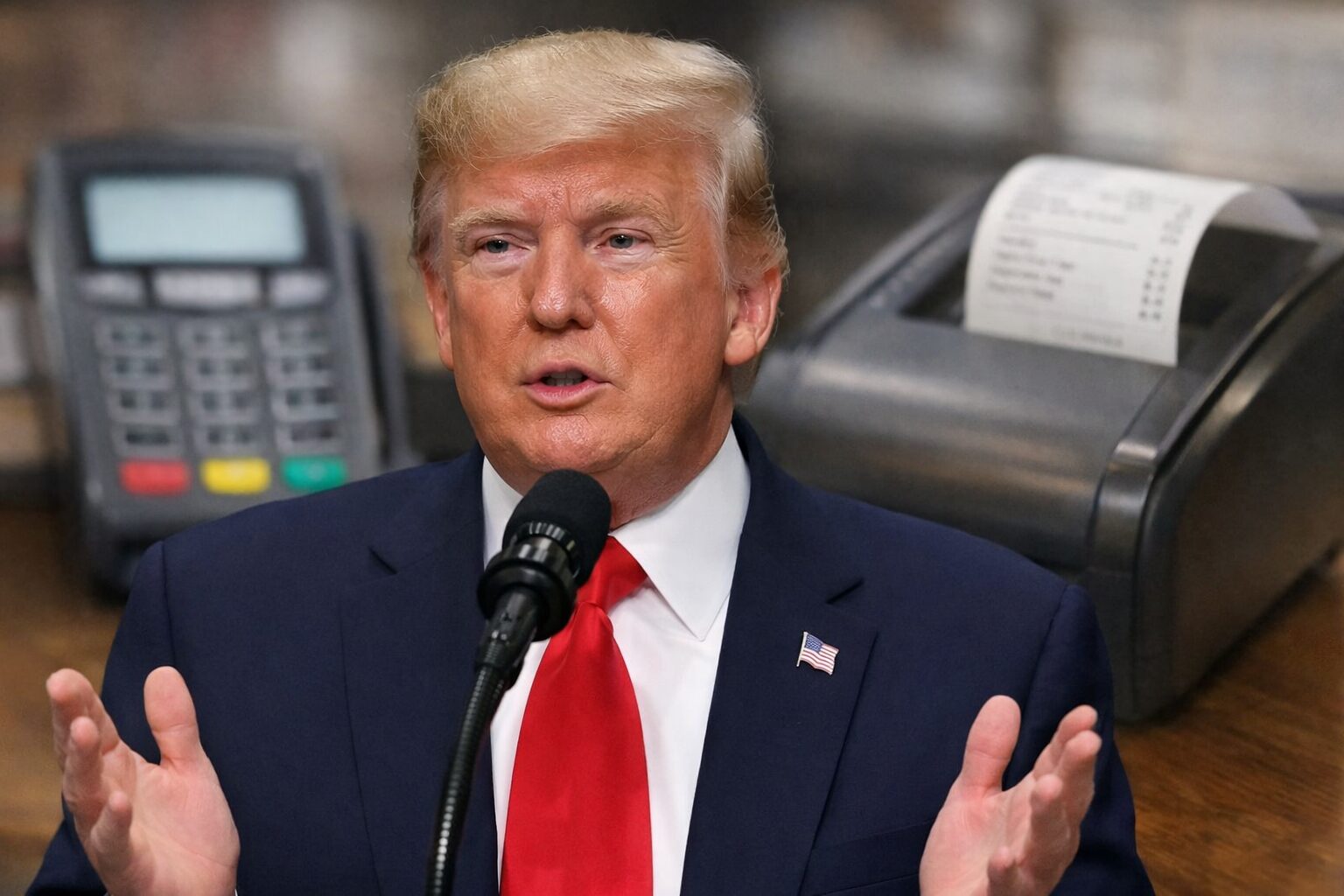
President Trump told the Republican midterm convention that “we will cut out-of-control credit card swipe fees, saving the average family $1,200 per year.” He added that Americans shouldn’t pay seven or eight times what consumers pay in other countries. That is not what’s actually happening. Trump gave no policy specifics on how he’d achieve $1,200 in savings, and that’s not what the legislation he’s endorsed (Illinois Democrat Dick Durbin’s Credit Card Competition Act) even claims. An earlier version was co-sponsored by economically illiterate then-Senator J.D. Vance. It would require banks with more than $100 billion in assets to enable at least two unaffiliated networks on their credit cards, including one other than Visa or Mastercard. The bill then lets merchants choose which network routes each transaction. Amex and Discover cards are exempt. Networks compete today for issuing-bank relationships using pricing, technology and marketing support. The bill ends most of this, and confiscates the apparatus to allow merchants to choose the lowest-cost provider for each purchase. The $1,200 Promise Doesn’t Match The Bill The $1,200 number appears to come from the merchant campaign for regulation. Bill co-author Senator Roger Marshall says the average family currently pays nearly $1,200 each year because swipe fees are embedded in retail prices. Marshall is parrotting a claim by the National Retail Federation whose members get a windfall from the bill. But on that very same page, they estimate total annual savings of $15 billion nationwide which is one-seventh split between businesses and consumers. If it all went to consumers, that would be $174 per family, and it mostly goes to businesses. Nothing requires businesses to lower their prices. That’s never happened in other countries that have regulated interchange. And cards are already less expensive to accept than many other forms of payment – they’re generally not the driver of price. This was central problem I laid out when I debated the retail industry’s case for the bill at CardCon. Lower Merchant Costs Mean Less Value Somewhere Else The change from this law would shift payment networks from spending on getting consumers to use cards on their networks to spending to get merchants to do so. It’s a transfer from consuemrs to merchants. Today these fees don’t just fund rewards they also fund purchase protections that go beyond the legally required minimum. According to the New York Fed which looked at 550 million card accounts (90% of the U.S. market) on average issuers are receiving 1.82% of purchase volume and spending 1.57% on rewards. Most of the cram down comes out of consumer pockets, since the difference isn’t just funding profit but the costs of issuing and servicing cards (and of course issuers take in fees and interest charges). We know that acquisition bonuses are lower in countries that regulate interchange, because it’s not as valuable to bring on a new customer. And rewards earn is lower, too, or capped. Another interesting data point in the study was that cards earn issuers a 6.24% overall return on assets While customers who pay their bill each month in full (so aren’t paying interest) earn issuers a 2.57% return – it would be better to invest that money in a high yield savings account if they could, rather than consumers who don’t revolve Of course issuers don’t get to do that, they’re acquiring customers and hoping to find ones that revolve The reduction in rewards isn’t just an unintended consequence. The Reserve Bank of Australia specifically predicted its interchange rules would mean lower rewards, fewer card features and higher fees. That’s literally a goal of the regulator there because they want consumers to pay for rewards. In the end the biggest reason I wouldn’t ‘push the botton’ on this policy that it is isn’t just cutting points it makes extending credit less profitable, which means you get less credit (especially for marginal borrowers). That’s bad for the economy, and it pushes the people least eligible for credit get pushed toward worse substitutes like payday lending. Moreover, rewards are crucial for air travel volume and affordability, a driver of route decisions, and a driver of economy activity. Major airline profitability is tied to cards. Delta says they’re building up Austin flights because of their American Express deal. Southwest moved into Hawaii to offer cardmembers a reason to earn (since they lacked partners members could redeem on to places like Europe). Gut that and you get fewer flights and more expensive seats. That’s bad for the economy, too. Remember too that the real subsidy is from consumers who borrow on cards to those who don’t. And poorer consumers use cards, too. They also often shop at different stores, so there’s not really a cross-subsidy. And if anything, card users are subsidizing non-card users because (1) card users spend more, and (2) depending on the type of business, cash acceptance costs can be much higher than credit due to incorrect change, employee theft, and higher insurance costs. Topics on this page
Trump Says Cutting Swipe Fees Will Save Families $1,200—The Bill He Backs Doesn’t Do That
Full Article
Original Source
Read the full article at Viewfromthewing →KhanList aggregates and links to publicly available news content. We do not host full articles from third-party sources. Always verify important information with original sources.