
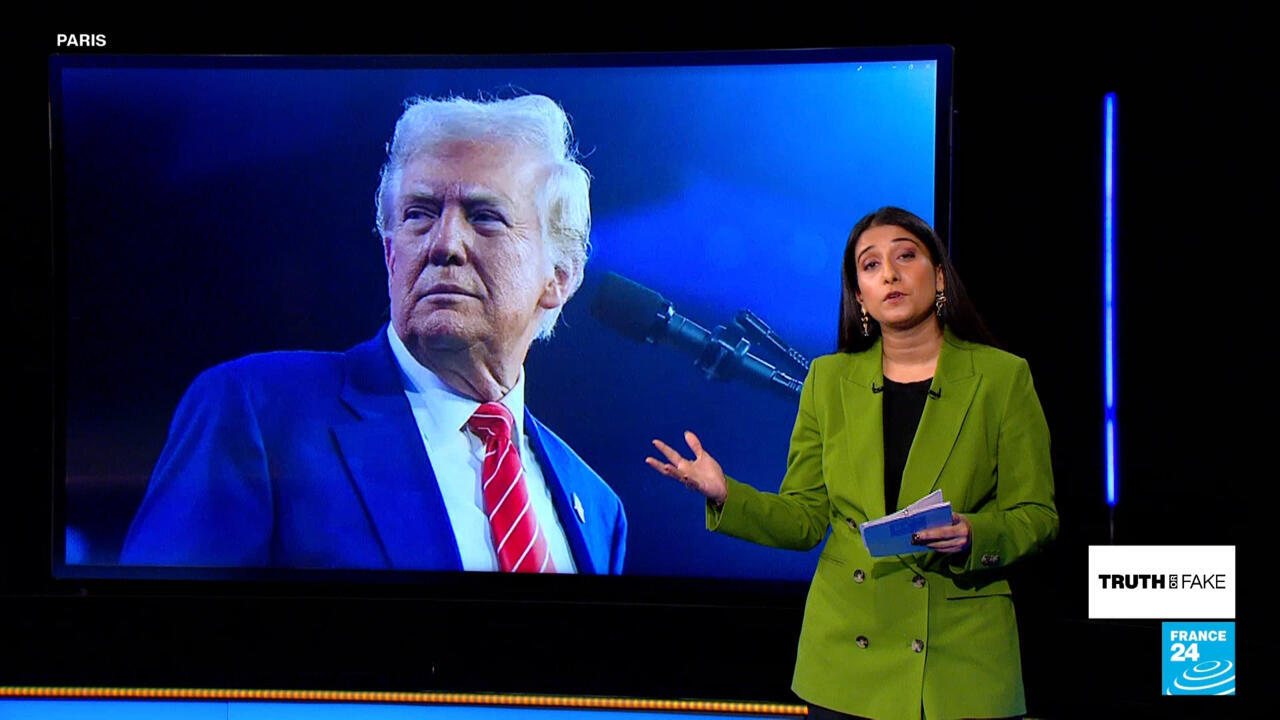
Donald Trump promised an “America First” foreign policy and pledged to keep the US out of foreign wars. But since returning to the White House, his administration has been deeply involved in conflicts around the world. From the war in Ukraine and threats to Greenland and Canada, to the US intervention in Venezuela, Trump's shifting approach to the Middle East and war with Iran, Vedika Bahl examines his foreign policy record since returning to office. When Donald Trump returned to the White House, he promised an “America First” foreign policy, pledging to keep the United States out of foreign wars and prioritise domestic interests. But two years into his second term, his administration has been deeply involved in conflicts and diplomatic disputes around the world. Here is a look back at some of the defining moments of his foreign policy since returning to office. Ukraine: A promise to end the war remains unfulfilled One of Trump's most prominent campaign promises was to end Russia's war in Ukraine, which he vowed to resolve on his first day back in office. But the conflict is now in its fifth year, and Trump's approach has been marked by dramatic shifts in Washington's relationship with Kyiv. Tensions reached a low point in February 2025, when Trump and Vice-President JD Vance publicly berated Ukrainian President Volodymyr Zelensky during a heated Oval Office meeting, accusing him of failing to show sufficient appreciation for American support. The confrontation was followed by a temporary US suspension of military assistance and intelligence sharing with Ukraine. Washington's position on weapons deliveries has also fluctuated. Ukraine has repeatedly sought additional Patriot air defence systems to protect its cities and infrastructure, but deliveries have been limited amid depleted US stockpiles. Trump subsequently welcomed Russian President Vladimir Putin back onto the international stage at a summit in Alaska, where the two leaders discussed the war. No agreement was reached, with Trump acknowledging that negotiations had yet to produce a breakthrough. Relations between Washington and Kyiv have since faced further strain, including over Trump's announcement of a diesel export deal with Russia, which Zelensky criticised as a "weak decision". More recently, Putin proposed a trilateral summit involving Trump and Chinese President Xi Jinping to discuss Ukraine, despite Kyiv itself not being invited to the table. Despite Trump's repeated promises to bring the conflict to an end, the war continues. Greenland and Canada: Trump's territorial ambitions strain relations with allies Trump's foreign policy has also raised questions about Washington's relationships with some of its closest allies, particularly after he repeatedly expressed interest in acquiring territory belonging to NATO partners. Greenland, an autonomous territory within the Kingdom of Denmark, became a particular focus.Trump argued that the United States needed Greenland for national security reasons. In January 2026, he refused to rule out using military force to take control of the territory, despite repeated assurances from both Greenland and Denmark that it was "not for sale." The comments prompted a strong response from European allies. Several NATO countries rallied behind Greenland, with some deploying military personnel to the territory.Trump responded by threatening higher tariffs against countries that opposed his plans. In September, the United States, Denmark and Greenland signed a new defence agreement expanding America's military presence on the island, without transferring sovereignty. Canada has also been a target of Trump's territorial rhetoric. He repeatedly referred to the country as America's "51st state", mocking former Canadian prime minister Justin Trudeau by calling him "Governor Trudeau". Trump also falsely claimed that Canadians wanted to join the United States, suggesting they would benefit from lower taxes and better healthcare. Canada's new prime minister, Mark Carney, has firmly rejected the idea of the country becoming part of the United States. But Trump has continued to suggest that he has not ruled out the possibility, and ties between the neighbours remain strained as Ottawa seeks to align itself closer to Europe. The 'Donroe Doctrine': US intervention in Venezuela Trump's approach to Latin America has been dubbed the "Donroe Doctrine", a play on his name and the 1823 Monroe Doctrine, which warned European powers against further colonial intervention in the Americas. Successive US presidents have invoked the original doctrine to justify American influence across the region, at times through military intervention.Trump explicitly embraced the comparison in January 2026, following a US military operation in Venezuela that resulted in the capture of President Nicolas Maduro, who was taken to the United States to face criminal charges. The operation marked a significant escalation in Washington's involvement in the region.Trump described the move as a revival of the Monroe Doctrine, joking that it should instead be called the "Donroe Doctrine". Following Maduro's capture, Trump said American oil companies would help rebuild Venezuela's oil industry. Washington has since secured control over Venezuelan oil reserves and gained influence over how the proceeds are spent. However, the promised return to democracy remains uncertain. Meanwhile, the US military has carried out a series of strikes against vessels in the Caribbean, off Venezuela's coast, killing hundreds of people. The Trump administration has described the targets as "narco-terrorist" boats involved in drug trafficking and says the operations are intended to prevent narcotics from reaching the United States. But officials have not provided evidence that the vessels targeted in the strikes were carrying drugs, raising questions about the legal basis and justification for the operations. Middle East: From Gaza's 'Riviera' to the Iran war Trump began his second term as a staunch supporter of Israel, maintaining Washington's backing for the country's military campaign in Gaza.But his relationship with Israeli Prime Minister Benjamin Netanyahu has also faced moments of tension. In February 2025, Trump sparked widespread international criticism when he proposed a US takeover of the Gaza Strip and the resettlement of its Palestinian population. He shared an AI-generated video depicting Gaza transformed into a luxury seaside resort, dubbed the "Riviera of the Middle East". He later presented a 20-point Gaza peace plan alongside Netanyahu in September 2025, describing it as a major achievement of his foreign policy. A ceasefire took effect the following month, securing the release of all remaining hostages and increasing humanitarian access to the territory. However, a year later, the wider plan remains largely stalled. Israeli strikes have continued in Gaza, Hamas remains armed and there has been no full Israeli withdrawal or comprehensive reconstruction. Disarmament remains a major sticking point. Washington has pushed for Hamas to surrender its weapons alongside a phased Israeli withdrawal, while Netanyahu has insisted that disarmament must come first. And then there is Iran. In February 2026, Trump joined Israel in launching a war against Iran, marking one of the most consequential foreign policy decisions of his presidency; particularly striking given his previous criticism of Kamala Harris during the 2024 election campaign, when he accused her of risking a war in the Middle East. The US-Israeli military campaign resulted in the killing of Iran's Supreme Leader Ayatollah Ali Khamenei and several other senior officials. Iran subsequently asserted control over the Strait of Hormuz, a crucial shipping route for global energy supplies, sparking major disruption to international shipping and energy markets. Despite initially fighting alongside Israel, Trump and Netanyahu have since disagreed over how to bring the conflict to an end. Trump has explored the possibility of a deal with Tehran, while Netanyahu has continued to advocate military action to protect Israel's security interests. Nevertheless, Trump has continued to publicly support Netanyahu, endorsing him ahead of Israel's latest elections. With the war in Iran still underway and fighting continuing in Gaza despite a nominal ceasefire, Trump's "peacemaker" pledge to avoid foreign conflicts appears increasingly distant from the reality of his second-term foreign policy.
Trump promised 'no more wars'. His foreign policy tells another story
Full Article
Original Source
Read the full article at France24 →KhanList aggregates and links to publicly available news content. We do not host full articles from third-party sources. Always verify important information with original sources.