
It didn’t take him long to react. Shortly after the results of the Spanish general election were announced, U.S. President Donald Trump celebrated the electoral defeat of Socialist Prime Minister Pedro Sánchez. “Sánchez lost,” a reporter told him, to which the Republican replied: “He lost? Oh, that’s a good thing. He did a terrible job; he deserves to lose. That’s great news.”The relationship between Trump and Sánchez has been marked by obvious tension over the past two years in which they’ve both been in power, particularly on issues such as immigration, defense spending, and tariffs. The Spanish Socialist leader has stood out among his European colleagues as one of those who has spoken out most clearly against some of the Republican president’s policies, and Trump has attacked Sánchez on several occasions with unusual severity.The two politicians also served in office simultaneously during the final two years of Trump’s first term, from June 2018 — when Sánchez took office at La Moncloa — to January 2021, when the Republican left the White House following the victory of Democrat Joe Biden. Although there were also clashes at that time over issues such as the European tech tax and defense spending, that was a much calmer period for relations between the two countries than the one that marked the beginning of Trump’s second administration.The victory of Alberto Núñez Feijóo’s Popular Party (PP) and the far-right Vox party led by Santiago Abascal — a longtime ally of Trump and some of the most conservative Republican politicians — opens up a new chapter in relations between Washington and Madrid.The most heated clashes between Trump and Sánchez have centered on the U.S. president’s demand that Spain increase its defense spending to 5% of gross domestic product — a commitment accepted by the rest of NATO’s members at the 2025 summit in The Hague, but which the Spanish Socialist government did not sign.In October 2025, Trump went beyond trade threats and, in a meeting with Finnish President Alexander Stubb, suggested that allies should consider expelling Spain from the Atlantic Alliance for refusing to increase military spending. “Maybe you should throw them out of NATO,” he said.In March 2026, Trump once again threatened the Spanish government. On that occasion, it was over Spain’s refusal to allow Washington to use the joint-use military bases in Rota and Morón after the United States and Israel attacked Iran on February 28. “And now Spain actually said we can’t use their bases. And that’s all right, we don’t want to do it. We could use the base if we want,” he said. “We could just fly in and use it, nobody is going to tell us not to use it. But we don’t have to.” He also took the opportunity to point out that the Sánchez administration had refused to increase defense spending and to toughen its stance: “We’re going to cut off all trade with Spain. We don’t want anything to do with Spain.”Sánchez responded forcefully. “We are not going to be complicit in something that is bad for the world for fear of reprisals from someone,” he said during a public appearance. “Some will say that this is naive. What is naive is to think that violence is the solution. Or to think that blind and servile obedience is leadership.”Months later, at the NATO summit in Ankara in July 2026, the Republican labeled Spain a “terrible ally” and “bad people” and ordered a complete cutoff of bilateral trade. Days later, Sánchez downplayed those attacks and said that after the press conference, the two had talked about soccer and golf. “We spoke about football, about the World Cup in the United States. So, it was an informal, casual conversation; there was absolutely no tension whatsoever. On the contrary, it was all friendly words and courtesy,” said the Spanish leader.In October, Trump used the immigration crisis that Ceuta experienced in July to attack the Spanish government. “They arrived by the tens of thousands, they flooded into Spain, and the country is doing nothing about it. They simply accepted their arrival,” he told reporters who asked him about the unrest in France at the time. “Europe must change its ways. It has to change its customs, or there will be no Europe left,” he concluded. Now, the right’s victory in Spain opens up a new avenue for collaboration between the two countries. But it comes at a time when Trump is in a weak position. He has just suffered a massive Democratic victory in the midterm elections on November 3, which has caused the Republicans to lose their majorities in the House of Representatives and the Senate. And the countdown has already begun for the 2028 presidential election, in which Trump will no longer be eligible to run.Sign up for our weekly newsletter to get more English-language news coverage from EL PAÍS USA Edition
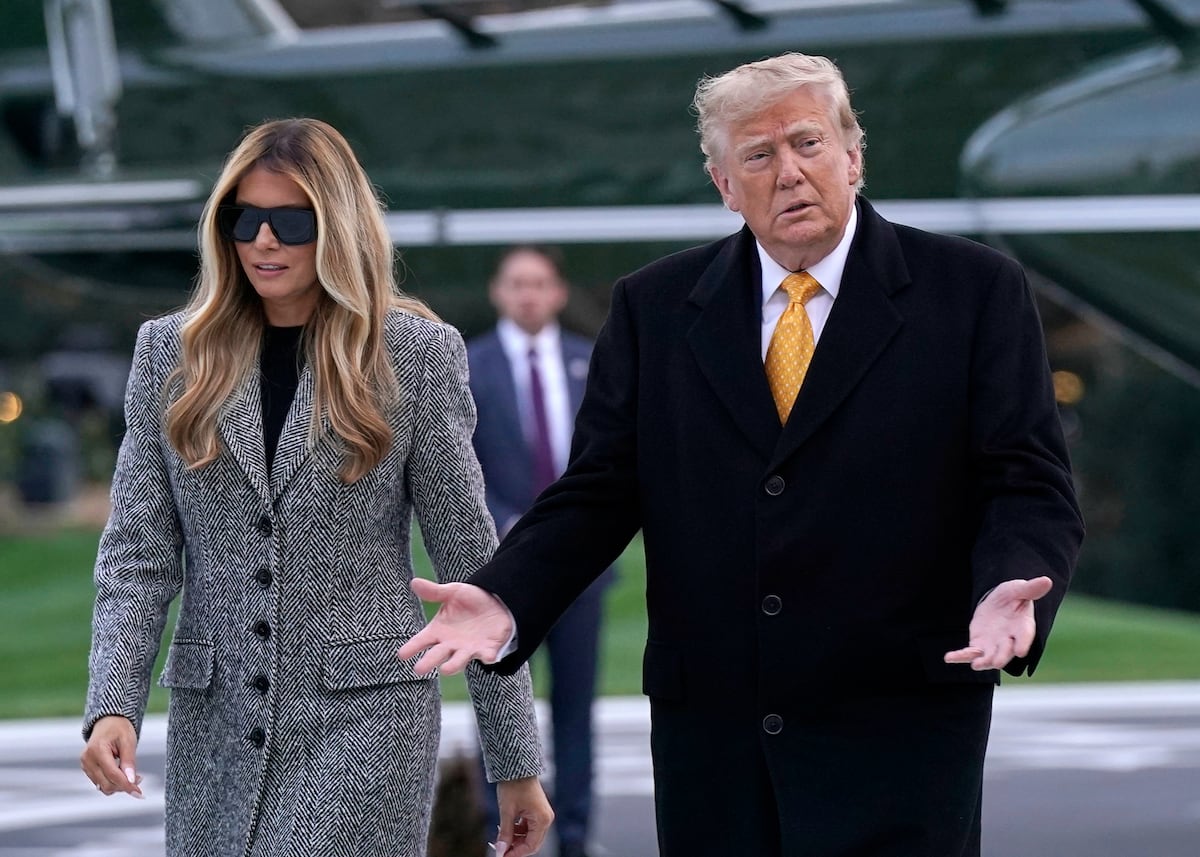
Trump, on Pedro Sánchez’s election defeat: ‘He did a terrible job; he deserves to lose. That’s great news’
Full Article
Original Source
Read the full article at English →KhanList aggregates and links to publicly available news content. We do not host full articles from third-party sources. Always verify important information with original sources.