
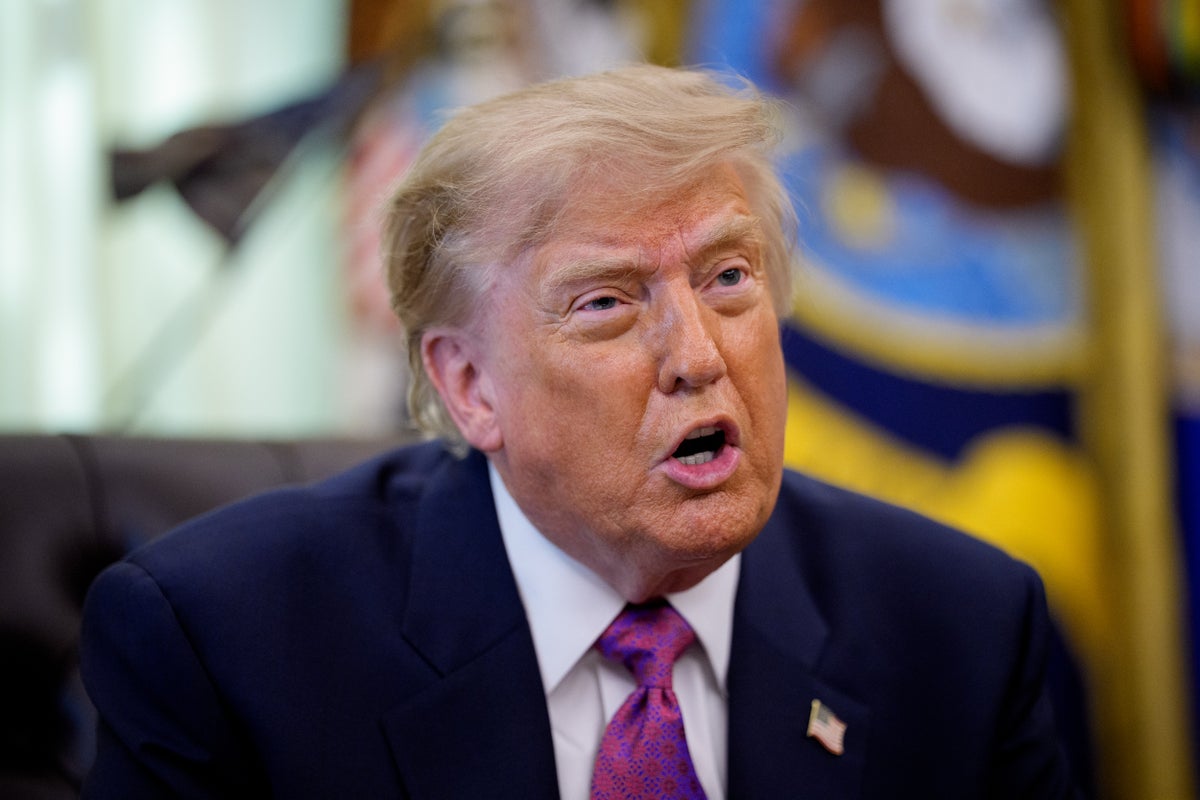
A senior Treasury official on Monday condemned “name-calling” in politics following critical remarks from Canadian leaders, glossing over President Donald Trump’s long track record of using personal insults against his political opponents.Under Secretary for International Affairs Erin Browne addressed the diplomatic friction while appearing on “NewsNation,” speaking from the G20 Summit in Asheville, North Carolina. The interview turned to recent remarks by Ontario Premier Doug Ford, who had previously called Trump a “dictator” and a “bully,” even as Ford urged calm and noted that the U.S. and Canada remain “allies” and “best friends.” When asked by anchor Markie Martin how heavily the trade dispute with Ottawa would affect the summit, Browne pushed back against the rhetoric.“Well, I don’t think name-calling is ever appropriate,” Browne said, as reported by Mediaite. “You know, the president has done a really phenomenal job in leading this country and leading it so that we bring back jobs to America, bring back manufacturing to America, and he’s really made it a central point to work for all Americans and ensure that we are not taken advantage of by our counterparts anymore.”A Treasury official criticized Canadian leaders for resorting to personal insults, brushing aside President Donald Trump’s extensive history of using targeted nicknames against his political rivals (Getty)Browne added that trade balances would remain a central focus of the gathering.“So, certainly, imbalances of the important focal point of the G20 and that is something that we’ll be discussing over the coming days in the context of global imbalances,” she said.The comments follow a breakdown in cross-border trade negotiations. Canadian Prime Minister Mark Carney characterized the latest U.S. proposals as “unfair” and “uneconomic,” citing last-minute changes to terms. Retaliatory tariffs from Canada are set to go into effect on September 8 if an agreement is not reached.When pressed on how the administration plans to avert escalating trade tensions, Browne put the responsibility back on Canadian negotiators.“I think President Trump has really set the example of leadership by putting a really fair deal on the table for Canada,” Browne said. “So it really comes up to Canada to come back to us with accepting the deal that President Trump has already offered to them.”Ontario Premier Doug Ford called the US and Canada ‘best friends’ just days after launching personal insults at President Donald Trump amid trade friction (Reuters)Browne did not address the president’s own history of insults directed at Ford. Trump previously referred to Ford as a “flunky” and called him the “less charismatic, intelligent, and overall unimpressive brother of the late, great Rob Ford.”While Browne characterized personal attacks as inappropriate, targeted nicknames and derogatory labels have long served as a core element of Trump’s public strategy and political rhetoric. Over the course of his political career, Trump has publicly attached insults to scores of rivals, foreign leaders, media figures and political institutions.Notable examples of Trump's name-calling include:“Crooked Hillary” — Used to target 2016 Democratic presidential nominee Hillary Clinton. “Sleepy Joe” / “Crooked Joe” — Frequent labels directed at former President Joe Biden. “Comrade Kamala” / “Laffin’ Kamala” — Insults directed at former Vice President Kamala Harris. “Lyin’ Ted” — Used against Texas Senator Ted Cruz during the 2016 Republican primaries. “Little Marco” — Moniker applied to Florida Senator Marco Rubio during the 2016 primary campaign. “Low Energy Jeb” — Used to describe former Florida Governor Jeb Bush. “Ron DeSanctimonious” — Insult used against Florida Governor Ron DeSantis during the 2024 Republican presidential primary. “Birdbrain” — Used to attack former U.N. Ambassador Nikki Haley during the 2024 Republican primary campaign. “Mini Mike” — Applied to former New York City Mayor Michael Bloomberg during the 2020 presidential race. “Pocahontas” — Targeted at Massachusetts Senator Elizabeth Warren. “Sloppy Steve” — Used to describe former White House strategist Steve Bannon. “Slimeball James Comey” — Directed at former FBI Director James Comey following his firing.
Trump official blasts ‘name-calling’ by Canada - despite it being the president’s go-to attack
Full Article
Original Source
Read the full article at Independent →KhanList aggregates and links to publicly available news content. We do not host full articles from third-party sources. Always verify important information with original sources.