
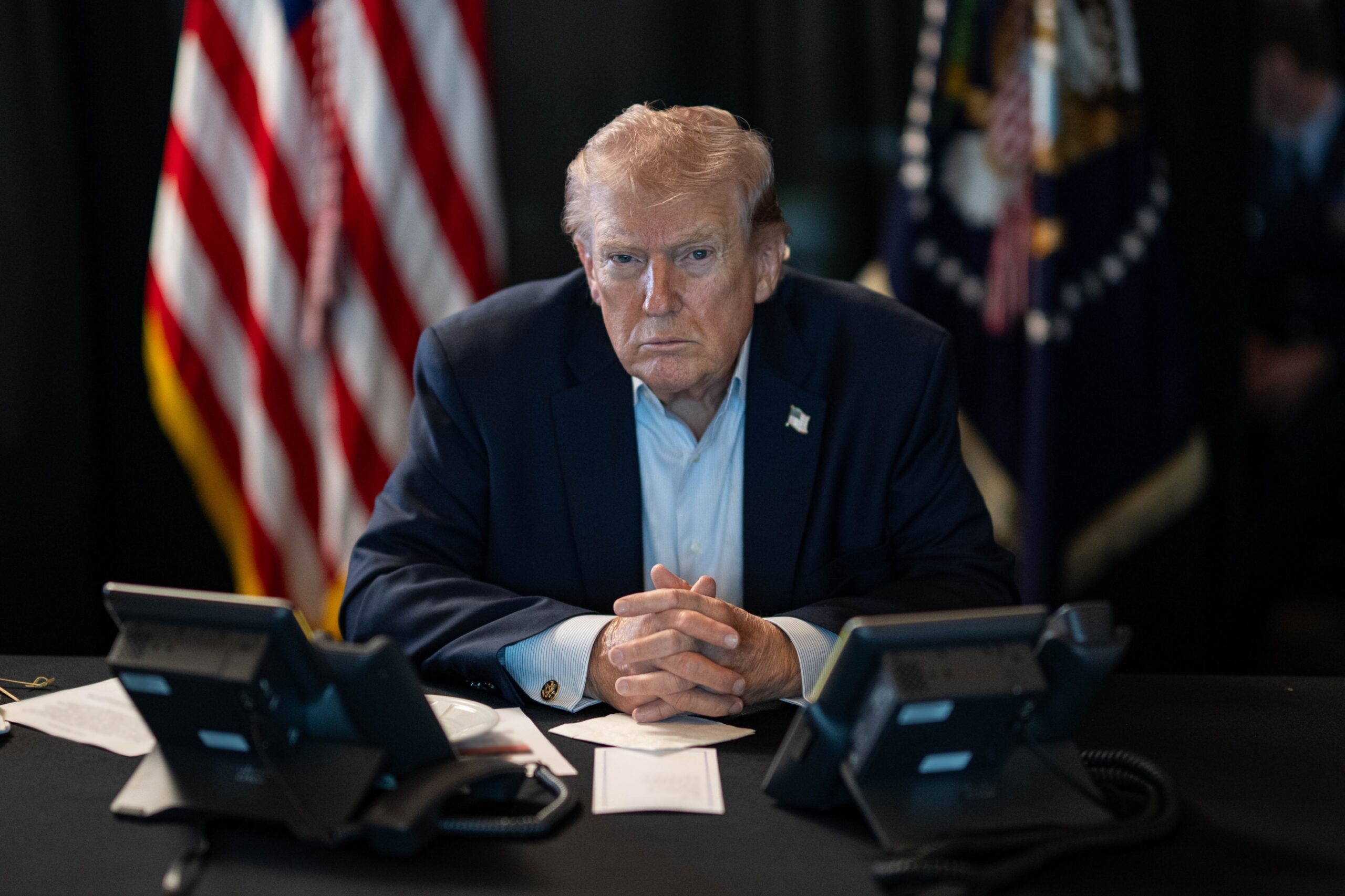
Politics That makes winning the midterms difficult, to say the least. Photo by The White House via X Account/Anadolu via Getty Images In the last consumer price index report before the midterm elections, inflation was up to 3.7 percent. It’s still a far cry from the 9.1 percent peak under former President Joe Biden, but that offers little comfort to vulnerable congressional Republicans. President Donald Trump’s job approval rating on the economy sits at just 33.8 percent in the RealClearPolitics average of polls. On inflation specifically, only 27.2 percent approve of the job he is doing, while nearly 70 percent disapprove. A Fox News poll this month found that 77 percent disapproved of Trump on inflation, while a meager 22 percent approved. It is against this backdrop that Republicans will be defending their narrow congressional majorities. And while the polls in some of the most competitive Senate races look iffy, the national electoral environment is indisputably bad for the GOP. These dire conditions have arisen as a result of Trump’s own choices. The biggest driver of the most recent inflation is a spike in energy prices caused by the Iran war. Just as Biden chose to do another COVID stimulus right as lockdowns were ending and people were going back to work, Trump chose to start a war with Iran he cannot now end. Biden was warned by political allies that what he was doing would exacerbate inflationary pressures on the economy but persisted anyway, dooming his party’s congressional majorities and, ultimately, his presidency. Trump was warned that the Iran war would have similar political consequences. He was counseled by his own team that the regime in Tehran was not as close to collapse as outside agitators for war were claiming, and he was advised that an attack would cause the Iranians to close the Strait of Hormuz and choke off oil supplies. Like Biden before him, Trump ignored all these warnings and pressed ahead. The electoral impact is likely to be similar. Biden had defeated the socialists who demanded passage of the Green New Deal in the Democratic primaries, only to then follow their lead on opening the border and jacking up federal spending. Trump had routed the neoconservatives, running many of them out of the Republican Party entirely, yet ended up giving them the war George W. Bush never did (albeit mainly because W. couldn’t, having already taken their lead on Iraq). Both disasters were predictable and predicted. Trump even had the benefit of watching Biden so spectacularly misread his mandate. Trump’s successor-turned-predecessor’s errors paved the way for his own return to the White House. And yet here we are. Trump’s tariffs have also been unhelpful. Voters associate them with higher prices, even when the connection is dubious. (Though it is true that tariffs raised some prices.) But at least Trump had made some kind of case for trade protectionism and reshoring American jobs on the campaign trail, even if the electorate was then more concerned about the cost of living than jobs and unemployment. While Trump appealed to Republicans with disparate views on foreign policy, there was little in his first term and virtually nothing in his 2024 campaign to indicate to voters that a war with Iran was in the offing. Inflation was always going to be a difficult issue for Trump. Even if he did nothing to make the problem worse, price increases are cumulative. In most cases, he was only going to be able to cause the rate of inflation to decline, slowing price increases rather than immediately dropping them back down to where they were in his first term. But inflation likely would have continued to come down if he had avoided the Iran war. His positions would then have been more defensible, even if midterm elections are typically hard for the party that controls the White House. Trump could have more plausibly made the resurgence of inflation Biden’s legacy. Now he shares responsibility for this, and his party will almost certainly share the same fate as the Democrats in Congress who enacted Biden’s spending plans. And this GOP Congress didn’t even get to vote on the war (unless you count the war powers resolutions voted on after hostilities began). Trump says the latest round of inflation is a small price to pay for preventing Iran from getting a nuclear weapon. Yes, high gasoline and diesel prices are preferable to nuclear annihilation, if you believe those were the stakes. Subscribe Today Get daily emails in your inbox Most voters don’t, however. And Trump himself was ready to end the fighting back in June. This war is continuing because of the Strait of Hormuz, which was open before Trump went down this road. But if and when the president succeeds at breaking this oil logjam, he will not receive the same credit for fixing a problem he helped create. Now Trump is on the campaign trail, sometimes in the reddest parts of the country, seeking to stop an electoral bloodbath like that suffered by the GOP in 2006, when another ill-advised Mideast war shredded its congressional majorities. Trump, in other words, is furiously trying to fix a problem of his own creation.
Trump, Like Biden, Has Become a President of Inflation and War
Full Article
Original Source
Read the full article at Theamericanconservative →KhanList aggregates and links to publicly available news content. We do not host full articles from third-party sources. Always verify important information with original sources.