
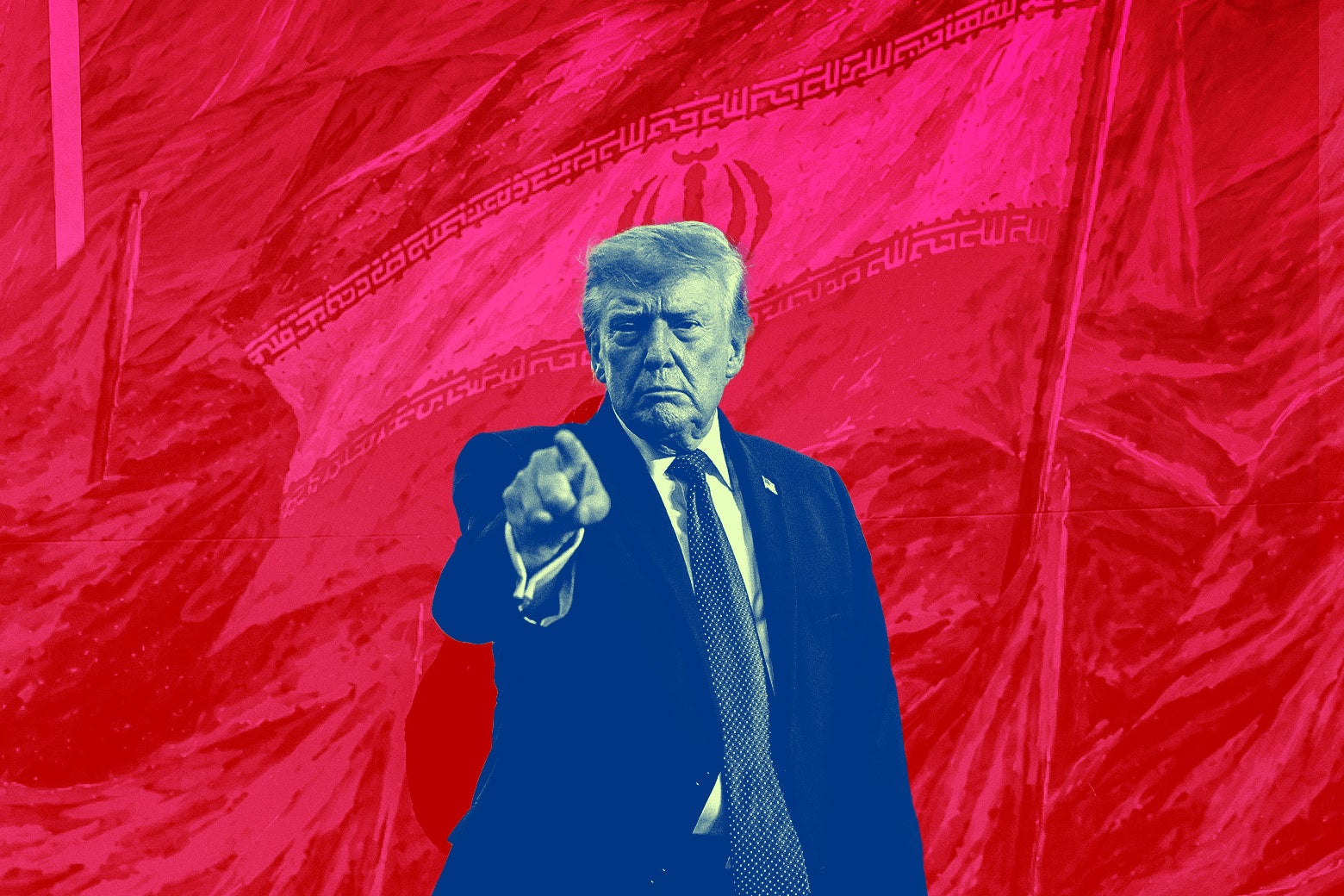
The Slatest The Iran War Might Sink Republicans Next Week. But Once the Election Is Over, All Bets Are Off. Photo illustration by Slate. Photos by Atta Kenare/AFP via Getty Images and Kevin Dietsch/Getty Images. This story is adapted from the Slatest newsletter. You can sign up here to get it in your inbox every day. If Republicans get thumped in next week’s midterms, Donald Trump’s war in Iran will be a big reason why. Many voters see the 8-month-old, $47 billion–and–counting conflict as a glaring violation of the president’s campaign pledge not to start new wars—one that has sent gas prices spiraling higher to boot. Yet regardless of just how much the elections end up looking like a rejection of Trump’s military adventurism, there are mounting signs that the president plans to escalate the fighting shortly after polls close on Tuesday. Let’s read the tea leaves. What are the signs? They’re everywhere. As the Wall Street Journal reported this week, U.S. officials have told America’s allies in the Gulf to brace for “a short, intense military campaign” after the elections. Per the New York Times, the Pentagon has drawn up plans for new strikes targeting Iran’s energy infrastructure, missile batteries, drone arsenal, and nuclear facilities. The U.S. is shipping more weapons to the region and preemptively evacuating embassies and military bases that Iran could target for retaliation. More U.S. warships are en route, carrying thousands of Marines. Iran and the Gulf states caught in the crossfire, meanwhile, are frenziedly stocking up on missiles and interceptors as if anticipating a return to hostilities. What has Trump said about all this? The president has publicly pledged not to strike Iran before the midterms, but he has also hinted that he has plans to do so once voting wraps. This month, Trump suggested that the U.S. would win the war “right after the election” and said, “We may do another little Epic Fury,” referencing the code name for the joint U.S.-Israeli strikes that started it. It doesn’t seem very Trumplike to show restraint. Why is he waiting until after the midterms, anyway? Carl Von Clausewitz once famously argued (and I’m both paraphrasing and translating here, since the dude spoke German) that war is the continuation of politics by other means. As the midterms have neared, though, this particular war has been more like the inverse: Domestic politics are dictating Trump’s approach to the fighting. Instead of greenlighting new attacks on Tehran, Trump has tasked the U.S. Navy with helping oil tankers transit the embattled Strait of Hormuz in a bid to hold down gas prices and save GOP seats. Iran, meanwhile, has been doing everything it can to keep prices high, upping attacks on tankers and having its proxies target Saudi Arabian oil refineries. After the vote, though, those incentives could flip. Unconstrained by Republicans nervous about losing their seats, Trump might escalate the fighting to try to force Iran to capitulate. So could the next attack be worse than what’s come before? Some Democratic lawmakers seem to think so. Chris Murphy of Connecticut, a member of the Senate Foreign Relations Committee who has been privy to classified battle plans, recently described the administration’s postelection strategy as “insane.” Without giving details, Murphy hinted that Trump could target civilian infrastructure in ways that would “lead to devastating escalation and the likely destruction of our commitment to the rule of law.” Um, yikes. What could that mean for the conflict? It depends on who you believe. According to the Atlantic, some Trump confidantes think U.S. sanctions have sent Iran’s hardline leadership “close to the edge,” and that another round of attacks “would push them over.” Other analysts think an escalation will just embolden Iran, which has already endured thousands of U.S. strikes. So what’s the bigger picture? Well, keep in mind that elections can have consequences. If Democrats retake Congress, they could muster enough votes to block funding for the war. If Israeli opposition parties put aside their differences after this week’s election and topple Benjamin Netanyahu as prime minister, Trump could lose his biggest partner in the fight. And if the war keeps dragging on, it could become a millstone for Vice President J.D. Vance—or whoever becomes the next Republican presidential nominee—in the next election, too. They don’t call them forever wars for nothing. Tolga Akdoğan Without minimizing the scariness of war, it’s time for a hard pivot. Spooky season culminates tomorrow, and my colleagues have put together a frightfully good list of what to brew, read, and dress up as to get your weekend off to the right start: Creepy cocktails: Double, double toil and trouble! Plenty of people are brewing themed cocktails to celebrate Halloween, but too often these drinks wind up as tricks instead of treats. Courtney Iseman breaks down why gimmicky cocktails go wrong—and gives some recipe ideas for making your spooky spirits a smashing success. Icelandic Dracula: Shortly after Bram Stoker’s Dracula was published, a translation of the novel appeared in Iceland, with some very noticeable differences from the original. Where did Nordic Dracula come from? Who wrote this version? And did Stoker really give it his blessing? Tune in to this spooky episode of Decoder Ring for “a seasonally appropriate literary mystery—one full of doppelgängers, supervillains, plot twists, and vampires who just refuse to die.” Spirit Halloween: Have you ever wondered what it’s like to work at the seasonal costume superstore Spirit Halloween? Luke Winkie spoke with a 20-year-old assistant manager at one, and it turns out that it’s as bloodcurdling as it seems. Giant skeletons: Home Depot’s 12-foot-tall skeletons are some of the most coveted—and noticeable—Halloween decorations around. They first went viral in 2020, and they have been a hit since, towering over yards across America in all kinds of inventive tableaux. Heather Schwedel spoke with a Home Depot merchant to get the inside scoop on how these giant skeletons came to be. Enjoy the weekend! I’ll see you back in your inbox on Monday, with some special Slatest programming as we await the midterms.
Trump Keeps Hinting That the Iran War Is About to Heat Up Again
Full Article
Original Source
Read the full article at Slate →KhanList aggregates and links to publicly available news content. We do not host full articles from third-party sources. Always verify important information with original sources.