
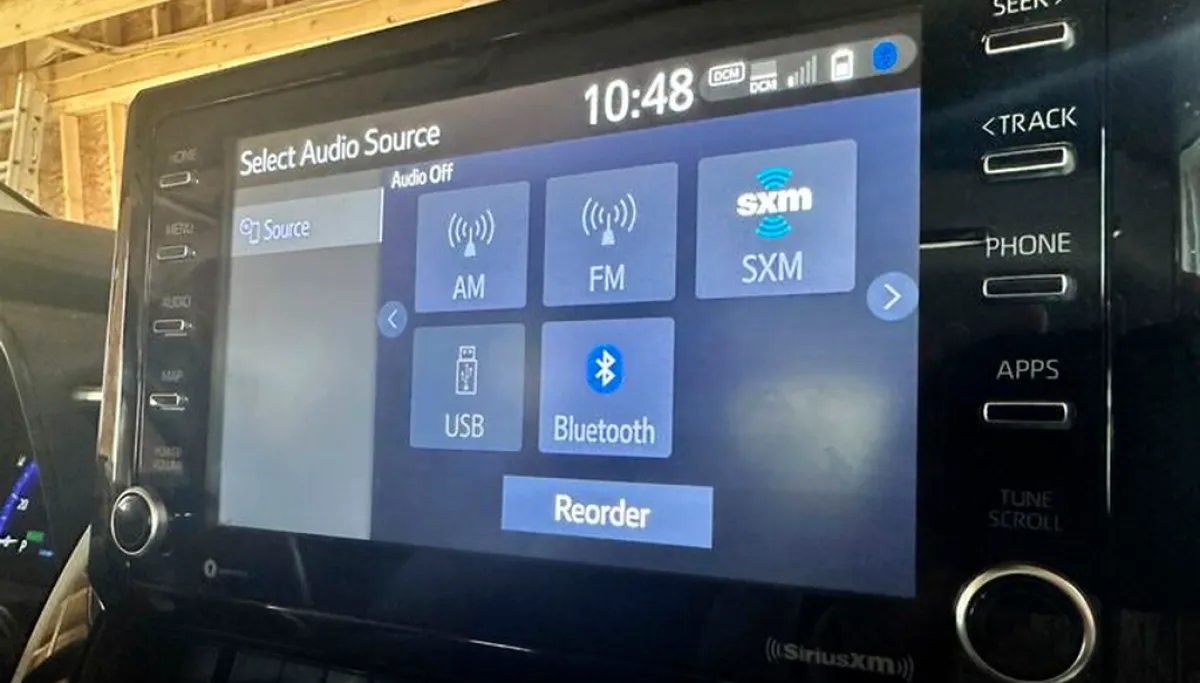
For years, Washington has argued over a question that shouldn’t have been hard in the first place: Should automakers — companies that collect billions in federal subsidies and incentives — get to yank free AM radio out of dashboards, just as cars turn into rolling computers stuffed with connected infotainment systems that Big Auto and Big Tech use as monetization tools to hoover up data about their drivers?Automakers have been pushing to strip AM radio from new vehicles so drivers get funneled toward connected infotainment built by Apple, Amazon, and Google — platforms that can track where you drive, what you listen to, and how you use your car. That information feeds personalized services, targeted ads, and increasingly granular profiles of consumers. AM radio offers none of that. No location tracking, listening history, or algorithm stands between you and the program you tuned in for. You just turn it on, and the signal comes through free and without handing over your personal data.That’s part of the reason why the House passed the bipartisan AM Radio for Every Vehicle Act on Tuesday by a wide margin, sending it on to the Senate, where the companion bill already has 60 co-sponsors from both parties.Having spent years behind a radio microphone myself, I know why this fight matters, and it’s about far more than just checking Big Auto and Big Tech’s data collection. AM is still how tens of millions of people get their news, political commentary, emergency alerts, sports, religious programming, and entertainment.President Donald Trump gets this. Asked about it during his Jan. 8 interview with Hugh Hewitt, he didn’t hedge: “I like the AM radio in every car. I’m in favor of it. … We’re going to be doing something on that.”Congress just did.Trump isn’t alone here, either. FCC Chairman Brendan Carr has repeatedly backed keeping AM radio standard in new vehicles, pointing to its role during emergencies, when other communications networks tend to fail first.That public safety argument carries real weight. Over-the-air broadcasting keeps working when cell networks and internet service don’t. The Federal Emergency Management Agency’s National Public Warning System depends on specially equipped broadcast stations to push out emergency alerts when everything else goes dark, which is part of why every FEMA administrator across the last five presidential administrations, Democratic and Republican alike, has backed this bill.There’s a second reason conservatives in particular should care. Do they really want even more of their news and entertainment routed through the same tech companies they’ve spent years accusing of tilting the playing field through content moderation, demonetization, buried search rankings, and opaque recommendation algorithms? The House has done its part. Senate Majority Leader John Thune (R-SD) and Majority Whip John Barrasso (R-WY) should give the bill a floor vote.But saving the receiver is only half the job. Washington also needs to ask whether the broadcasters actually producing AM programming can compete fairly in a media market that looks nothing like the one that produced today’s ownership rules.Chairman Brendan Carr’s Federal Communications Commission has already started down this road on the TV side. Last month, it scrapped the long-standing national ownership cap that kept any one company from owning stations reaching more than 39% of TV households, replacing it with a case-by-case review. The commission’s reasoning: broadcasters now compete with digital platforms that have no national reach limits at all, so the old framework no longer fits.WHEN THE GRID COLLAPSES, YOUR $1,000 IPHONE IS JUST A PAPERWEIGHT: LONG LIVE LOCAL RADIORadio deserves the same look. There’s no national ownership cap for radio, but local ownership limits still cap how many stations one company can hold in a given market — rules built for a communications landscape that no longer exists. A radio station isn’t just competing with the one down the street anymore. It’s now up against podcasts, satellite radio, streaming, YouTube, social media, and some of the biggest tech companies on the planet, none of which face radio’s market-by-market restrictions.The House has taken the first step of protecting media fairness by passing the AM Radio for Every Vehicle Act. Now it’s on the Senate and the FCC to finish it.Steve Cortes is president of the League of American Workers and adviser to Catholic Vote. He is a former senior adviser to President Donald Trump and Vice President JD Vance, talk radio host, and broadcaster for Fox News and CNN.
Trump is right. Big Tech doesn’t need more control over your car
Full Article
Original Source
Read the full article at Washingtonexaminer →KhanList aggregates and links to publicly available news content. We do not host full articles from third-party sources. Always verify important information with original sources.