
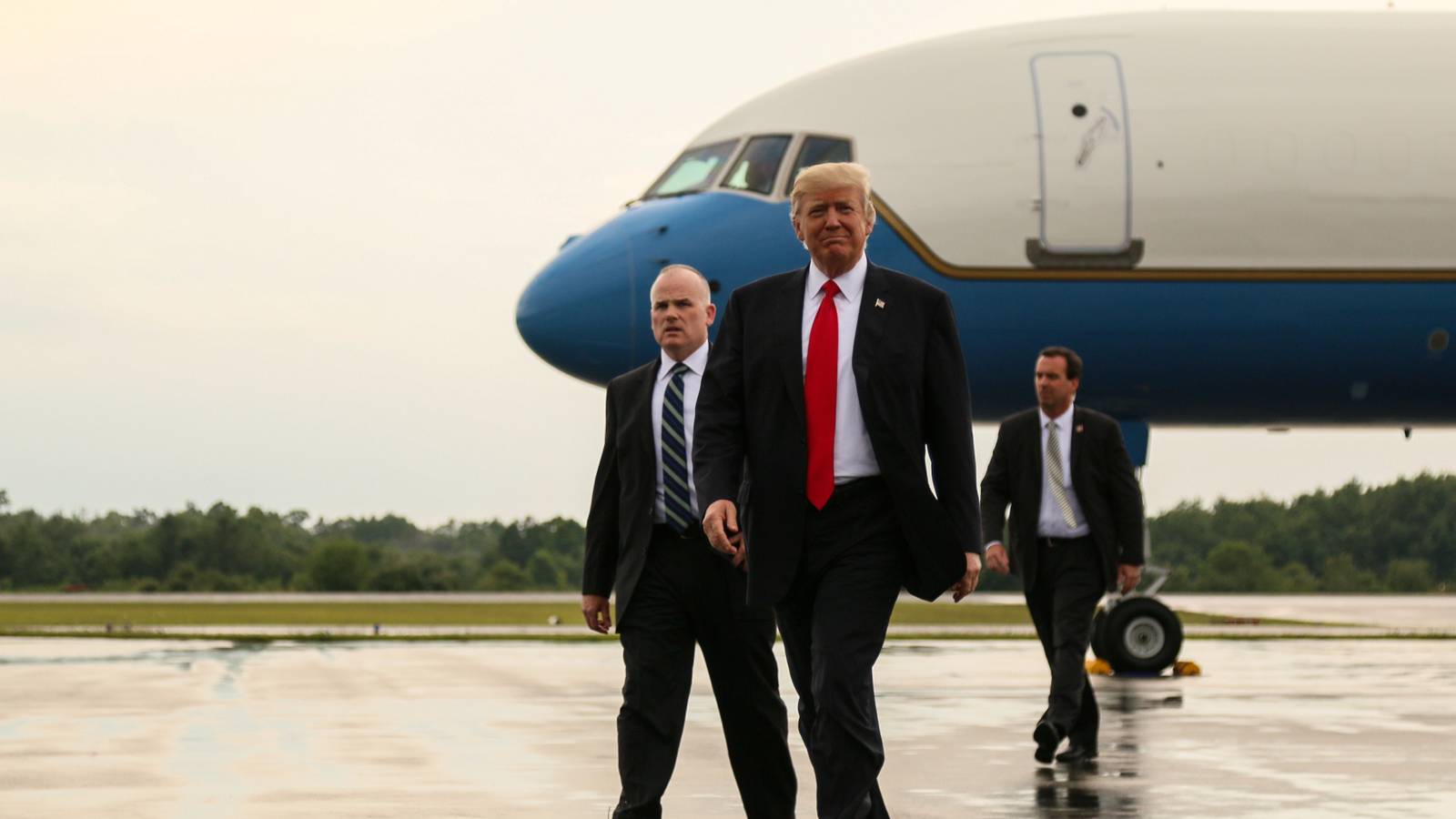
Published Oct 31, 2026, 12:33 PM EDT Jack comes to Simple Flying with a lifelong interest in all things aviation. He holds a degree in Aerospace Engineering from Georgia Tech, and is a certified private and remote pilot. Beyond these experiences, Jack previously worked for a corporate flight department where he gained first-hand experience in the world of business aviation. Currently, Jack works in the professional services industry and continues to build his flight hours outside of work. The United States military has deployed Avenger air-defense systems armed with Stinger missiles and counter-drone equipment at Donald J. Trump International Airport (DJT) in Palm Beach, Florida, following a request from the Secret Service. The installations are part of an expanded protective operation covering the airport and President Donald Trump’s nearby Mar-a-Lago estate, adding ground-based defenses against aircraft and unmanned aerial threats. The deployment was confirmed by the North American Aerospace Defense Command (NORAD) and US Northern Command (USNORTHCOM), which said the equipment was positioned in and around Mar-a-Lago at the Secret Service’s request. Officials have not identified a specific incident that prompted the measures or disclosed the precise operating locations. Reporting by The War Zone indicates that at least two Avenger systems have been positioned at the airport, with additional units protecting the area around the president’s residence. Avenger Systems Bring Stinger Missile Defense To The Airport Credit: Danny Ye | Shutterstock The equipment includes the AN/TWQ-1 Avenger (pictured above), a mobile, Humvee-based short-range air-defense system operated by the US Army. Its turret carries two missile launchers, each capable of holding four FIM-92 Stinger missiles. The infrared-guided weapon can engage low-altitude aerial targets, including aircraft and certain types of unmanned systems. Avengers are designed to protect specific locations rather than defend an entire region. Their mobility allows military personnel to reposition them as operational requirements change, while their missile launchers provide a rapid-response capability against approaching targets. The Stinger has also been adapted to address evolving drone threats, extending the system's role beyond its traditional use against helicopters and other aircraft. Photographs show Avenger units near Mar-a-Lago and at the airport, approximately three miles away. WPTV separately reported seeing two ground-based air-defense assets aboard a barge in the Intracoastal Waterway outside the president’s estate. The positioning of equipment at the airport extends the protective perimeter beyond the residence, adding security around an important arrival and departure point during presidential visits. Counter-Drone Equipment Adds Another Layer Of Protection Credit: Rawpixel.com | Shutterstock Alongside the missile systems, NORAD and USNORTHCOM confirmed deploying Counter-Unmanned Aircraft System capabilities to support the Secret Service. These include rapidly deployable counter-drone fly-away kits designed to help military personnel detect, identify, and track unmanned aircraft. According to The War Zone, the equipment can incorporate several types of sensors, including electro-optical and infrared cameras, Ku-band radar, and electronic-support measures. These technologies help operators locate drones, assess their characteristics, and monitor their movements. Electronic-warfare equipment can also provide options to disrupt or interfere with certain unmanned aircraft. However, officials have not publicly itemized every component deployed in Palm Beach or confirmed the precise configuration of the systems at the airport. NORAD and USNORTHCOM cited operational security when declining to provide further details. Consequently, although reporting describes drone-jamming equipment as part of the expanded defenses, the military has not disclosed exactly how it is being used. The combined arrangement provides different responses to aerial threats. Sensors can identify and track suspicious activity, electronic-warfare equipment can offer options for countering certain drones, and Avenger systems provide a missile-based response. The deployment reflects a layered approach rather than reliance on a single weapon. The Secret Service described the measures as part of its response to a heightened threat environment, saying its protective operations continually adapt through new technology and methods. Neither the agency nor the military has publicly connected the deployment to a specific attempted attack. Repeated Airspace Violations Add Context To The Expansion Credit: Bill Perry | Shutterstock The additional defenses arrive amid repeated violations of restricted airspace around Palm Beach. Temporary flight restrictions (TFRs) are established when the president visits the area, limiting aircraft movements around Mar-a-Lago and requiring pilots to follow specific procedures. Civilian aircraft that enter restricted airspace can be intercepted by military fighters. Fighter pilots have intercepted more than 60 aircraft violating temporary flight restrictions around Palm Beach since January 2025. Airspace violations can involve civilian pilots who are unaware of restrictions, misunderstand flight procedures, or fail to establish required communications. While such incidents do not necessarily indicate hostile activity, repeated incursions create additional demands for the agencies responsible for protecting presidential movements. The latest deployment broadens the range of threats security personnel can monitor and respond to, and demonstrates a substantial reinforcement of the area's air defenses.
Trump International Airport Gets Stinger Missiles & Drone Jammers At Secret Service Request
Full Article
Original Source
Read the full article at Simpleflying →KhanList aggregates and links to publicly available news content. We do not host full articles from third-party sources. Always verify important information with original sources.