
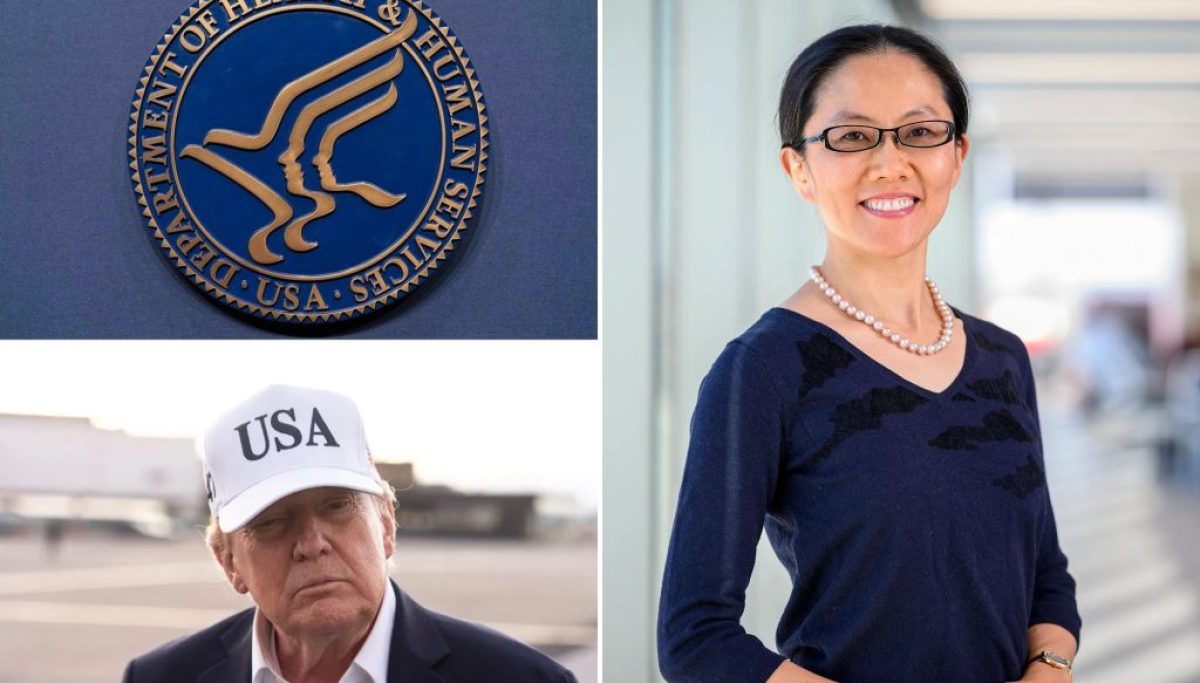
President Donald Trump’s pick to lead policy planning at the Department of Health and Human Services has spent her career strategizing a free-market overhaul of the private health insurance market with the hope of bringing down costs for patients.Ge Bai, Trump’s nominee for assistant secretary for planning and evaluation at HHS, has long been an outspoken advocate for laissez-faire healthcare reforms, including substantial deregulation of the employer-sponsored health insurance market.Upwards of 165 million people under 65, roughly 60% of adults in the United States, get their healthcare coverage through their employer, as of an April study from the health policy group KFF. But Bai has long argued that the health insurance market as it exists artificially inflates costs through unnecessary complexity, saying instead that employers should directly fund health savings accounts for their employees to purchase health insurance independently.Republicans, including Trump himself, have increasingly expressed support for expanding access to HSAs, but Democrats have pushed back, saying HSAs are not enough to ensure everyone has access to healthcare.Bai is scheduled to testify before the Senate Finance Committee at her confirmation hearing on Tuesday, when she will likely be grilled by both Republicans and Democrats about her ideas on how to lower healthcare costs.Healthcare affordability has been a top issue for voters heading into the 2026 midterm elections in November, and senators are likely to ask Bai about how her support for deregulating insurance markets will help patients pay for healthcare expenses.Bai is a less controversial figure than other Trump health nominees who had a difficult time making it through the Senate confirmation process. Although she is not affiliated with the Make America Healthy Again movement, she is well-connected among the conservative movement’s healthcare policy wonks.Should she be confirmed to lead the Office of the Assistant Secretary for Planning and Evaluation, Bai will be the principal policy development and strategic adviser for HHS Secretary Robert F. Kennedy Jr., who, during his tenure, has reportedly relied heavily upon his deputies for decisions on healthcare financing policy.Ge Bai. (Photo provided by Johns Hopkins University) Who is Ge Bai? Bai earned two undergraduate degrees at Dalian University of Technology in China before immigrating to the U.S. She earned her doctorate in accounting at Michigan State University in 2012.In 2016, Bai became an assistant professor of accounting at the Carey Business School at Johns Hopkins University. By 2021, she became a tenured professor of accounting and health policy and management at the Johns Hopkins Bloomberg School of Public Health.In addition to her career in academia, Bai has been an outspoken advocate for free-market healthcare reforms, publishing articles in both academic journals and lay-audience outlets such as the Washington Post and Forbes.Bai has also been a key policy adviser to the free-market think tank Paragon Health Institute, which has been highly influential in Trump administration health policy.Paragon’s Medicaid reform policies played a foundational role in shaping the healthcare reforms in the Republican One Big Beautiful Bill Act, passed last year, that reduced Medicaid spending by roughly $1 trillion over the next decade.Until her nomination by Trump in June, Bai served as the principal deputy ASPE. She was also previously a health policy adviser to the nonpartisan Congressional Budget Office, which provides estimates of the long-term costs of legislation and certain executive actions. Bai has been a strong proponent for years of replacing employer-funded health insurance plans with employer contributions to HSAs.Currently, employers can offer employees high-deductible health insurance plans that are allowed to have an accompanying HSA, which patients can use to cover copays and other health-related expenses.But Bai has said on multiple occasions that the healthcare system would be more efficient if patients paid out-of-pocket cash prices for routine health services, such as preventive screenings or annual check-ups, instead of having these covered by insurance.Bai and other conservatives argue that using health insurance to pay for routine services increases overall healthcare costs by putting middlemen between patients and providers. Reserving insurance for catastrophic or high-risk care and paying cash via HSAs for routine services, in theory, would drive greater price transparency and competition.During an interview with the American Journal of Managed Care in October 2025, Bai said one of the first things she would do to improve healthcare costs would be to do away with traditional employer-sponsored health insurance plans and replace them with employer-sponsored HSAs.“Employers should contribute healthcare dollars directly to workers’ HSAs, which can then be used to purchase insurance and pay for routine services,” Bai said, adding that she would also deregulate insurance markets to allow for more catastrophic coverage options.Bai wrote in a Forbes opinion piece last year that HSAs “enable patients to benefit from competitive cash prices and exert downward pricing pressure on providers.”Bai’s ideas are somewhat similar to Trump’s suggestion last year to redirect subsidies for Obamacare premiums to patients directly instead of to insurance companies.Trump’s so-called “Great Healthcare Plan” includes a provision of sending money directly to the public instead of big insurance companies to allow patients “to buy the health insurance of their choice.” An important issue in the OBBB is expanding HSAs. My article @Forbes: Health Savings Accounts: A Path To Financial Savings And Better HealthOver the past two decades, Health Savings Accounts (HSAs) have provided tens of millions of Americans with financial savings and…— Ge Bai (@GeBaiDC) June 27, 2025 What does ASPE do? Most changes to the employer-sponsored health insurance system would require an act of Congress, but the ASPE has significant oversight over HHS activities that can influence the Trump administration’s healthcare agenda moving forward.RFK JR. CLAIMS CREDIT FOR BIG PHARMA’S SUCCESS IN OBESITY DECLINEAll significant policies drafted by the other HHS agencies, such as the Food and Drug Administration or the Centers for Medicare and Medicaid Services, must first go through the ASPE’s financial and regulatory impact analysis. That means Bai and her team could stall or accelerate specific health regulations across HHS.The ASPE also has the authority to launch or terminate multimillion-dollar pilot programs for healthcare payment models, which are sometimes used to test new policy reforms before they are solidified by Congress or HHS regulation.
Trump HHS pick wants to replace employer-sponsored health insurance with market alternatives
Full Article
Original Source
Read the full article at Washingtonexaminer →KhanList aggregates and links to publicly available news content. We do not host full articles from third-party sources. Always verify important information with original sources.