
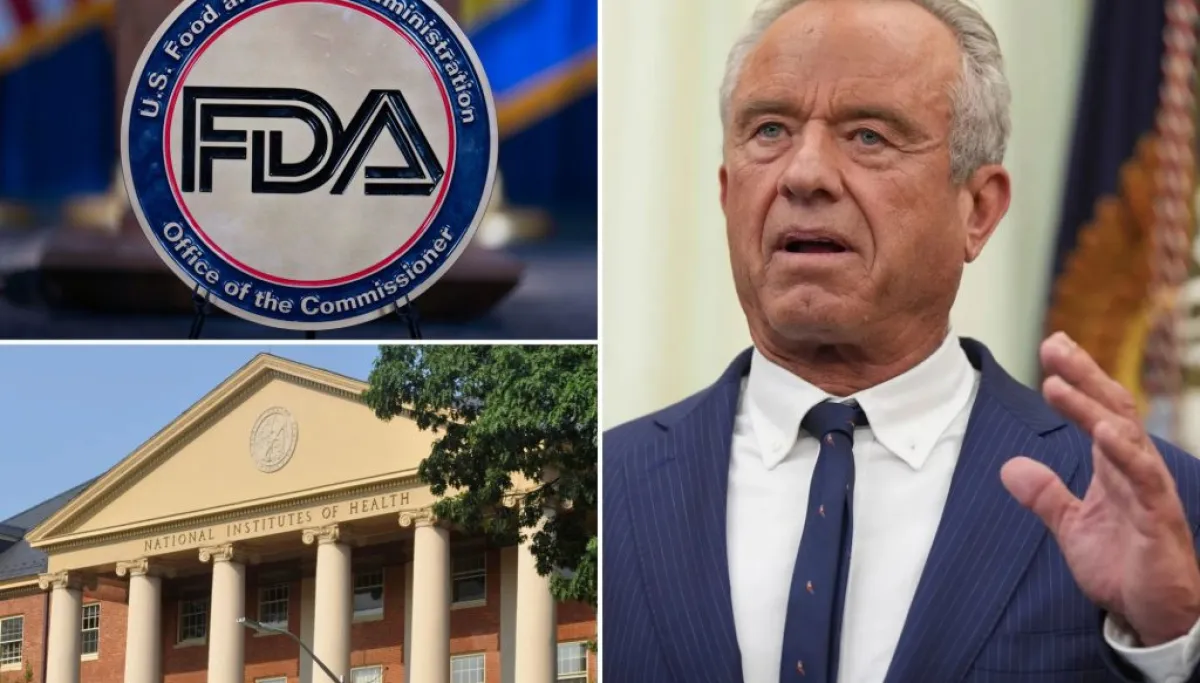
EXCLUSIVE — The Trump administration is moving to reduce reliance on animal testing for medical research as part of its broader effort to modernize federal biomedical research agencies.Several agencies within the Department of Health and Human Services announced new programs on Monday to transition away from animal use in drug testing and medical research and toward biotechnologies, including human organoids, artificial intelligence, and computational modeling. HHS Secretary Robert F Kennedy Jr. said in a statement that the Trump administration intends to “use the best science to protect patients, accelerate medical breakthroughs, and end unnecessary animal testing.” “We are moving HHS toward a new era of biomedical research that puts human biology at the center of science,” Kennedy said. “We are modernizing outdated regulations, investing in human-based technologies, and breaking down barriers that have kept researchers dependent on animal models when better tools are available.”The push against animal testing became a part of the Republican healthcare agenda following the outrage over beagle experimentation done at the National Institutes of Health, overseen by Dr. Anthony Fauci’s National Institute for Allergy and Infectious Diseases.Since then, transitioning away from animal testing has not only become part of the Make America Healthy Again movement but also a key component of the U.S. strategy to maintain biopharmaceutical dominance as China has increased its investment in the sector.As part of the HHS-wide effort, NIH announced on Monday it will be allocating $88 million in funding for biomedical infrastructure projects nationwide to reduce reliance on animal testing and instead use New Approach Methodologies, or NAMs. That investment includes building a new laboratory at the NIH Clinical Center specifically for NAMs development that “will integrate standardized human organoid models, robotics, artificial intelligence, and advanced data capabilities to enable experiments on reproducible human biological systems,” according to a press release.The Food and Drug Administration also announced a finalized rule to replace terms like “animal tests” with less constraining language, such as “nonclinical tests,” to allow pharmaceutical developers to use data collected through NAMs. Acting FDA Director Kyle Diamantas said in a statement that his agency is modernizing its regulations “so developers can use the best science available to demonstrate that medical products are safe and effective.” “By removing outdated barriers to new approach methodologies, we can reduce unnecessary animal testing while making product development more predictive and efficient,” Diamantas said.RFK JR. TAKES STEPS TOWARDS ELECTROMAGNETIC RADIATION RULESThe new rule clarifying the FDA’s embrace of NAMs for pharmaceutical approvals also corresponds with HHS’s effort to encourage U.S. leadership in drug clinical trials, dubbed “Operation TrialBlazer,” launched in June. A pharmaceutical industry report from February projected that using NAMs in early-stage drug testing could save as much as 90% in new drug start-up costs by reducing attrition rates and preventing failure in late-stage drug development. HHS launched a new website on Monday highlighting more than 20 actions taken so far under the Trump administration from various agencies within the department to decrease reliance on animal testing, ranging from research projects on artificial intelligence to finding new homes for retired lab animals.
Trump health agencies fast-track end to animal testing
Full Article
Original Source
Read the full article at Washingtonexaminer →KhanList aggregates and links to publicly available news content. We do not host full articles from third-party sources. Always verify important information with original sources.