
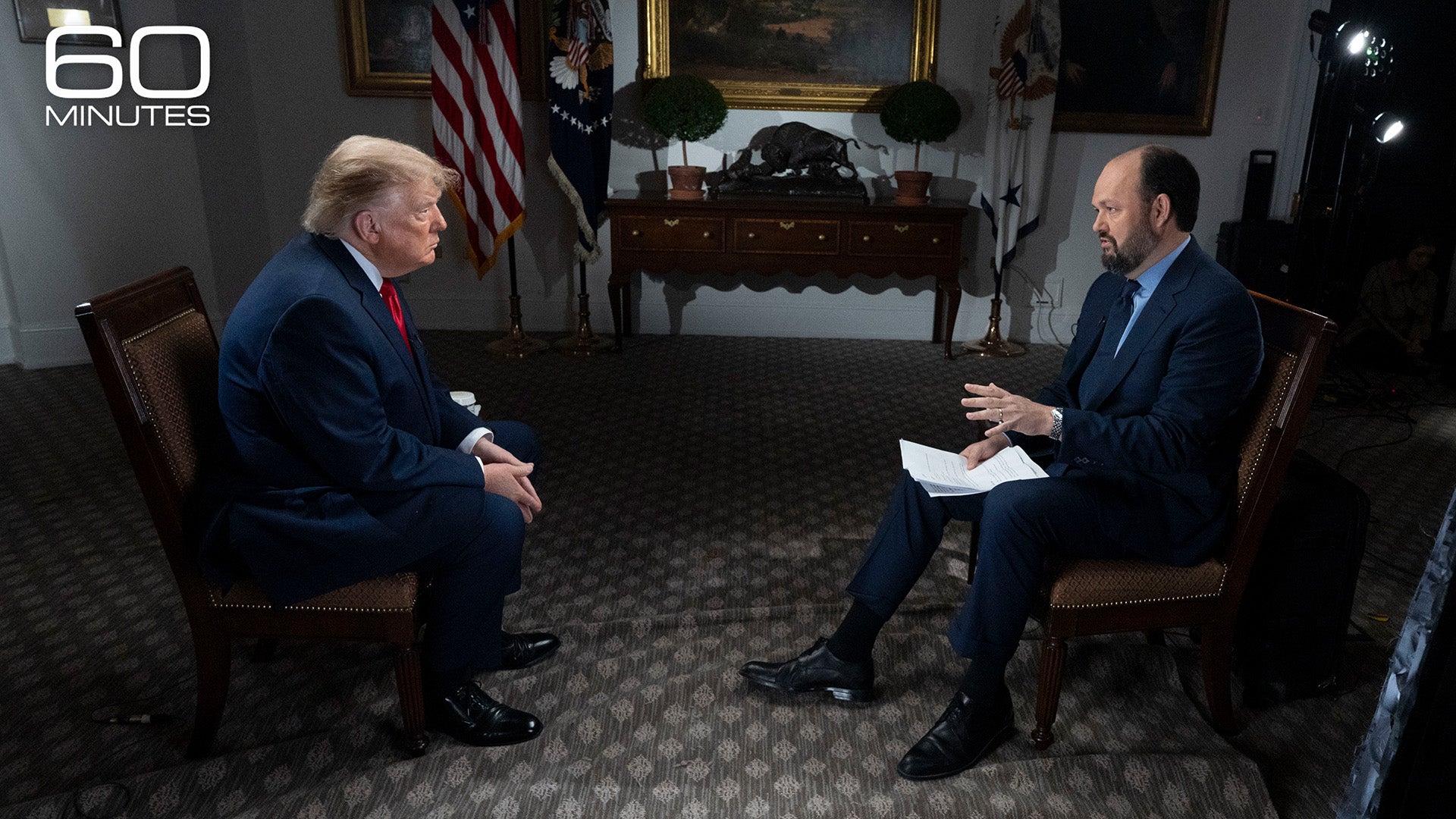
President Donald Trump acknowledged missteps in his administration’s immigration crackdown and messaging on the economy following Republicans’ sweeping midterm election losses, but defended his war in Iran and refused to forgive his political enemies during a wide-ranging “60 Minutes” interview Sunday.The interview, taped Friday at the White House and broadcast Sunday, marked Trump’s first sit-down since Democrats captured control of both the House and Senate. New CBS News correspondent Ross Douthat repeatedly pushed back on the president’s answers, questioning his role in the Republican defeats and his growing personal wealth before turning to an unusually personal discussion about death and heaven. Trump initially distanced himself from the election results, arguing that his personal popularity had not translated to Republican candidates, including several he endorsed. When Douthat pointed to losing candidates in Texas and South Carolina, Trump defended his endorsements and suggested other Republicans would have fared no better. The president acknowledged that the war in Iran, rising gasoline prices and dissatisfaction with Israel had contributed to the losses. Asked about Vice President JD Vance’s assessment that the war had hurt Republicans, Trump said he did not disagree but defended his decision to attack Iran, insisting he would do it again to prevent the country from obtaining a nuclear weapon. Trump also said he was not looking to escalate the conflict following the midterms and suggested a diplomatic agreement remained possible. On the economy, Douthat questioned why voters remained unhappy despite what Trump characterized as strong economic indicators. The president blamed poor messaging, including his own, while arguing that his administration had struggled to get its accomplishments across to voters. Douthat also confronted Trump over his immigration crackdown, asking whether his administration had gone too far in deporting undocumented immigrants who held jobs and contributed to their communities. “I think it might be too tough, yeah,” Trump acknowledged. The president suggested he could work with incoming Democratic congressional majorities on immigration legislation, including some form of legal status for certain undocumented workers. He also acknowledged that members of his administration favored deporting nearly everyone in the country illegally. Asked whether he planned to fire anyone following the Republican defeats, Trump said he expected to make a few changes to his administration. CBS noted that White House chief of staff Susie Wiles was replaced by deputy chief of staff Stephen Miller about an hour after the interview. The questioning grew more pointed when Douthat cited a Forbes report estimating that Trump’s net worth had increased by $3 billion over the previous year. When the president suggested that others had also benefited from the stock market, Douthat interjected that his own wealth had not increased by billions. Trump said he devoted little attention to his finances and that his son handled much of his business affairs. Douthat followed up by asking why he had not divested from his businesses to avoid conflicts of interest, noting that previous presidents had not owned cryptocurrency companies while in office. But the interview took its most personal turn toward the end, when Douthat asked Trump about death, heaven and whether he could forgive political enemies including James Comey and Nancy Pelosi. Trump initially responded to a question about his mortality by expressing hope that he would be remembered fondly. Douthat pushed back, clarifying that he was asking what Trump believed would happen to him personally after death, rather than how he would be remembered. The president said he hoped to go to heaven. Douthat then invoked Erika Kirk’s remarks about Christian forgiveness at her late husband Charlie Kirk’s memorial service, asking whether Trump could forgive his enemies if doing so were necessary to enter heaven. Trump resisted, saying his feelings toward his opponents were genuine. Even when Douthat challenged him to consider the blessings of his own life and the possibility of divine judgment, the president maintained that he could not forgive certain adversaries. “I probably cannot do that, no, because I do hate some of my enemies and I always will.”
Trump Grilled on Midterm Losses, His Own Mortality in ‘60 Minutes’ Interview
Full Article
Original Source
Read the full article at Thewrap →KhanList aggregates and links to publicly available news content. We do not host full articles from third-party sources. Always verify important information with original sources.