
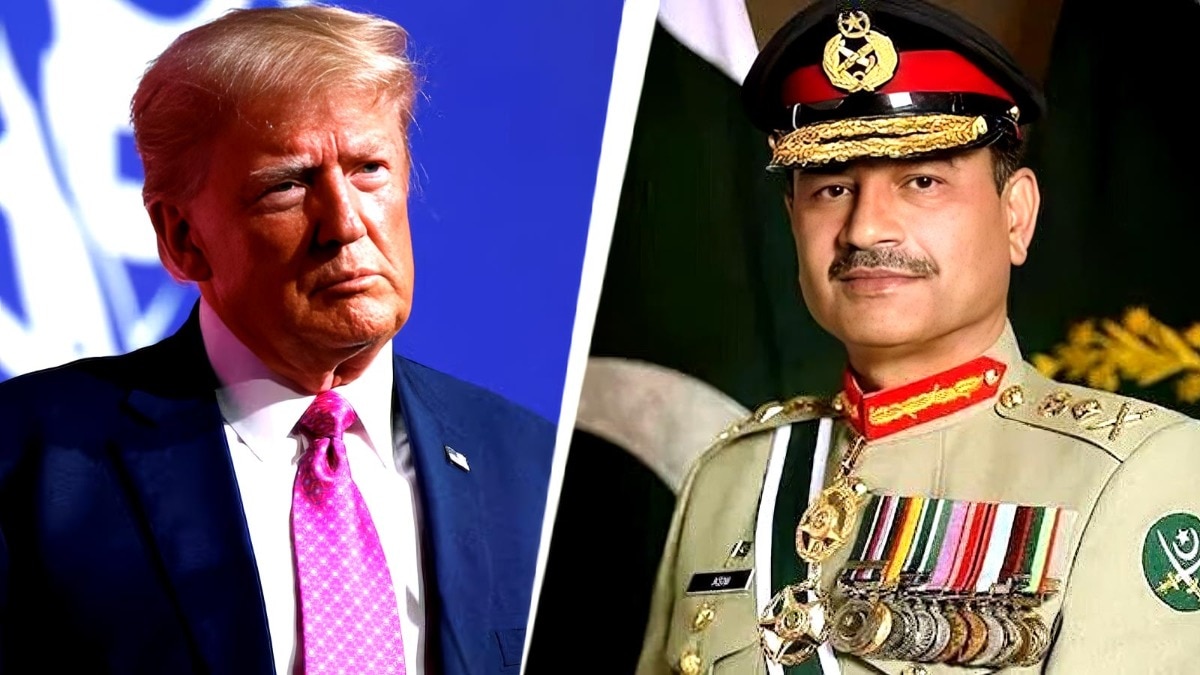
Ahead of the Pakistan Army chief's Iran visit, Donald Trump spoke to Asim Munir and reportedly urged Islamabad to press Tehran to return to talks amid the stalemate.Pakistan's Army chief Asim Munir spoke with Donald Trump last week. (File Photo)Tensions between the US and Iran are entering another critical phase, with US President Donald Trump warning countries against giving Tehran an economic "lifeline" and Iran threatening to disrupt oil exports from the Gulf. Pakistan has maintained relations with both sides and previously helped mediate talks that led to an interim peace agreement in June, although that understanding later collapsed.Against this backdrop, Pakistan's Army chief Asim Munir spoke with Trump last week, days before travelling to Tehran for talks with Iranian officials, three Pakistani sources told news agency Reuters. One of the sources said Trump's main request was for Pakistan to use its influence to encourage Tehran to return to negotiations with the US.The call, which has not previously been reported, was initiated by Trump, according to the report. The details of the conversation remain unclear.Munir arrived in Tehran on Monday accompanied by Pakistan's Interior Minister Mohsin Naqvi. Pakistan's military described the visit as "part of Pakistan's efforts to promote regional peace and stability". TRUMP SEEKS PAKISTAN'S INFLUENCETrump's reported conversation with Munir came after the US President warned countries against providing what he described as "any type of lifeline to Iran". Washington has been seeking to isolate Tehran economically and diplomatically, while Iran has responded with threats to shut down oil exports from the Gulf if the conflict escalates."There is a trust deficit on both sides," a third Pakistani source told Reuters about Washington and Tehran, adding that Munir's aim was to mitigate the lack of mutual trust. Munir is expected to meet people close to Iran's Supreme Leader Ayatollah Mojtaba Khamenei during his visit, according to the report. Iran has sought to play down any claim that Munir's visit is solely focused on the confrontation with Washington. Iranian Foreign Ministry spokesperson Esmaeil Baghaei said ahead of the visit that Munir was travelling to Tehran within the framework of bilateral relations between Iran and Pakistan."The bilateral relationship between Iran and Pakistan is truly going through one of its best stages, and both sides are determined to expand these relations day by day, in all areas," Baghaei said during a press briefing.Pakistan's military also said the visit was aimed at promoting regional peace and stability. Baghaei rejected speculation that Munir's trip was linked to the scheduled visit of Omani Foreign Minister Badr bin Hamad Al Busaidi, who is due in Tehran on Tuesday."The Oman visit has nothing to do with this; it is just almost simultaneous in terms of time," Baghaei said. Al Busaidi's separate visit is expected to include discussions on bilateral relations, regional security and issues surrounding the Strait of Hormuz and maritime traffic.PAKISTAN'S MEDIATION EFFORTS UNDER SCRUTINYPakistan has previously attempted to mediate between Washington and Tehran, including efforts that helped produce an interim peace agreement in June. That understanding, however, quickly faltered as renewed fighting between Iran and the US threatened to widen the conflict.Islamabad's latest diplomatic push therefore comes with both sides facing a significant trust deficit. Pakistan’s ability to communicate with Tehran while maintaining close relations with Washington and Gulf allies gives it a potentially important role in efforts to prevent further escalation.Munir’s visit is also expected to cover issues beyond the immediate US-Iran confrontation.A Pakistani government source said discussions were likely to include recent attacks by Iran-aligned Houthi fighters against Saudi Arabia, as well as the new defence agreement between Pakistan, Saudi Arabia and Turkey.MUNIR'S BALANCING ACT IN TEHRANThe reported Trump-Munir conversation adds another dimension to the Pakistani army chief's visit, placing Islamabad's balancing act under renewed scrutiny. His Tehran visit comes less than three weeks after Pakistan, Saudi Arabia and Turkey signed the Mecca Joint Defence Agreement on August 7.Pakistan has strong ties with Saudi Arabia and Turkey, while its geographic proximity and longstanding relationship with Iran make continued engagement with Tehran difficult to avoid. At the same time, Islamabad has played a mediating role between Washington and Tehran and appears keen to prevent the confrontation from developing into a wider regional war.For Munir, the challenge will be to encourage dialogue without appearing to take sides in the increasingly bitter US-Iran confrontation.- EndsWith inputs from ReutersPublished By: Satyam SinghPublished On: Aug 24, 2026 20:54 IST
Trump asks Pakistan's Asim Munir to nudge Iran back to negotiation table: Report
Full Article
Original Source
Read the full article at Indiatoday →KhanList aggregates and links to publicly available news content. We do not host full articles from third-party sources. Always verify important information with original sources.