
While the American public remains fixated on daily domestic political disputes and legislative gridlock, a profound and highly strategic alignment is quietly shifting the balance of power in our hemisphere. The United States and Guatemala have forged an aggressive, deeply transactional security and economic partnership.By connecting the dots across recent diplomatic maneuvers, a clear reality emerges of what can be called the “Don Marco” Strategy — a doctrine born from President Donald Trump’s signature “America First” transactional leverage and Secretary of State Marco Rubio’s strategic regional execution. This sophisticated blueprint is quietly transforming Guatemala into a front-line forward operating hub designed to enforce U.S. border policy and serve as a vital logistical anchor in the broader Caribbean theater. Far from a standard diplomatic dance, this strategy represents a net positive for American national security, built to withstand the predictable criticisms of partisan detractors.The primary operational driver of this new relationship is the resurrection of strict third-country removal frameworks. Following Marco Rubio’s high-profile Central American tour, during which he held a joint press availability with Guatemalan President Bernardo Arévalo, the two nations drastically escalated their migration enforcement coordination. In exchange for hundreds of millions of dollars in U.S. infrastructure support and targeted military aid, Guatemala agreed to absorb a 40% increase in U.S. deportation flights and accept third-country nationals. This agreement builds directly on the conceptual framework of regional Asylum Cooperative Agreements (ACAs). Under this architecture, rather than allowing thousands of undocumented migrants to march toward the U.S. southern border, the U.S. has systematically begun transferring non-Guatemalan migrants — including thousands of Hondurans, Salvadorans, and Nicaraguans — directly to Guatemala. The Guatemalan government then processes and promptly returns these individuals to their home countries at U.S. expense. By absorbing and repelling these migration flows hundreds of miles away from the Rio Grande, the Don Marco Strategy effectively transforms Guatemala into America’s outer border wall.However, the strategy extends far beyond migration management. In May 2026, a public debate erupted following a statement by the Guatemalan government indicating it desired U.S. assistance with “active military operations” to combat U.S.-designated terrorist organizations and cartels within its borders. While both governments quickly clarified that the deal does not authorize foreign troop deployment on national territory, the discussion underscored an unprecedented deepening of military integration. Concurrently, the U.S. has partnered with Guatemala via the U.S. Army Corps of Engineers to quietly finance and execute major port, highway, and rail infrastructure expansions.Detractors on both the left and right will inevitably raise concerns regarding this massive regional pivot. Critics from isolationist factions will likely argue that this initiative represents an unforced case of “mission creep,” potentially over-extending American resources or laying the logistical groundwork for a future military intervention in Cuba or neighboring Caribbean nations. Human rights organizations will also undoubtedly claim that outsourcing deportation processing to Central America compromises the humanitarian integrity of the U.S. asylum system.These objections, while predictable, fail to grasp the cold, realistic utility of the Don Marco Strategy. First, this is not imperial overreach or theater preparation for an unprovoked invasion; it is a defensive strategy of territorial denial. By fortifying the Central American mainland with robust transportation infrastructure and well-equipped local security forces, the United States creates a resilient buffer zone. This ensures that adversarial foreign powers like China or Russia cannot easily project military influence or disrupt maritime chokepoints in the Western Caribbean if geopolitical tensions in Havana ever reach a boiling point. Securing our flanks today prevents hot conflicts tomorrow.Second, the critique regarding migration management ignores the immediate crisis at our own southern border. The U.S. immigration system has been pushed to a breaking point. By utilizing the classic Trumpian “carrot-and-stick” transactional diplomacy — conditioning economic aid waivers on strict border enforcement — the administration is compelling regional neighbors to assume responsibility for the transit routes crossing their own sovereign territories. Guatemala is not being coerced; it is being fairly compensated with infrastructure dollars to enforce law and order within its borders, creating a mutually beneficial framework.HEGSETH FIRING SYLVIA ISN’T OFFICE POLITICS — HE SMOKED OUT A WARTIME MOLESimultaneously, the alliance serves as a strict economic blockade against Beijing. In tandem with the security deals, U.S. Trade Representative Jamieson Greer signed the landmark U.S.-Guatemala Agreement on Reciprocal Trade, which embeds severe economic restrictions against “non-market countries.” This historic update has already reshaped domestic infrastructure in the region through the rollout of comprehensive U.S.-backed biofuel and commercial energy implementation frameworks. Because Guatemala remains one of the final global partners maintaining formal diplomatic ties with Taiwan, Washington’s quiet economic maneuvers ensure it stays that way.Through a mix of tough trade leverage, infrastructure funding, and targeted military cooperation, the Don Marco Strategy has successfully brought a key regional partner into total alignment — quietly securing the geopolitical balance of power in our backyard and proving that strategic clarity, not passive diplomacy, is what keeps America safe.Eric Wargotz is a practicing physician, geopolitical analyst, and multisector policy writer whose commentary has appeared in the Washington Examiner, the Baltimore Sun, and the Jerusalem Post. He is a judge and the 178th president of MedChi, the Maryland State Medical Society, following a career that includes serving as a Senate nominee and elected county commission president. A clinical professor emeritus at George Washington University, his views are his own and do not represent his affiliates.
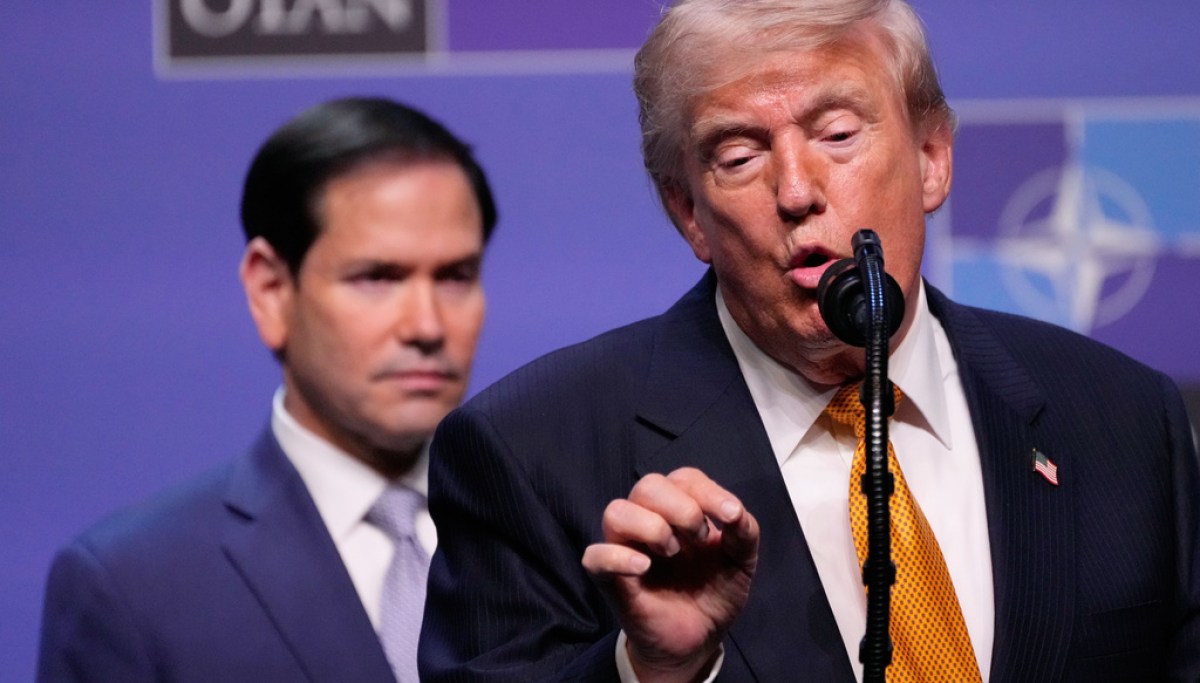
Trump and Rubio didn’t build the wall at the Rio Grande — they built it in Guatemala
Full Article
Original Source
Read the full article at Washingtonexaminer →KhanList aggregates and links to publicly available news content. We do not host full articles from third-party sources. Always verify important information with original sources.