
Trend Overview Welcome back to the Trump Administration Foreign Policy Tracker. Once a month, we ask FDD’s experts and scholars to assess the administration’s foreign policy. They provide trendlines of very positive, positive, neutral, negative, or very negative for the areas they watch. The Trump administration launched Operation Economic Outcast against Iran, aiming to cut off all financial lifelines to the Islamic Republic. The initiative promises to be the most comprehensive sanctions campaign ever devised against the country, though military exchanges between the United States and Iran continue to shake the region. Conversely, President Donald Trump removed Syria from the U.S. list of state sponsors of terrorism, terminating the last major U.S. sanctions regime on Damascus. It remains unclear whether the decision will lead the Syrian government to deal with persistent risks, such as the continued presence in its armed forces of many fighters who remain associated with terrorist organizations. Meanwhile, Jerusalem attacked Syria’s Abu al-Duhur airbase in an attempt to prevent Turkish encroachment near Israel’s borders. U.S. Ambassador to Turkey Tom Barrack criticized the operation, raising questions about his persistent advocacy for Turkish interests over the interests of America and its closest allies. Check back next month to see how the administration deals with these and other challenges. Trending Neutral Previous Trend:Negative August tested whether the administration would impose costs on China even when doing so could complicate the upcoming Trump-Xi summit in Washington. Treasury Secretary Scott Bessent launched a broader sanctions campaign against Iran and warned that banks turning Iranian oil into revenue would face U.S. penalties. China is Iran’s top oil buyer and trade partner, making Beijing the central test of that threat. Bessent urged China to cooperate but also emphasized “quiet diplomacy,” leaving open whether Washington will target major Chinese financial institutions. Beijing rejected the pressure. China’s foreign ministry denounced the measures as unilateral and vowed to defend China’s economic interests. Treasury did sanction Iran-linked brokers, companies, and shadow-fleet vessels across several jurisdictions, including China and Hong Kong. But the administration has so far avoided the bigger step: sanctioning the Chinese banks, refiners, and commercial nodes that allow Tehran to keep converting oil into cash. That restraint may preserve summit atmospherics, but it also risks teaching Beijing that Trump wants leverage without escalation. The administration took useful structural steps elsewhere. It moved toward a modest tariff on Chinese excess capacity, imposed national-security tariffs on imported drones and drone components, and ordered 30 universities to audit foreign research partnerships, many tied to Chinese institutions. Those moves support reindustrialization, defense supply-chain security, and research protection. The pattern is mixed: Trump is tightening pressure on China-related vulnerabilities, but the hardest test remains whether he will enforce Iran sanctions against Beijing when doing so threatens the broader bargain with Chinese leader Xi Jinping. Trending Neutral Previous Trend:Positive On August 12, President Trump signed a National Security Presidential Memorandum (NSPM) authorizing private companies to conduct government-supervised surveillance and disruptive operations against foreign cyber-enabled criminal groups — a first for U.S. policy. But the NSPM changes less than headlines suggest; it still requires written federal approval before any disruptive operation and leaves unresolved the obvious liability and discovery risks that could prove barriers to participation. Meanwhile, a wave of suspected Iranian intrusions against water utilities in at least a dozen states has exposed the consequences of Washington’s failure to help the sector mitigate cyber risks. Following the attacks, the White House will reportedly announce a voluntary assistance program for under-resourced water utilities, but it is unclear how utilities without cybersecurity personnel will utilize free tools that require technical expertise. The Justice Department and Federal Bureau of Investigation announced the seizure of hacking platforms used by a Chinese state-sponsored group to conceal intrusions into NASA, the Federal Reserve, the Senate, and other sensitive networks — the latest in a string of actions taken against Chinese hacking infrastructure. Following the June executive order establishing post-quantum encryption transition deadlines, the General Services Administration and the Treasury Department launched post-quantum cryptography initiatives, standing up an interagency working group and a financial-sector quantum-readiness task force, respectively. Finally, the Senate confirmed Adam Cassady as ambassador-at-large for cyberspace and digital policy, filling a post vacant since January 2025, but he inherits a fragmented bureau thinned by last year’s reorganization. Trending Negative Previous Trend:Neutral Citing Seoul’s decision not to help with the war against Iran and his “very good” relationship with Kim Jong Un, President Trump directed the Pentagon to scale back combined military exercises with South Korea on August 16. These regular exercises are critical to enhancing U.S.-South Korean interoperability and readiness, as well as deterring aggression from the North. Kim responded to Trump’s unilateral concession by launching ballistic missiles a few days later. Despite an evident failure to integrate the necessary drone warfare lessons from the war in Ukraine, the U.S. Army plans to stand down an experimental drone battalion in Europe tasked with incorporating lessons from Ukraine. The move is one of several concerning steps by the U.S. Army in Europe, including reported plans to transfer a Multi-Domain Task Force out of Europe and previous reductions to America’s military force posture on the continent. On August 20, Israel received the second of six (and potentially eight) American-made KC-46 refueling aircraft that Jerusalem is procuring, strengthening its ability to strike targets in Iran. The Trump administration also approved a possible KC-46 sale to Qatar on the same day. With no serious operational need for the KC-46, Qatar should not receive any before the air refueling requirements of the United States, Israel, and Japan are fully met. U.S. forces continued conducting a naval blockade of Iranian ports throughout August. The blockade is increasing economic pressure on the regime in Tehran and creating positive leverage for Washington, but is straining a U.S. Navy that is insufficiently resourced. Trending Negative Previous Trend:Positive During an unannounced visit to Moscow on August 25, CIA Director John Ratcliffe reportedly warned the Russians against attacking NATO, urged them to accept a peace settlement, and pressed them to curtail support for Iran. The trip came after the U.S. intelligence community reportedly raised concerns about the potential for Russian escalation as Moscow’s war in Ukraine founders. While a Russian military incursion into NATO territory remains unlikely, officials fear the risk of aggression may grow in the coming months and years. Even as Ratcliffe was delivering that message, Under Secretary of Defense for Policy Elbridge Colby was traveling to Brussels to discuss a Pentagon review that allies fear will lead to further reductions in U.S. force posture in Europe. The Pentagon reportedly intends to deliver options to Secretary Pete Hegseth by early November. Separately, at Hegseth’s direction, U.S. European Command announced plans to disband its Ukraine-aid headquarters and cede leadership of a NATO command that will assume its role. Meanwhile, Moscow has rebuffed Ukrainian proposals for moratoriums on long-range aerial bombardment and strikes on civilian targets in the Black Sea. Instead, Moscow is threatening to double down on strike campaigns that, while unlikely to turn the tide in the war, are making life even more painful for Ukrainians amid a shortage of ballistic missile defense capacity. Elon Musk’s SpaceX could help by allowing Ukrainian drones to use the Starlink satellite internet system to hunt for missile launchers inside Russian territory. But Kyiv reportedly has made no progress since it put that request to Musk and the White House. Trending Neutral Previous Trend:Neutral Washington might have prematurely rushed to praise the newly formed Mecca Joint Defense Agreement, welcoming it as a stabilizing tool for regional self-reliance. The foundational premise of the trilateral alliance that brought together Saudi Arabia, Turkey, and Pakistan has already encountered significant diplomatic ambiguity regarding its primary target. Despite widespread expectations that the treaty was designed to safeguard Saudi Arabia against aggression from Iran and its Yemeni proxy, the Houthi movement, member states have notably shifted their public rhetoric. Turkish Foreign Minister Hakan Fidan rebutted these assumptions, arguing that the pact was “not aimed at Iran.” He went on to rant against Israel. Compounding the confusion, founding members have actively engaged Tehran rather than isolating it. Pakistan’s interior minister, Mohsin Naqvi, traveled to Tehran to brief Iranian leadership on the new defense structure. Such outreach created the impression of inclusion, leading Iranian media official Mehdi Rahimi to announce that Tehran had received an invitation to join the alliance. Iran later denied it was invited. Instead of positioning the pact as an anti-Iran bloc, signatories hinted that the collective defense weight of the alliance is structurally engineered to balance regional hegemony, effectively pointing its deterrent capabilities against Israel — which has never attacked Saudi Arabia — instead of Iran, which has been consistently targeting the kingdom. Trending Negative Previous Trend:Positive While Washington sought to reassure Indo-Pacific allies and partners of its commitment to the region, the abrupt redeployment of U.S. forces and military assets will hamper efforts to strengthen deterrence against China across the First Island Chain. During his visit to Manila on a tour of the region, Under Secretary of Defense for Policy Elbridge Colby labeled the Philippines as a “model ally,” a designation he has previously offered to South Korea. The move, which follows sustained U.S. investment in upgrading its military facilities across the country, signals Washington’s strong ties to Manila amid growing Chinese maritime aggression in the South China Sea. The U.S. Department of the Treasury also intervened in foreign currency markets to prop up the Japanese yen after it hit near-record lows, offering Tokyo critical space to stabilize its monetary policy and retain its commitments to investing in America. However, the United States announced plans to rotate the USS George Washington to the Middle East to replace the USS Abraham Lincoln, a move that will likely deprive the region of an aircraft carrier for several months. The shift reportedly raised concerns within Japan and the Philippines, particularly as China conducted live-fire drills from its newest amphibious assault ship earlier in August. The United States also abruptly scaled down and postponed two exercises with South Korean forces — namely, the annual combined Ulchi Freedom Shield exercise intended to simulate a North Korean invasion and Ssangyong, a combined amphibious landing exercise between South Korean and U.S. Marine units. Trending Neutral Previous Trend:Positive Four human rights groups filed a lawsuit on August 11 contending that President Trump’s policies toward the International Criminal Court (ICC) represent a “blatantly illegal attack on international justice.” The White House responded by calling the ICC an illegitimate instrument of lawfare that poses a national security threat to the United States. On August 18, Secretary of State Marco Rubio announced new sanctions against the international body’s president and one of its trial lawyers. The Senate confirmed Preston Wells III on August 7 to serve as representative of the United States to the International Atomic Energy Agency (IAEA). Three days later, Damascus reached an agreement with the IAEA — under pressure from Washington — to remove nuclear material from a clandestine Assad-era site. The first inspection of the site took place on August 18. Meanwhile, the Board of Peace continues to face challenges disarming Hamas, making Israel reluctant to withdraw from certain parts of Gaza. The Trump administration dispatched special envoy Jared Kushner to the region on August 16 to address the issue. The Trump administration is also sending more than $200 million for the International Stabilization Force (ISF) — the international coalition of forces that will oversee the transition of power if and when Hamas disarms — to pay for vehicles, equipment, infrastructure, and operating costs. The administration has tasked U.S. Maj. Gen. Jasper Jeffers with directing the transfer of weapons from Hamas to the National Committee for the Administration of Gaza (NCAG) should Hamas disarm. Trending Positive Previous Trend:Positive Secretary of the Treasury Scott Bessent announced Operation Economic Outcast on August 24, saying, “Our objective is to sever every economic lifeline that sustains this tyrannical regime until Tehran stands alone.” Treasury issued determinations against five sectors of Iran’s economy — digital assets, technology, gold, aviation, and shipping — and sanctioned nearly 60 entities, individuals, and vessels enabling the regime. Secretary Bessent said the Trump administration was conveying steps and timelines to countries to terminate activity supporting the Islamic Republic. The campaign’s effectiveness will hinge on robust enforcement. Treasury subsequently revoked Banque Misr UAE’s correspondent banking access, saying it processed around $1.8 billion for likely elements of Iran’s shadow banking network between January 2024 and June 2026. Adm. Brad Cooper, commander of U.S. Central Command (CENTCOM), said in a video posted on X on August 27 that American forces successfully demined the international shipping lanes in the Strait of Hormuz. “Over the past several months, U.S. forces have assisted nearly 1,500 commercial vessels in transiting the strait,” Cooper said. Hours later, Bessent wrote on X, “The USA has guided 130 million barrels [of oil] out over the past 14 days.” The naval blockade that CENTCOM reinstated in mid-July prevented Iran from exporting any oil. Meanwhile, the Department of Justice unsealed charges against 17 members of the Mabna Institute, an Iran-based hacking company, for stealing research and intellectual property from hundreds of universities, companies, and government agencies on behalf of the Islamic Revolutionary Guard Corps (IRGC) and other regime entities. Trending Neutral Previous Trend:Neutral President Donald Trump has increased his focus on Gaza. In late July, the U.S.-led Board of Peace (BOP) proposed its 15-point roadmap for implementing peace in the coastal enclave. Hamas accepted a phased disarmament framework, but Israeli Prime Minister Benjamin Netanyahu rejected it, insisting on full disarmament before withdrawal. The BOP is reportedly considering a new framework that would more closely align with Israel’s sequencing demands. With Israeli elections just two months away, domestic political considerations could be driving Netanyahu’s rejection. In a sign of tension between the White House and Israel, Trump has said that Israel should not be conducting strikes in Gaza that could undermine the disarmament proposal. BOP head Nickolay Mladenov echoed these sentiments in early and late August. Meanwhile, Trump has sent Congress an agreement to export civilian nuclear technology to Saudi Arabia for approval. While the deal would advance Middle East security by requiring Saudi normalization with Israel, it could set off a regional nuclear arms race. In a positive move, the Trump administration sanctioned two pro-Palestinian groups, Palestine Action and Masar Badil, on August 26. Palestine Action, the Treasury Department stated, has “supported numerous acts of terrorism since July 2020, including acts that have physically injured UK law enforcement personnel.” Masar Badil “is a transnational organization that is also a front for the Samidoun Palestinian Prisoner Solidarity Network,” which the United States and Canada sanctioned in October 2024 for being a Popular Front for the Liberation of Palestine front group. Trending Negative Previous Trend:Negative On August 16, President Trump directed Defense Secretary Pete Hegseth in a social media post to “substantially reduce” joint military exercises with South Korea. The order referred to the Ulchi Freedom Shield (UFS) exercise — one of two major annual combined exercises between the two allies. Originally scheduled to run from August 17 through 27, the 11-day exercise ended on August 21, six days early. The allies also halved the 14 planned field training exercises. The 2026 UFS involved roughly 18,000 South Korean troops. South Korean Foreign Minister Cho Hyun said officials in both governments were not “notified in advance” of Trump’s directive. Trump cited South Korea’s refusal to support U.S. efforts against Iran as one reason for the decision and also asserted that North Korea has been “unthreatening and respectful.” The move was widely seen as an attempt to ease tensions with Pyongyang and reopen dialogue between the United States and North Korea. Despite Trump’s assessment, Pyongyang’s actions suggest otherwise. North Korea launched 10 short-range ballistic missiles on August 20. Scaling back UFS also undercuts the alliance’s readiness to confront the North Korean threat. The reduction further complicates Seoul’s effort to use UFS to advance its full operational capability assessment — a key test of whether South Korea is prepared to lead the allies’ combined forces in wartime. Consequently, Washington should sustain alliance military readiness by continuing these critical joint military exercises. Maintaining a credible military posture deters North Korean aggression and strengthens America’s negotiating leverage in any future summit diplomacy. Trending Neutral Previous Trend:Neutral The administration’s Lebanon policy remained fundamentally unchanged during August: a sound, but unimplemented, framework. Washington opened a seventh round of direct Israeli-Lebanese talks in Rome on August 4 focused on pilot zones, verified Hezbollah disarmament, and Israeli redeployment. President Joseph Aoun later informed Lebanon’s cabinet of progress on border and detainee issues but that the ceasefire and additional pilot zones remained unresolved. U.S. Gen. Joseph Clearfield then met Aoun and Prime Minister Nawaf Salam in Beirut to pursue implementation. On the ground, however, the June 26 Framework’s central bargain remains unimplemented. The Lebanese Armed Forces (LAF) announced on August 9 that it had removed unexploded Israeli ordnance from Zawtar al-Gharbiyeh and other southern towns — but did not mention Hezbollah weapons or infrastructure. The LAF later claimed Israeli demolitions in Zawtar al-Sharqiyah were hindering deployment. Meanwhile, the IDF said Hezbollah attacked troops on the Ali al-Taher ridge with an explosive drone on August 15, seriously wounding three; Hezbollah did not claim responsibility. Washington’s strongest August move was financial. On August 20, Treasury sanctioned 10 people in a network it said moved up to hundreds of millions of dollars in cash for Hezbollah across Lebanon, Turkey, the United Arab Emirates, and Iran and redesignated Hezbollah for serving Tehran under IRGC-Quds Force command. Meanwhile, Beirut diluted one of its own March sovereignty measures by granting Iranian Ambassador-designate Mohammad Reza Sheibani a six-month civilian residency after the foreign ministry declared him persona non grata and ordered him to leave Lebanon. Trending Negative Previous Trend:Negative The Trump administration submitted a classified bilateral nuclear cooperation agreement with Saudi Arabia to Congress for a legally required 90-day review. President Trump previously conditioned approval of the agreement on Riyadh joining the Abraham Accords and normalizing relations with Israel — something the kingdom has yet to do. The deal opens a door to uranium enrichment at a U.S. plant on Saudi soil, potentially reversing decades of American nonproliferation policy and leadership against the global spread of nuclear fuel-making capabilities. Uranium enrichment and plutonium reprocessing can produce fuel for nuclear reactors — or material for nuclear weapons. The administration already signaled in November 2025 that it would drop its opposition to South Korean enrichment and reprocessing. There was mixed progress on the decades-old Syrian nuclear proliferation case after an International Atomic Energy Agency (IAEA) visit to sites linked to the Assad regime’s past nuclear activities, including the site of the nuclear reactor Israel destroyed in 2007. The government of President Ahmed al-Sharaa also disclosed to the agency a stockpile of natural uranium metal and graphite intended to operate the now-defunct reactor. Damascus will place the material under IAEA safeguards for a civil nuclear program. However, given Syria’s precarious security situation and the presence of former and current extremists in the leadership and military, leaving the material in Syria could still pose a proliferation risk, and any further civil nuclear activity is likely to raise Israeli concerns. Trending Neutral Previous Trend:Neutral The latest biannual Analytical Support and Sanctions Monitoring Team report to the UN Security Council’s 1267 (ISIS and al-Qaeda) Committee assessed the Trump administration’s killing of Abu Bakr ibn Muhammad ibn Ali al-Mainuki as a significant setback for ISIS. The report confirmed, based on an official U.S. briefing, that Mainuki had been the ISIS second-in-command as well as head of the ISIS General Directorate of Provinces. Thus, ISIS’s communication, command, and control across its global network may be significantly weakened. The report also underlines the ISIS shift to Africa, where most of its operations have been taking place over recent years — a shift now reflected in ISIS’s appointment of an African leader and deputy for the first time in its history. Likewise, the report’s findings indirectly reflect the impact of U.S. counterterrorism pressure on ISIS in Somalia, where “caliph” Abdul Qadir Mumin is located. As a result, the Trump administration has significantly degraded ISIS in its most prominent hub. Meanwhile, on August 24, the United States unconditionally rescinded Syria’s state sponsor of terrorism status, following the expiration of the mandatory 45-day congressional notification period that President Trump set in motion in July. Hayat Tahrir al-Sham, also known as al-Nusra Front, the group Syrian President Ahmed al-Sharaa led before he assumed office, is no longer designated as a terrorist organization as well. Washington has not secured anything from Sharaa in return. Trending Neutral Previous Trend:Negative President Donald Trump completed the process of removing Syria from the U.S. list of state sponsors of terrorism on August 24, eliminating the last major U.S. sanctions regime on Damascus. The decision followed the conclusion of the 45-day congressional review period triggered by Trump’s July notification. The State Department also revoked Hayat Tahrir al-Sham’s designation as a Specially Designated Global Terrorist. While these measures are positive steps toward facilitating Syria’s economic recovery, removing the designations without conditions carries risks, particularly because the Syrian Armed Forces still include fighters affiliated with terrorist organizations designated by the United States and the United Nations. Washington also intensified its efforts to bring Syria and Israel back to the negotiating table, a necessary step toward finalizing a security agreement between the two countries. On August 23, the United States mediated talks between Syrian Foreign Minister Asaad al-Shaibani and Mossad Director Roman Goffman. The meeting had followed Israel’s strike on the Abu al-Duhur airbase in northern Syria over concerns about growing Turkish entrenchment. In response to the tensions, U.S. envoy Tom Barrack said Washington was working on a Syria-Israel-Turkey deconfliction mechanism. Another significant development came on August 25, when the Kurdish-led Syrian Democratic Forces (SDF), a U.S. counterterrorism partner in the fight against the Islamic State, announced its dissolution, effectively concluding the integration process established under the U.S.-mediated January 29 agreement between Damascus and the SDF. The agreement helped prevent an escalation of clashes between the two sides and facilitated peaceful integration. Trending Negative Previous Trend:Negative Washington’s response to an August 18 Israeli strike on Syria’s Abu al-Duhur airbase fell almost entirely to Ambassador to Turkey Tom Barrack, who doubles as envoy for Syria and who used the episode to argue Ankara’s case rather than America’s. Barrack disclosed Israel’s responsibility before Jerusalem acknowledged it, calling the operation an “unnecessary escalation.” Barrack has long advocated for Turkey’s interests. He told PBS that Israel had raised its concerns over the five preceding days and had “communicated to the Syrians,” conceding this was no miscommunication. Washington’s contrary assessment rests largely on assurances Damascus relayed to Mossad. He then volunteered that Israel’s election cycle had clouded its thinking and dismissed Turkish-Israeli hostility as political theater. In an August 21 interview, Barrack went on to speculate that the strike was meant for “baiting the Turks” and asserted that Israel “still occupies” the Golan in violation of UN resolutions, abandoning the policy Trump set by proclamation in 2019. He retracted his claim two days later, after criticism from Senator Rick Scott (R-FL) and others. Barrack’s analysis conveniently omits relevant facts regarding Turkey’s provocative behavior: no mention of Ankara’s rehabilitation of a base dormant since 2013, its patronage of Hamas, or its record of entering Syria uninvited three times since 2016. Pleased with Barrack’s position, Ankara pocketed his deference and escalated anyway, seeking an Interpol notice for Israeli Prime Minister Benjamin Netanyahu and deepening defense ties with Riyadh and Islamabad. An ambassador’s job is to advance American interests, not to litigate Ankara’s grievances. Barrack has inverted it. The analyses above do not necessarily represent the institutional views of FDD.
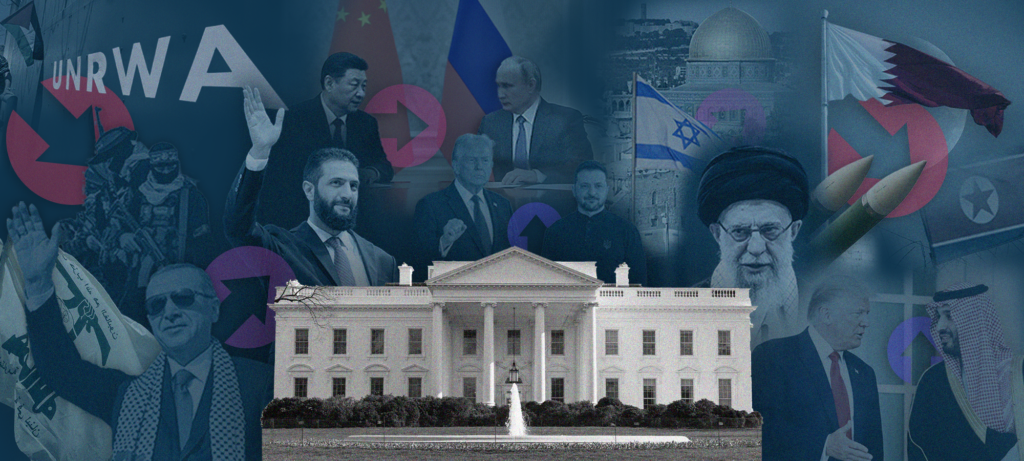
Trump Administration Foreign Policy Tracker: September
Full Article
Original Source
Read the full article at Fdd →KhanList aggregates and links to publicly available news content. We do not host full articles from third-party sources. Always verify important information with original sources.