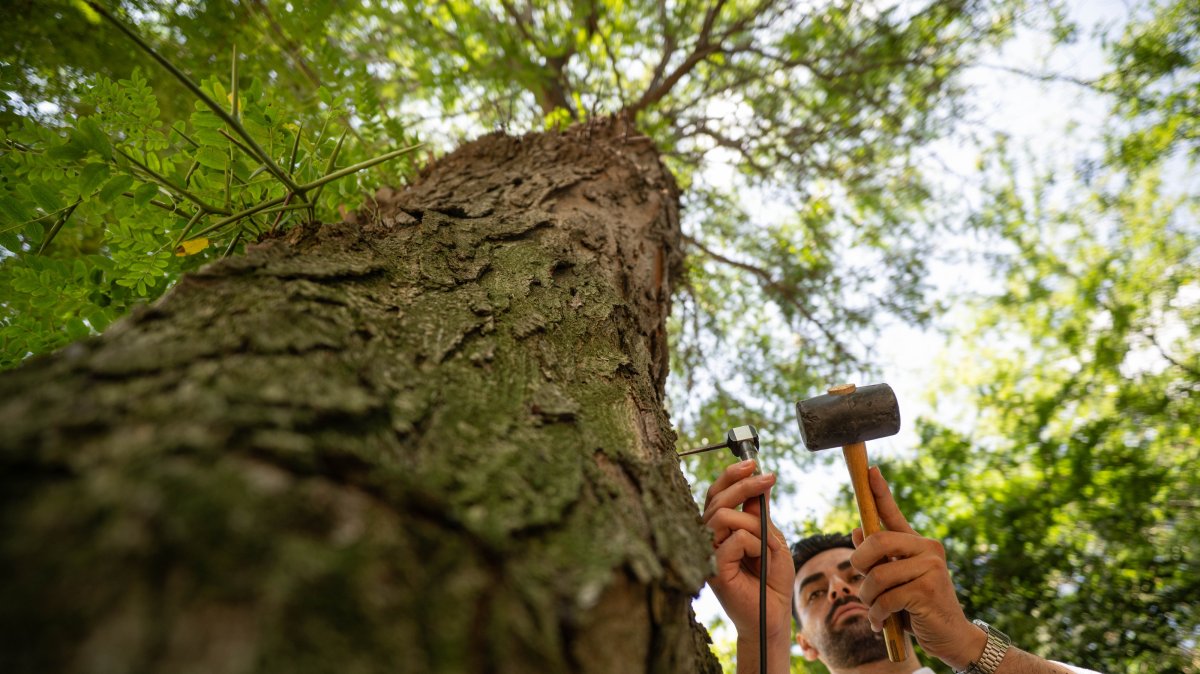
Centuries-old trees across Istanbul's historic groves, Bosporus hillsides and protected natural sites are being preserved through detailed survey plans and advanced scientific techniques that help identify structural risks before they become hazardous. Experts say the studies, which document each tree's physical characteristics and health, play a key role in protecting the city's centuries-old natural heritage while ensuring public safety. The first stage of the process involves preparing survey reports that serve as identity records for each tree. Information including species, age, height, trunk diameter, crown width, health condition and geographic coordinates is recorded, alongside details such as disease, fungal growth, monumental value and conservation requirements. The data is then transferred into digital mapping systems, creating a comprehensive inventory that guides future maintenance and preservation work. The reports are also used to determine whether trees require pruning, mechanical support, removal of dead branches or, in rare cases, removal for safety reasons. Any intervention involving trees in protected natural sites must be supported by expert reports and approved by the relevant authorities. Following the survey stage, specialists examine the internal structure of trees using acoustic tomography, a technique often described as an "MRI scan for trees." Sensors placed around the trunk measure the movement of sound waves to produce 3D images that reveal internal decay, cavities or structural weaknesses that cannot be detected from the outside. Serhun Sağlam of Istanbul University-Cerrahpaşa's Faculty of Forestry said the survey reports function like identity cards for trees, ensuring that every specimen is individually documented and monitored. "Each tree is assigned a number. Its species, diameter, height, crown width and age are recorded, while its health, aesthetic value and status as a monumental tree are also documented," Sağlam said. He noted that every tree's coordinates are digitally mapped, providing detailed information on vegetation across protected areas and helping authorities detect unauthorized interventions. Sağlam stressed that acoustic tomography results are evaluated alongside factors such as tree species, root structure, size and local environmental conditions to determine whether a tree poses a risk of falling. Rather than removing aging trees, he said the priority is to preserve them through scientific management. "Our primary approach is pruning. By reducing the crown size and the tree's weight, we lower the risk of collapse. If necessary, we also use mechanical support systems," he said. "Most of these are old and monumental trees. Our goal is not to cut them down but to keep them alive while ensuring public safety." The technology has been used in Istanbul for nearly two decades, particularly in heavily visited parks and groves, helping authorities identify trees at risk and reduce the likelihood of accidents.
Tree IDs help preserve Istanbul's centuries-old heritage
Full Article
Original Source
Read the full article at Dailysabah →KhanList aggregates and links to publicly available news content. We do not host full articles from third-party sources. Always verify important information with original sources.