
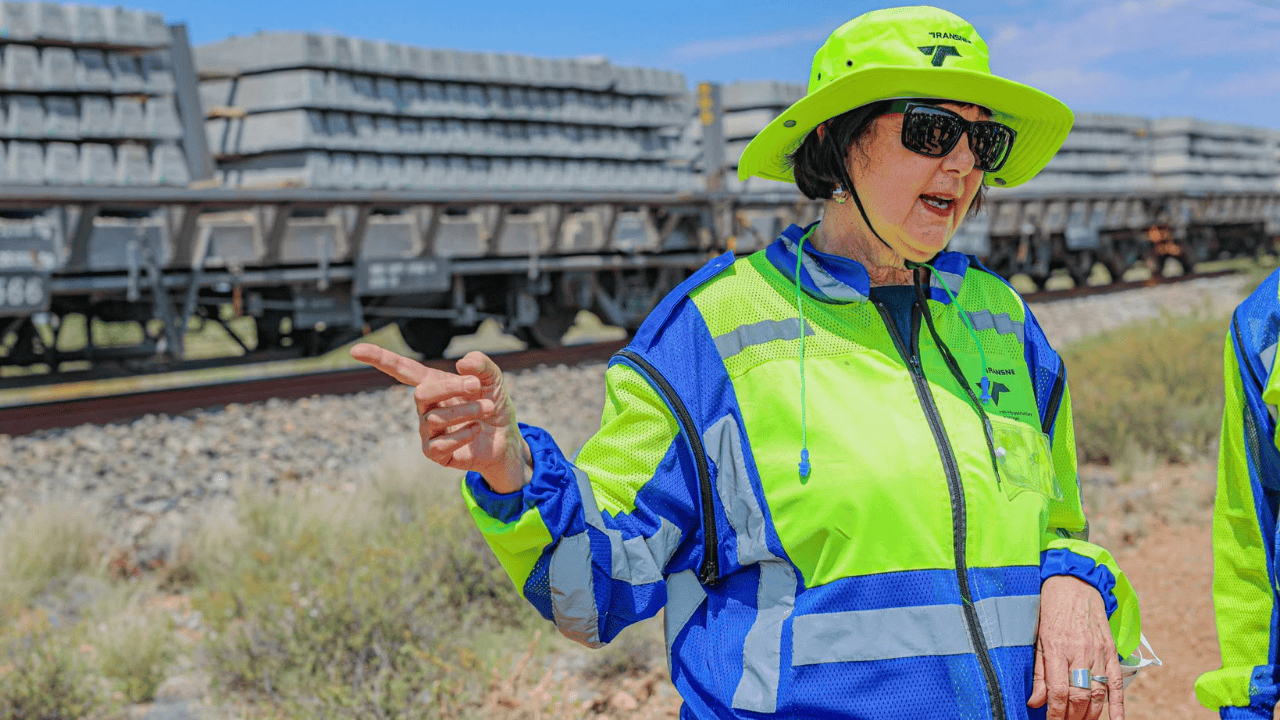
The line runs through the Northern and Western Cape, with its annual maintenance shutdown taking place from 6 to 16 October 2026. The Minister of Transport, Barbara Creecy visited the Iron Ore Line Annual Maintenance Shutdown on 12 October 2026 in the Northern Cape as a part of October Transport Month, where she noted that the Department aims to replace a total of 45 000 railway sleepers. The Iron Ore Line is a critical component of South Africa’s flight logistics network, connecting mining production areas with export markets through the Port of Saldanha. The Iron Ore Line The line runs through the Northern and Western Cape, with its annual maintenance shutdown taking place from 6 to 16 October 2026. According to the Department of Transport the programme aims to improve the safety reliability, capacity and efficiency of South Africa’s rail network. Creecy said that sustained investment in the corridor is essential to improving the reliability of bulk commodity movements and supporting economic growth through an efficient and competitive rail system. Replacing railway sleepers “What this machine is doing down there is that it’s replacing the railway sleepers,” Creecy explained. Railway sleepers are heavy horizontal supports that are placed under railroad tracks to keep the rails aligned and transfer the load of trains into the ground. “So the railway track has got these railway sleepers that run under the track, and the sleepers create stability for the railway track, and they keep it straight,” Creecy explained. New railway sleepers “And so then what this machine is doing, is it is picking up the old sleepers and in one hour, it can replace 360 sleepers.” She noted that the old sleepers were a different colour compared to the new sleepers. “Those one’s over there that are of a brownish shade are the old ones,” Creecy pointed out. Replacing 45 000 sleepers “We are replacing 45 000 sleepers and before the shut actually happened, we did an investigation of the whole line,” she added. Further explaining that the reason why the sleepers are being replaced, is because if the sleepers are in a bad condition, it starts to impact the straightness of the land. Creecy explained that the trains that run on this land are at a minimum, three and a half kilometres long. Derail risks “The iron ore trains and the manganese, they are the longest trains in the world,” she expressed. “So when you have a train that is 4km long, moving along a line that has got to be very stable,” Creecy asserted. Further explaining that if the line is not stable, there is a risk that the train can derail, and that’s why this work is terribly important. Ability to run more trains “We want to make sure that we are able to run trains as fast as possible on the line,” Creecy said. “Because the faster you run your trains, the more trains a day you can run, the more iron ore and manganese you can export through our ports.” Reflecting on the last four years, Creecy observed that during 2022 to 2025, trains were run very slowly with 35 slots on the line due to the state of deteriorated infrastructure. Increased train slots “What we are hoping once we have concluded this, we will be able to run between 48 and 56 slots a week.” “So you would understand we can significantly increase the tonnage while being able to support more slots a week,” she noted. The work builds on maintenance interventions that were undertaken on the corridor in May and is being implemented by the Transnet Rail Infrastructure Manager (TRIM).
Transport Month: Barbara Creecy says the iron ore line annual maintenance shutdown aims to replace 45 000 railway sleepers
Full Article
Original Source
Read the full article at Citizen →KhanList aggregates and links to publicly available news content. We do not host full articles from third-party sources. Always verify important information with original sources.