
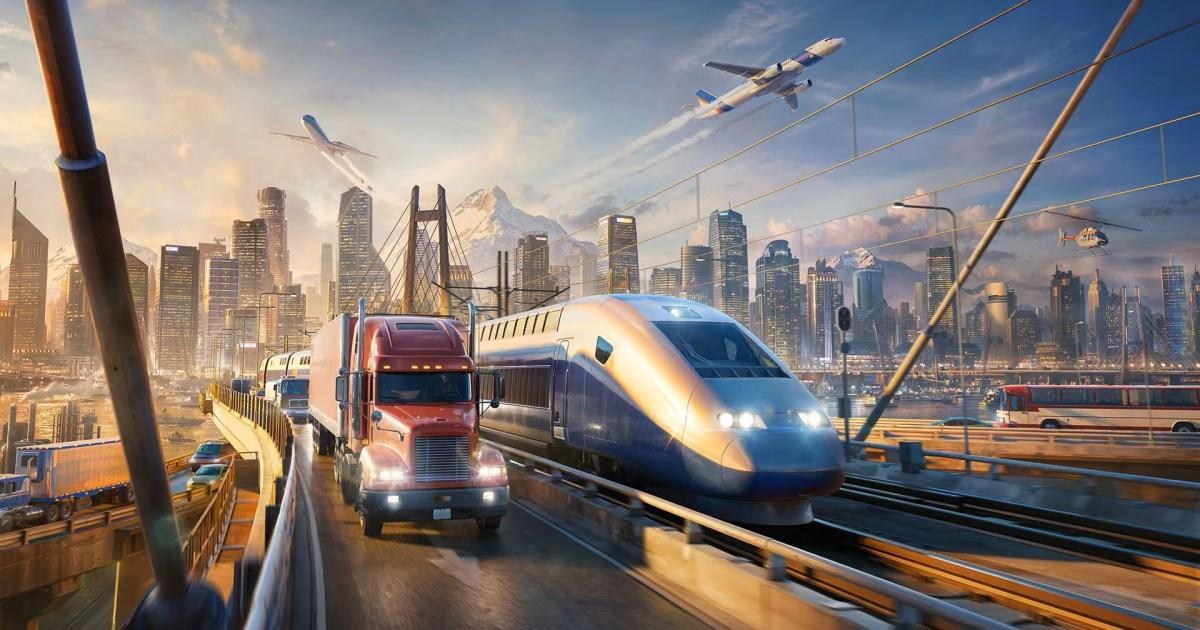
Transport Fever 3 – things start off low-tech (Paradox Interactive) The spirt of Transport Tycoon lives on in this new business sim, that gives you the chance to control your own company from the 1900s to the present day. We’ve never been quite sure why anyone would want to rule an entire country, never mind the whole world. The sheer responsibility of it all, and the fact that everything you do will immediately trigger someone’s hatred and opprobrium, makes it seem less like a dream job and more like a penalty for some dreadful previous karmic transgression. At least when it’s simulated, as part of a video game, messing everything up can be fixed with a hatred-free reload. Tycoon games can superficially resemble running a country, but for most that’s an artifice disguising a narrower and more manageable focus. That’s certainly the case for Transport Fever 3, where your responsibility, massive and far reaching though it is, remains limited to helping citizens get from one place to another, and businesses get the goods they need to thrive. It would be a mistake to regard that task as simple, although it does get progressively easier. Starting with a virgin, procedurally generated landscape, whose villages and hamlets are connected by little more than pre-tarmac dirt roads, a good place to start is ensuring people can get around their towns, moving easily – if not exactly comfortably – between residential and commercial districts. The earliest year simulated by Transport Fever 3 is 1900, when horse and cart was the most common baseline transport and trams and railways were a luxury option. Your job is to spot needs, then create delivery lines to assuage them. As more modes of transport become technologically feasible, those routes can be built around buses, lorries, trams, planes, helicopters, and shipping, depending on the job at hand and the terrain you need to negotiate. You’ll always be starting small though, so elaborate construction projects that need more specialist management only crop up once you’ve got a reasonable amount of experience. Every town has an overview window that uses a traffic light system, where green means things are going fine and red is an invitation to sort out something that’s broken. That could be as straightforward as adding more buses to a route to reduce waiting times but may require deeper fixes such as increasing the supply of an industrial resource or building new processing plants to reduce the time between deliveries. Expert, exclusive gaming analysis Sign up to the GameCentral newsletter for a unique take on the week in gaming, alongside the latest reviews and more. Delivered to your inbox every Saturday morning. Ironing out those bottlenecks isn’t quite as easy as just building a road though. You need to think about what each road will be used for, and by how many people. City streets come in multiple widths, some with tram lines built in, while outside urban areas you can opt for simple country lanes or motorways, which themselves come in a wide range of capacities. The speed of travel along each is matched by the amount you pay to construct and maintain them. The same goes for railways, which are far more expensive to build, but cheaper to run on high traffic routes, making them significant purchases in the early days, although less so as your economy gets going. Each individual train and carriage also needs maintenance, a process that’s thankfully taken care of by building engineering depots that work their magic automatically, when vehicles trundle through their catchment areas, so you don’t have to handle the process for each individual piece of rolling stock. New to Transport Fever 3 is the need to manage noise and pollution. In industrial areas that’s no issue, but when your transport lines go past residential districts you’ll need to bear them in mind, or risk plummeting satisfaction levels. Noise barriers help, as do tunnels, although they’re easily the costliest option. It’s often simpler just to re-route freight, building bypasses to steer HGVs and railways away from people’s homes. Other changes in this instalment include a more refined interface for managing your supply and passenger lines; four biomes with their own climates and weather patterns; way more industries whose logistics you’ll need to organise; and systems for managing everything from traffic light timing to how long lorries are willing to wait when they’re picking up or offloading. This get more complicated as you get to the present day (Paradox Interactive) You’ll also need to take into account goods’ perishability. Sure, you can set up a route bringing fish, via trawlers, to a harbour, where they’re transferred to a warehouse, then picked up at a station for delivery to nearby towns, but if that process takes too long the fish spoil. Add freezers to the warehouse and the trains or lorries that pick up from it and you’ll be able to send your catch further afield without it rotting along the way. As you level up, cities’ growing populations precipitate new business opportunities, each of which comes with resource, warehousing, and transport requirements to take care of. That also encourages you to optimise existing routes, adding bus lanes, tram lines and one way streets, upgrading steam trains to diesel, and taking advantage of new lovingly recreated transportation technologies as the eras roll by. There is a comprehensive tutorial, but its broadbrush approach assumes a baseline knowledge of, amongst other things, how buildings connect to one another, which menu to access for an overview of your network, and vitally important niceties like having to hold R3 rather than click it – in order to fast forward time. The latter is something you’ll need to do quite a bit, especially in the early part of the game when your transportation mainstays are all horse driven. The game could also really do with undo and redo buttons, whose absence is frankly baffling. Thanks to a well thought out interface design and numerous YouTube videos, you will work it all out, but a familiarity with Transport Fever 2 or equivalents in the tycoon genre helps. It’s a slog starting from scratch but then Transport Fever 3 is made for a very particular kind of player, for whom fastidious detail, long hours of tinkering, and mechanical authenticity are fun and invigorating rather than wearyingly tedious. By this point you’ll know which camp you fit into and can probably revise the final score accordingly. Transport Fever 3 PS5 review summary In Short: A transport focused tycoon game with numerous enhancements to its UI and simulation, that’s user friendly by genre standards but potentially headache inducing for more casual players. Pros: Allows you complete control over every facet of a transportation network; streamlined menus that prove workable with a controller and a fine level of detail that lets you zoom in and visit individual citizens. Cons: The breezy tutorials assume you already know what you’re doing, and if you don’t you could be in trouble. Undo and redo buttons are conspicuous by their absence. Score: 7/10 Formats: PlayStation 5 (reviewed), Xbox Series X/S, and PCPrice: £49.99Publisher: Paradox InteractiveDeveloper: Urban GamesRelease Date: 29th September 2026Age Rating: 3 Business sims aren’t for everyone but this is a good one (Paradox Interactive) Email gamecentral@metro.co.uk, leave a comment below, follow us on Twitter. To submit Inbox letters and Reader’s Features more easily, without the need to send an email, just use our Submit Stuff page here. For more stories like this, check our Gaming page. Arrow MORE: Xbox is in freefall but all one exec can talk about is GTA 6 pre-orders Arrow MORE: Ganondorf almost got his own Zelda spin-off by Ubisoft claims report Arrow MORE: Games Inbox: What is the best Rare game? GameCentral Sign up for exclusive analysis, latest releases, and bonus community content.
Transport Fever 3 PS5 review – keeping the world moving
Full Article
Original Source
Read the full article at Metro →KhanList aggregates and links to publicly available news content. We do not host full articles from third-party sources. Always verify important information with original sources.