
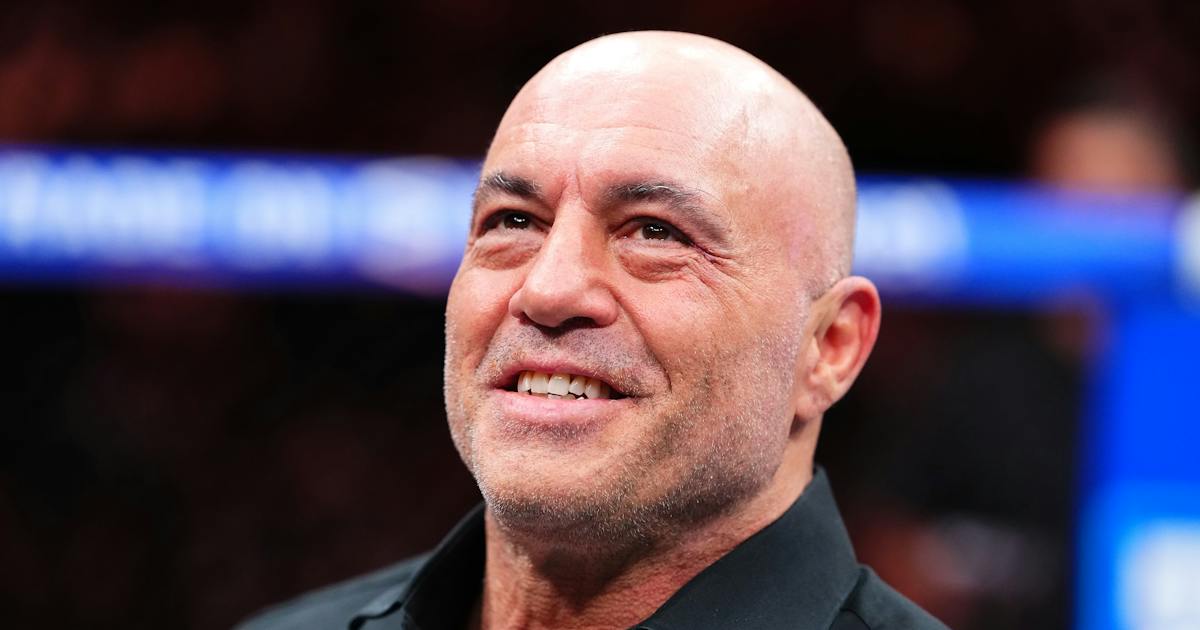
The following is a lightly edited transcript of the November 17 episode of The Daily Blast podcast. Listen to it here.Greg Sargent: This is The Daily Blast from The New Republic, produced and presented by the DSR Network. I’m your host, Greg Sargent.Donald Trump has been privately raging over the GOP’s epic midterm wipeout, and new reporting suggests this anger is why he’s responding to those losses by doubling down on the MAGA agenda. Tellingly, this comes even as the manosphere podcast bros are now turning hard on Trump, excoriating him for betraying what his movement was supposedly all about. These things add up to one larger development: the utter refusal of Trump and MAGA to admit that the failures of their worldview drove this massive rout. That’s going to ensure that things get very ugly over the next two years.We’re talking about all of it with New Republic staff writer Monica Potts, who’s been writing well about the failures of MAGA economics. Monica, good to have you on.Monica Potts: Thanks for having me.Sargent: So on election night, Trump vowed to work with Democrats, but The Atlantic reports the following: “As he watched television in the days that followed and called his outside advisers, he grew steadily angrier.”The Atlantic adds that Trump was furious that all his campaigning produced nothing, reporting this: “He needed someone to blame.” Monica, this fury apparently helped drive Trump to promote Stephen Miller to chief of staff. What do you make of that?Potts: I mean, I think that it really tracks with what we know about Trump over the past 10 years, which is that, you know, like many autocrats, he takes a lot of his failures and successes very personally, that he sees this as a rejection of him personally. And so he’s going to double down on what he feels like he wants to do, regardless of how people feel about it. I think part of what drives him is his sense of self-aggrandizement. And that’s really what he’s cared about first and foremost since the beginning of his political career.Sargent: Right. He can’t possibly have failed, so the answer can only be to double down. I thought Paul Krugman made a pretty good prediction during the election. He said that if Trump suffers a wipeout, then Trump will blame the American voter for it and take it out on us—meaning take it out on Americans, on the American people. And that’s really what’s happening, isn’t it?Potts: Yeah, and he even hinted that it would be this way in some of his rallies leading up to the election. He had said things like, if Republicans win, you’ll all get $5,000—that he was going to kind of punish or reward the American people based on how he felt about the results. Which, again, I think just goes to the way he sees this office as something personal to him, and not as an office that he should be stewarding for the public.Sargent: Right. He has no conception of the presidency as a public thing, as something that the American people own, not him. So it’s interesting that this digging in by Trump, this cocooning of himself inside MAGA, comes as the podcast bro types are now slamming him very hard over the midterms. Let’s listen to Joe Rogan first.Joe Rogan (voiceover): But, like, they didn’t just lose the podcast bros, they lost most of the country. Like, when you get into a war that no one wants to be in, when you got militarized police in the streets wearing masks, and nobody, American citizens—they did some good things. They closed the border, and then crime dropped significantly. Those are good things. Also, not a good thing to snatch people out of their fucking taco stand that have been in the country for 20 years and are nice, good people that are loved by the community, but they just don’t have the right paperwork. There’s a lot of fucking scumbags that happen to be born right here in this patch of dirt that we keep letting out of jail. And you got these hardworking people that never did nothing fucking wrong, other than make their way over here when it was OK to do that.Sargent: Monica, I think it’s critical that Rogan talks at length there about how wrong mass deportations are. There’s a segment of MAGA that wants to say the results were only about the war, because that insulates some of the big MAGA priorities, like mass ethnic purges, from any blame for the electoral catastrophe. But it’s very clear, listening to Rogan and others like him, that the mass deportations played a big role in breaking up the MAGA coalition, don’t you think?Potts: Absolutely. Leading up to 2024, what Trump said over and over again was that they were going to deport the worst of the worst. If you only listened to Trump, you might believe that he was only going to be deporting people who were committing terrible crimes when they were in this country. And it just really shows how he was able to kind of say what he wanted to say. And a lot of voters didn’t really want to investigate it, or they wanted to believe him, or they thought he was the best option, or they didn’t really have a lot of knowledge about the policy things that he was talking about.For example, we know that there’s a lot of evidence that, you know, people who are immigrants to the United States actually commit fewer crimes than people who are native-born. But you have to really sort of think about those things and read about them, and most people just don’t have time for that. They wanted a sense of security on the border without thinking too much about what that meant. And so now that they’re faced with the truth of it, they see what it really means, and it’s not what they wanted. These kinds of deportations would never have been popular, even before he was elected.Sargent: That’s why it’s quite amazing that Stephen Miller has been elevated to chief of staff. The Atlantic reports this, relying on a White House official: “Miller has signaled to administration officials that the deportation program will expand and that he wants to make the most of Trump’s last two years in power. There is no sign of moderation.”Miller has done perhaps more than anyone on earth, except for Trump himself, to break up the Trump coalition. And Trump is allowing Miller to make it impossible to reassemble that coalition, even though Trump himself has admitted that the deportations hurt Republicans in the elections. What do you make of that part?Potts: I mean, I think it goes to what a lot of people have been saying about Trump from the beginning, which is that he doesn’t want to be, and doesn’t believe he needs to be, responsive to the American public. He believes he has power. He believes he has the power to use it however he wants. He believes, and a lot of people in his circle, like Stephen Miller, believe that they can use this time to do whatever they want, and they will be able to do things that are irreversible to the American experiment.And I think that, when it comes to how people—real people—will be hurt by this administration, they’re right. There are some things we won’t be able to undo, regardless of who takes power in 2029, and even regardless of what Democrats do next year. There are some things that the ship will have sailed on when it comes to individual people. And I think they know that, and they want to double down on it. That’s how they view power.Sargent: More of the podcast bros are slamming Trump over the midterms. Here’s a big one, Andrew Schulz, talking about Trump.Andrew Schulz (voiceover): It is the greatest fall from grace, miscalculation, the greatest failure, the greatest. There’s one thing where you go, I’m going to do these things, and then you don’t do them. That’s what most politicians do, right? More rare is literally doing the exact opposite of the things that you campaign on, to a level that nobody’s seen before, and a level of corruption and cronyism that has never been seen in Western democracy.Sargent: And Tim Dillon, another podcast bro, said the following: “People can’t buy things, they can’t own things. People in America exist in two states: broke or not broke.”Monica, we all knew this would happen with Trumponomics, or whatever you want to call it. You’ve written on this well. These young men, though, had a very specific set of expectations of what a Trumpified or MAGA-fied economy would look like. What was that exactly, do you think?Potts: I think that part of it is that there really is a huge swath of voters who still thought of Trump as a businessman. And they saw what happened after Covid under President Joe Biden, and they thought, well, maybe we just need a businessman to set things right.And macroeconomics is a really complicated field. People don’t know a lot about it. I took an entire course on it, and I can’t tell you anything about it anymore. How presidents and administrations can and should steward the economy is not something people have a lot of esoteric knowledge about, and that’s fine.But I think that what was clear in the 2024 election, more so than the 2016 election, was that at least since the Great Recession, voters have wanted change. And they don’t necessarily know exactly what that means. They can’t always exactly name the policies that they would like to see. But they just increasingly feel like the economy is unfair. That if you work hard, you can’t get ahead. That if you get raises in your job, most of those raises go to things that you’ve already bought or already need, like increased interest on your credit cards, or higher gas prices, or debt that you’ve gone into because you couldn’t afford things before, or a new car because the car that you bought before has fallen apart and now cars are too expensive to buy. So I think that increasingly, when it comes to the economy, people will vote for whoever is not in office, because the people in office haven’t fundamentally changed things in ways that people can see or feel yet.Sargent: If you look at this mass of young men who moved to Trump in 2024, you’re talking about young people who were very disoriented by the post-Covid trauma. They didn’t really understand why it was so hard to get really good-paying jobs, and why it was so hard to buy a home. Trump sold them a story about this, right? He basically said there’s a certain type of illicit immigrant in the country who’s at fault for all that, who’s standing in the way of you getting good jobs and cheap homes, right?And so the tariffs would restore, I guess, male breadwinner work. The deportations would also create more openings for such work and bring down house prices. And all of this would make it easier for a young man to lead a more traditional male life. And the woke people don’t want you to do that; that’s why they’re allied with the Democrats. You see what I’m saying? Like, that story. Can you talk about that story that Trump was telling these people?Potts: Yeah, he absolutely did. He spoke a language that was about this past that is partly imagined, really, but one in which, if you’re a young man, you can go get a job, and it uses your labor to earn wages that are good and solid. And he would do things like wear hard hats and climb into big rig trucks. And that kind of just felt to people like he was echoing a time when people were paid more fairly. And there are a lot of reasons that, well, men specifically were paid more fairly, and there are a lot of changes to the American workplace since then, and we could probably spend podcast after podcast talking about those.But I think that that did appeal to some young men. You know, the idea that they could get a good blue-collar job without having to go to college, without having to spend a lot of time and a lot of their own money on training, and earn a good living and provide for their families in a way that felt right to them. And I do think that that is something that has changed about the American economy. And he was able to point to a villain, which was policies that didn’t appreciate men anymore, whether they were DEI or other things, and also policies that allowed immigrants to take their jobs. And we all know that that’s not true, but that was appealing and convincing to enough young men who went over to his side that he won in 2024.Sargent: And it seems like part of the story he was telling, if you bring in the wokeness a little bit more, was essentially, they don’t want women to see you as attractive. They don’t want you to be able to lead a traditional male life and appeal to women on the basis of breadwinning and a willingness to be a good father. That was sort of the story.And it’s interesting to me that all these podcast bros, who speak to big audiences of young men in this sort of situation, right—that’s kind of why the podcast bros appeal to them in many ways, right? It’s interesting to me that they’re now turning against Trump on the immigration piece of this, not just the war and not just the economy, because that wasn’t at all guaranteed. It’s really kind of heartening that they’re sort of turning around and saying all these immigrants, they weren’t our problem. They weren’t the thing standing in the way of a flourishing life for us. They’re good people. You notice how Rogan keeps saying that? They’re good people. I find that somewhat heartening. I don’t know if that’s crazy, but what do you think?Potts: No, it is reassuring that Americans actually didn’t want what is happening with ICE, which is really, really bad. So in places like Kansas and Texas, there were people who saw people that they knew in their neighborhoods—construction workers, owners of small businesses, you know, house cleaners, people who had lived in their neighborhood and worked for years. They saw them taken away. They saw American citizens trying to fight for their neighbors, and ICE shooting them in Minnesota. And so I think those things really impacted people this time around. And that had nothing to do with the economy. They recognized in those targets of ICE hardworking Americans who just wanted to make a living for their family.Sargent: Yes. I think a lot of these podcast bro types came to see ICE as a perversion of masculinity, in a way, right? Donald Trump and Stephen Miller were trying to jam down everybody’s throats this vision of manhood, which is essentially thuggery, right? And violence. And guys like Joe Rogan just weren’t really willing to go along with that.And it’s really interesting, because ICE actually appealed, in its recruitment videos, to this kind of demented and perverted vision of masculinity. They showed people in uniforms kind of rappelling down from helicopters and running these military operations in cities. And then they would be pulling some woman and some child out of the house, and you were supposed to be applauding them for doing that. And people like Joe Rogan look at that and say, are you kidding me? That’s not masculine. That’s not tough. That’s not what we’re for. And I think Trump and Stephen Miller, and that kind of really deeply ideological component of MAGA, really miscalculated in thinking that would be something that appealed to a lot of people, don’t you?Potts: Yeah, I think that’s right. I think it really forced people to ask the question, what is masculine about covering your face and beating people up and not owning up to what you’re doing? And you had, in Alex Pretti, who was killed by ICE in a confrontation on the street, another, opposing view of masculinity, which is that he was trying to help people, and he saw somebody being pushed around and he tried to help her. And I think that really also spoke to people, actions like that on the street.Sargent: Well, so where does this go from here? Clearly, Stephen Miller is going to ramp up the paramilitary forces and the violence, and that’s going to get even less and less popular. But he seems to want to stoke all this vicious social tension and violence among different groups, right? He has a vision of America as antagonistic groups at war with each other. And that’s the Trump vision as well.But you’ve now got these Democrats taking over, people like James Talarico, who are offering a very different model of masculinity, one kind of rooted in public service and helping the neighbor and helping the downtrodden. And we’re going to have a really interesting struggle now over what the economy looks like, and the set of values that undergird it.Potts: What Democrats as a party, and anyone who wants to rise up to be the presumptive 2028 nominee, have to do is be able to sort of articulate what it means to be American that isn’t Trumpism, that isn’t Republicanism lite. And I think that’s probably the most important thing coming into the next two years.Sargent: What would that look like, ideally? So Democrats are talking to these podcast audiences—I’m imagining that, right? Democrats are saying the vision we have of the economy and of the society that we want is better for you than the one that Trump presented. How would they go about saying that? You write about this stuff. You write about what sort of values should undergird the economy we want. How should they talk to these people who are now kind of alienated and adrift?Potts: Yeah. I mean, I think that they have to talk about wages and costs in a way that shows that they understand what that means if you’re a person who lives paycheck to paycheck and is trying to balance your budget. And so, you know, it’s been 20 years since the minimum wage has risen. Not everyone makes the minimum wage, but everyone who gets a paycheck and has a boss and makes an hourly wage, especially, knows what it’s like to add up the hours that you’re working, figure out what your paycheck’s going to be, and figure out what that covers. And so I think they have to understand that those things aren’t just nice things to do if you’re a Democrat. They’re emergencies.And so they also need to understand that people know that CEOs and corporations are getting richer and richer and richer, that shareholders are getting richer and richer and richer, the harder they work and the more the economy grows. They want to know that they’re getting a fair share of the goods that they’re producing in the country, of the value that they’re producing in the country.And so I’m not a Democratic messaging expert, but I think that when I talk to voters, and when I do reporting around the country, that’s what I see more than anything. It’s not affordability necessarily. It’s the unfairness of it all. That you used to be able to, work really hard, get raises, get promotions, get a good job, and you could write your checks at the end of the month and not have a zero balance, and not feel like you had to make compromises on a nice date with your partner, or not feel like you had to not get your kid a flute if they wanted to play flute in the band next year, because you couldn’t afford it. And so I think that those things really, really, really matter to people.And that involves doing a lot of things that people might not see right away on the economy, but also finding things to do that they can see, like raising the minimum wage, that shows that they speak the same language, that shows that they know how people are feeling, and that they’re on their side. And supporting unions—there’s just reams of evidence that union membership will make working lives better for most working people. So I think that those things really matter.Sargent: Yeah. And I think if Democrats can articulate this stuff in a values-based way, it could really appeal to a lot of these audiences that these podcast bros are now speaking to and Trump has utterly lost. Monica Potts, really awesome to talk to you. Thanks so much for coming on.Potts: Thank you so much for having me.
Transcript: Trump Rages Privately at Losses as Manosphere Turns on Him
Full Article
Original Source
Read the full article at Newrepublic →KhanList aggregates and links to publicly available news content. We do not host full articles from third-party sources. Always verify important information with original sources.