
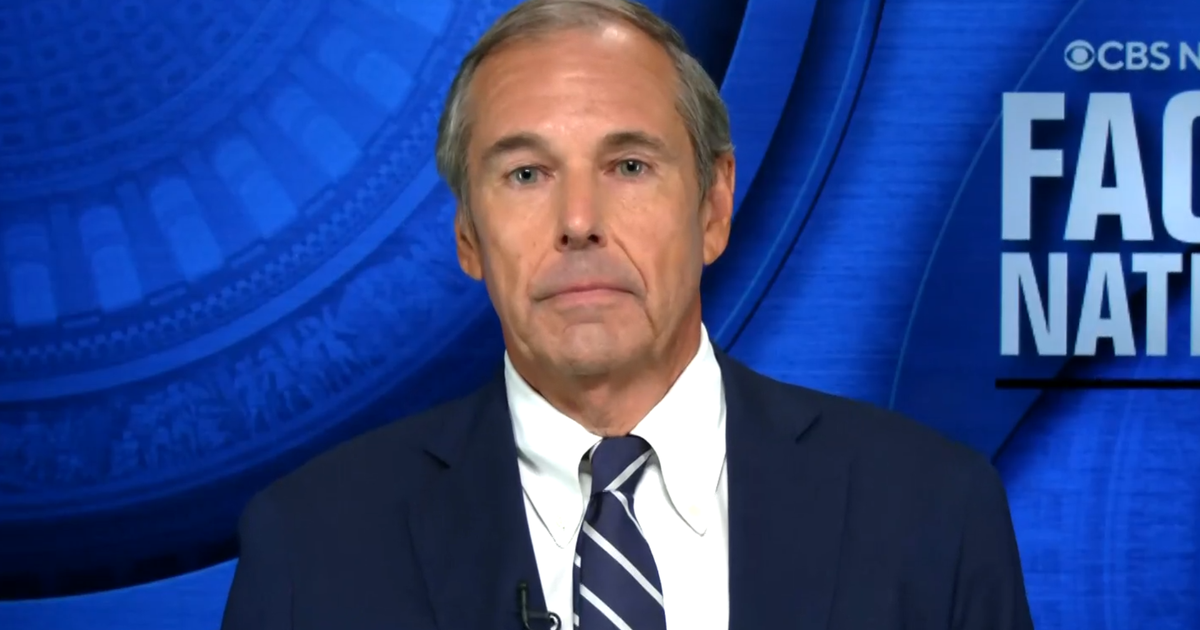
September 6, 2026 / 12:22 PM EDT / CBS News Add CBS News on Google The following is the transcript of the interview with Sunoco chairman Ray Washburne, Republican midterm election chair, that aired on "Face the Nation with Margaret Brennan" on Sept. 6, 2026.MARGARET BRENNAN: We go now to Ray Washburn, co-chair of the GOP midterm convention that is happening later this week in Dallas. He's also chairman of gasoline distributor Sunoco and a real estate investor. Mr. Washburn, good morning to you.RAY WASHBURNE: Good morning, Margaret. Thank you for having me on.MARGARET BRENNAN: So there's a lot of talk about what is the first ever Republican midterm convention. I'm seeing reports here that lawmakers are being asked to pay $25,000 to attend. Vulnerable ones are not. Do lawmakers have to pay to attend and participate?RAY WASHBURNE: You know, the whole attendance and selling the packages is all an RNC thing. I'm chairman of the host committee that's putting the convention on, so I'm not sure exactly in all the different packages they have. But what I do know is we have 20,000 people attending all 50 states, every territory, and people have started arriving this weekend. And there's a high degree of energy here in Dallas for the convention, so we're very excited.MARGARET BRENNAN: Okay. Well, the timing I know for some candidates it's kind of tough to leave their tight races in certain districts. Do you know how many lawmakers are attending and what the money being raised will do for those who attend?RAY WASHBURNE: Yeah. Well, obviously, with it's going to be a great networking thing for the candidates to come down. There are going to be a lot of donors here and high-profile people, not only in the administration but in the donor community. So their events stacked every single day. So it's very advantageous for them to come, even if it's just for a day, just to meet and network in. So we have a high degree of candidates coming, we pretty much have every race represented here, except for a couple that couldn't break away. MARGARET BRENNAN: Okay. Well, President Trump said this past week that he thinks in Dallas the speaker to focus on is former Texas AG Ken Paxton, who's running for Senate, and he kind of, he was half joking here. He said people don't like the way he dresses, looks, or does interviews. But he's the centerpiece candidate. Is he the centerpiece candidate? Is that kind of the drive and focus?RAY WASHBURNE: For the convention? Is that what you're asking? MARGARET BRENNAN: Correct. RAY WASHBURNE: The focus for the convention is Ken Paxton? Well, no, every candidate is a focus of the convention. You know, Ken Paxton, just because this is his home state, obviously he's a very high-profile person. Yesterday, Trump announced that they are going to contribute to his campaign $10 million, with more to come. Elon Musk has announced that he is putting in a substantial amount of money. So there's a lot of momentum for the Paxton campaign starting this week, which we knew was going to happen, starting with the convention through because he hasn't had a chance to put ads up this summer, and actually the first ad drop this morning. So there's going to be a wall-to-wall ad campaign for Ken Paxton from here through the convention. MARGARET BRENNAN: Yeah, a lot of focus on Texas and how competitive it might be. I want to ask you about—sorry, if you can hear me, I want to ask you about your other role at the top of Sunoco. It is the largest reseller of refined fuels. That means you're selling a gasoline station. You got to look inside what's happening with consumers right now. Are they changing their behavior based on the fact that gas prices are, what, more than 20% higher than last Labor Day?RAY WASHBURNE: Well, you know it's interesting, and the Energy Secretary spoke to it earlier. Right now, we've passed peak demand for the summer, and so going into the fall, the refineries are turning more out. It's very interesting. The refineries are running at 98% right now, and so it's an energy versus the 1970s and the malaise of the Carter administration when we had lines around the block. You have no issue at all finding any gas station to drive into and fill your car up. There are no lines. There's been no demand destruction really at all that we've seen this year, people are filling their cars up and they're still driving. Is it painful? Yes, it is more expensive. But you know, as inflation adjusted to what it was in the 1970s, when it was typically around 5% of someone's paycheck, today it's less than 2%. So it is more expensive because you see the signs in front of everyone, but companies like Costco, Buc-ees, the big retailers-they've really done a great job on keeping a lid on prices to where they could be. They could be much higher, but they're not.MARGARET BRENNAN: Do you think we've actually seen the worst of the energy shock? I mean, what's concerning you now?RAY WASHBURNE: Well, we have supply. As Energy Secretary said earlier in your broadcast, we passed peak demand. Supply is increasing, and demand, as long as it stays steady where it is, I mean, it's it—It hasn't gone—Demand hasn't, for gasoline, has not gone up, but it hasn't gone down either. So it's been pretty steady. So our projections through the fall are pretty much the same flat demand, and you know, as a distributor of gasoline, we'll sell about 17 billion gallons this year. We feel very positive through the rest of the year for our business, but we're selling to the stations, and the margins that they do-that's up to the stations to determine those.MARGARET BRENNAN: Well, let me ask you about the forecast ahead here because crude oil is roughly $90 a barrel. Yesterday, Secretary Besant said that is going to plummet once the Iran war ends. Take a listen.SEC. SCOTT BESSENT SOTWe have an energy supply shock, and that is going to end. And I, Lara, I actually think on the other side of this. On the other side of this, we're actually going to—could see oil prices $40 or $50 because there's so much supply coming on. It's just constricted right now. MARGARET BRENNAN: So $40 to $50 bucks a barrel. What time frame would you put on that kind of price drop?RAY WASHBURNE: Well, Russia right now their refineries are only running at 40 percent. 40 percent. Okay, they're doing no exports because Ukrainians, you know, are bombing their refineries. Once that comes back online, which it should hopefully soon, once the Iranian situation is resolved, well, then you do have a tremendous amount of supply that's bottled up that'll come back on the market. MARGARET BRENNAN: But two pretty big wars. RAY WASHBURNE: So, if you look at the forward strip price a year from now—yeah, yeah, they're two pretty big wars, but there can be a resolution to getting energy out. If you look at what's called the forward strip price, what people are projecting a year from now, it's much much lower than the $90. So, the oil traders are all looking out and thinking there is going to be a resolution in the next, within the next few months, in which case prices will come back down. But we're not in the refining business. I mean, that's the thing with refiners, they're buying their feedstock today, and they're taking a big risk. If prices drop, they're going to be very exposed.MARGARET BRENNAN: Ray Washburn we'll watch Dallas this week. Thanks for your time this morning. We'll be right back.
Transcript: Sunoco chairman Ray Washburne on "Face the Nation with Margaret Brennan," Sept. 6, 2026
Full Article
Original Source
Read the full article at Cbsnews →KhanList aggregates and links to publicly available news content. We do not host full articles from third-party sources. Always verify important information with original sources.