
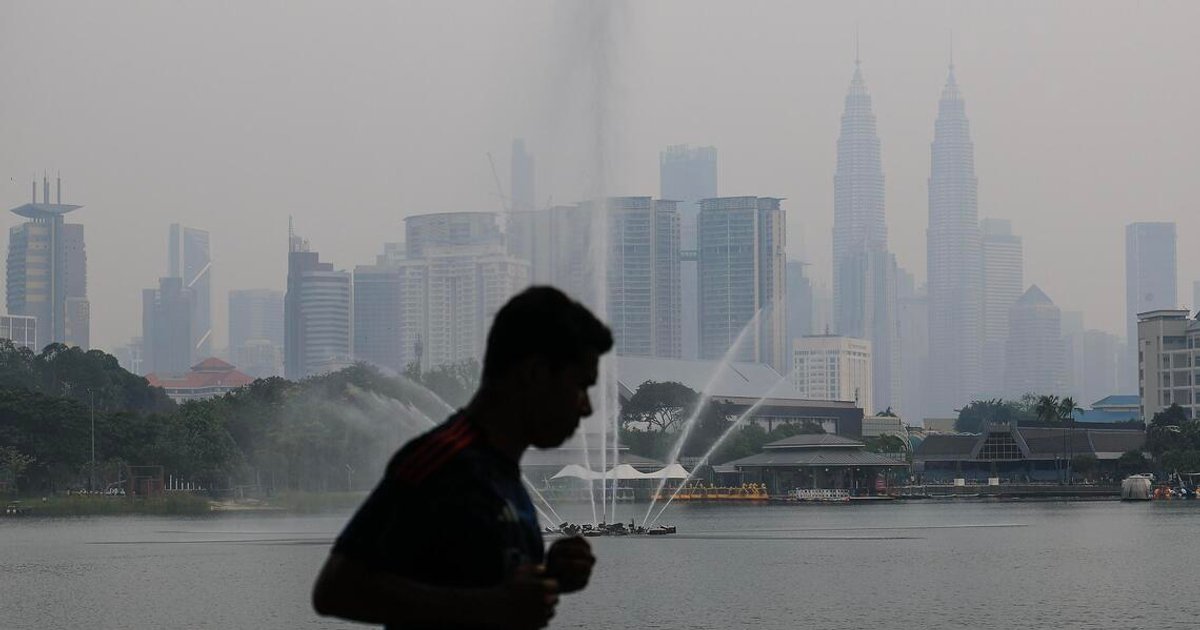
KUALA LUMPUR – Malaysia is open to enacting a law to tackle transboundary haze pollution similar to Singapore’s, but getting enough evidence to identify those responsible for fires remains a major challenge, Malaysia’s Parliament was told.Deputy Natural Resources and Environmental Sustainability Minister Syed Ibrahim Syed Noh said there was no obstacle in principle to such legislation, but clear mechanisms are needed to ensure effective enforcement.“As to whether we can introduce such legislation, as Singapore has done, the answer is yes. There is no obstacle if we determine that such legislation is necessary.“But when drafting any Act, there must be methods and mechanisms to ensure that the legislation is genuinely necessary, enforceable and ultimately functions as a punitive instrument that allows penalties to be imposed and legal action to be taken.“In this regard, the main challenge in enforcing such legislation is obtaining sufficient evidence to establish the source of the pollution and identify those responsible,” he said during the question-and-answer session on Oct 21.Syahredzan Johan (PH-Bangi) asked in a supplementary question if the government would proceed with a law on transboundary haze pollution and if it would study any weaknesses in Singapore’s Transboundary Haze Pollution Act, which has been in force since 2014.Syed Ibrahim said this would require getting information on the coordinates of fires, land ownership and the parties carrying out activities in the affected areas, as well as evidence linking the fires to the resulting haze pollution.He said gathering such information required in-depth investigation and scrutiny.“One of the purposes of legislation is to deter those involved in open burning, particularly when their activities affect the well-being and health not only of their own citizens, but also of people in neighbouring countries and across the Asean region.“We must continue our efforts, as this problem will recur if we fail to establish a comprehensive mechanism.“We have the Asean Agreement on Transboundary Haze Pollution (AATHP) and a vision of achieving a haze-free region by 2030.“Diplomatic efforts are continuing, including science diplomacy and the haze fund. These are among the initiatives that we hope will help us address the problem of transboundary haze pollution,” he said. THE STAR/ASIA NEWS NETWORK
Transboundary haze law possible but enforcement a challenge, Malaysia Parliament told
Full Article
Original Source
Read the full article at Straitstimes →KhanList aggregates and links to publicly available news content. We do not host full articles from third-party sources. Always verify important information with original sources.