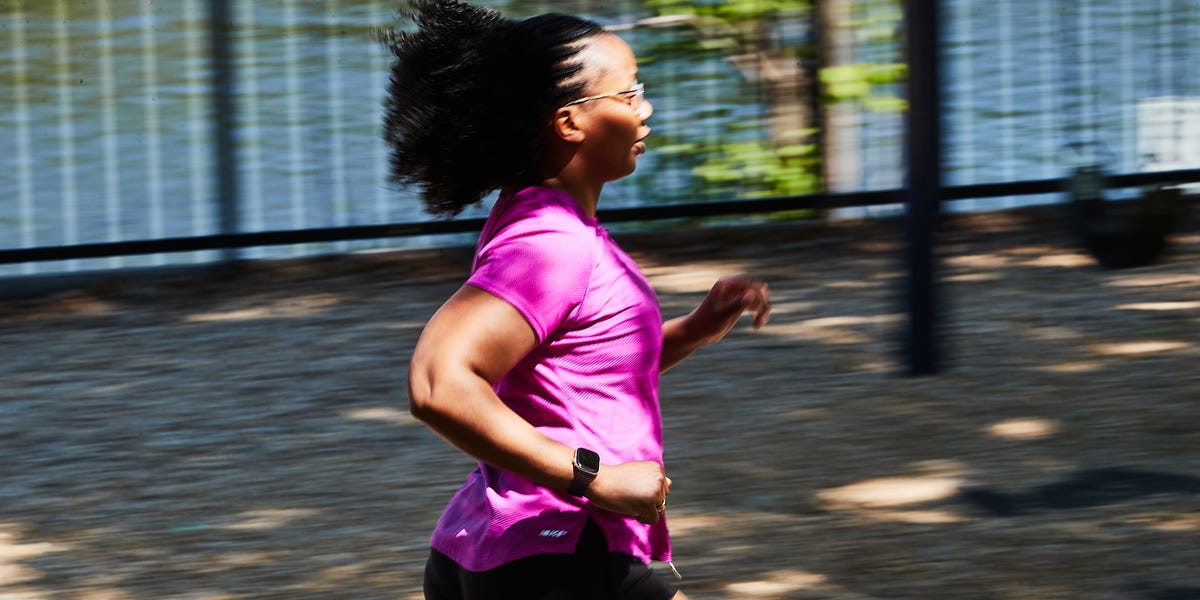
Training for my first half marathon last year felt intimidating at the start. But I locked into a run schedule and soon started looking forward to my easy runs on Tuesdays and Fridays, and long runs on Sundays. Running farther made me feel strong and confident, and that motivated me to stick with running through the summer heat.My training plan also worked up to a 14-mile long run, which gave me another confidence boost in completing the distance.I finished my first half in 3:01:27, nearly 30 minutes faster than what Strava predicted when I first started training. I felt great.Eager to run another race, I set my next goal to break the 2:30 mark. Because training for my first half marathon felt pretty easy, and I improved my pace quickly, I thought I could do it again.What I had failed to realize: It’s hard to cut another 30 minutes off a finish time. Plus, running a pace under 11:30 is much more challenging than clocking an average 13:00 pace. I wasn’t prepared for all the speedwork and extra training it takes to make that leap.Whitney Heins, a certified run coach and founder of The Mother Runners, tells me many runners underestimate what it takes to train for a faster half marathon after doing it for the first time, and that’s what makes it harder. “When you go into a training block thinking it’s not going to be hard, and then it happens to be harder, then you get in your head about it,” she says.Three weeks into training for my second race, I had to complete a five-mile run with three miles at race pace. I struggled to hold an 11:43 pace for 2.5 miles, and had to fight hard to run through the final few yards. After that workout, I realized hitting my goal pace would be even harder. It left me a little defeated.As the weeks progressed, I continued to check workouts off my training plan, but my motivation was dwindling, and slowly symptoms of burnout started to show up. I felt like I was tired all the time; I had trouble falling asleep the night before workouts because I was nervous about them. My appetite was also taking a hit.Despite the hiccups, I knew I was stronger going into my second race, but I started to predict my race-day performance based on a few bad workouts. Instead of vying for a 2:30 finish, I changed my goal to finishing in under three hours.After talking to Heins and another run coach, I realized there was a smarter way to approach that next race buildup. Here is the advice I wish I knew before I jumped into my training plan.Tips for Making Your Second Half Marathon Better Than the FirstSet Process GoalsAfter your first race, Heins recommends you write down at least three things that went well and three things that didn’t. Use those notes to set process goals, or small tasks to help you achieve bigger goals, for your next race.Though I did journal what went well and what didn’t after my first race, I didn’t necessarily use those notes to make changes for my second go at the half. For example, I knew I should have left myself more time to stretch before the start of the first race—but I didn’t do that for the second one either. Instead of solely focusing on getting to the starting line earlier on race day, I should have set a process goal to show up to my workouts earlier so I could make it a habit.Heins recommends habit-stacking to help you easily achieve your process goals. For example, she pairs stretches with bath time for her children, as a way to fit in more mobility.You can use process goals as a way to handle the mental side of increasing your mileage, too. Take workouts one day at a time, rather than focusing on all the runs you need to complete in an entire week or month. Narrowing your focus this way can help relieve some of the pressure that we put on ourselves when we look too far ahead, Heins says. It also allows you to let go of perfectionism and focus on building progress, one workout at a time.Tap Into EffortExactly how you structure your training in between races will depend on your timeline and goals. But no matter what, Donovan Stewart, a certified run coach and personal trainer at Life Time in Brooklyn, recommends you run based on effort for the first few runs back.“Focusing on effort allows runners to reconnect with how their body feels without forcing performance. Recovery runs should support the healing process, not create additional stress,” he says.Runners with time-specific goals for the second half should have runs with a few race-pace miles on their schedule. During those workouts, Stewart says, it’s still important to tap into how you’re feeling.While training for my second half, I focused more on pace and as the weeks progressed, my speed continued to lag. I wasn’t getting faster and that discouraged me.Stewart gives the reminder I could have used: There’s nothing wrong with slowing down. Take it as a sign to figure out what’s preventing you from hitting your goal pace. A lack of sleep and poor nutrition can both contribute to your run performance, as can issues like low iron, something I learned I was struggling with after a blood test.Develop a Race-Day StrategyA common mistake runners make during the second half marathon is running too fast at the start, and that can backfire, typically around the eight-mile mark when you’ll probably slow way down.“A lot of runners go out too fast in their second race because they’re more confident and emotionally comfortable than they were during their first,” Stewart says. “The adrenaline, crowd energy, and excitement of racing can make early miles feel easier than they actually are.” But you have to resist the urge to run above your goal pace.He recommends developing a race-day strategy that keeps you from slowing down at the end of your race. For example, break the half-marathon distance into 5K chunks, focusing on going 10 seconds slower for the first 5K, holding your race pace during the second and third 5K, and then pushing the pace during the final few miles, if you feel up to it. (Notice how this requires starting slower than goal pace!)Make Time for Rest and RecoveryAfter my first race, my recovery started the moment I crossed the finish line. I grabbed a thermal blanket, a few snacks, and water. I even did a couple of stretches near the finish line before we headed to lunch. I think that helped me recover faster.My postrace ritual the second time around didn’t go as smoothly. I grabbed a few snacks after crossing the finish line, but I didn’t stretch, and my postrun meal was delayed because I had to rush home to pick up my daughter.Skipping those recovery factors seemed to contribute to my soreness the next day. As Runner’s World previously reported, experts recommend light stretching and walking postrun to help increase blood flow. And refueling and rehydrating are crucial to jumpstarting the recovery process.Monique LeBrun is a health and fitness editor who is based in Easton, Pennsylvania. She covers a wide range of health and wellness topics, with a primary focus on running performance and nutrition. Monique is passionate about creating content that empowers runners to become the best versions of themselves. As an avid runner and parent, she loves spending time outdoors with her daughter, who often accompanies her on weekend runs as her personal mini run coach.
Training for Another Half Marathon? Avoid the Common Mistakes I Made So You Run a Faster Race.
Full Article
Original Source
Read the full article at Runnersworld →KhanList aggregates and links to publicly available news content. We do not host full articles from third-party sources. Always verify important information with original sources.