
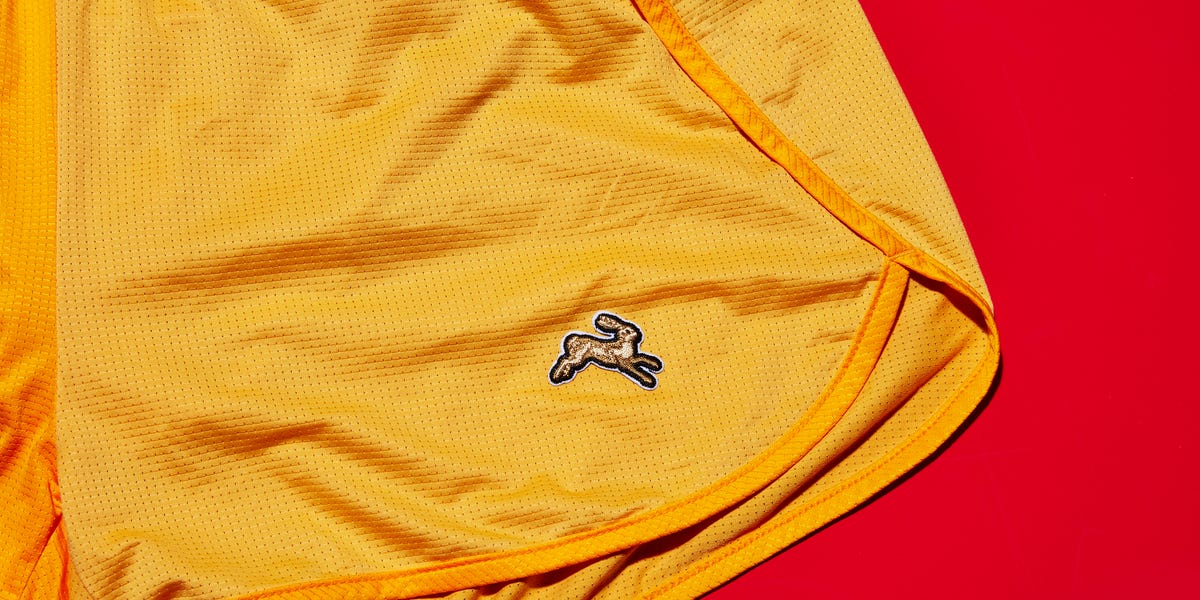
The running journalist Mario Fraioli still remembers the shorts Matt Taylor sent him in 2014, when Taylor was launching a new apparel brand.Dubbed the Longfellow short, the prototype pair had a button at the waist, they were longer than typical running shorts, and they didn’t have a liner. The idea was, in Fraioli’s telling, that you could go straight from an easy run to a coffee shop and still look presentable. Taylor wanted to know what Fraioli thought.Fraioli’s reaction? He didn’t love them. The sizing was off for him.He was, however, intrigued by Taylor’s passion for the apparel and the nascent brand.“He was super excited,” Fraioli told Runner’s World.With $35,000 of his savings from a previous endeavor and seed round capital, Taylor launched Tracksmith later in 2014. The initial product line was four men’s items, including those Longfellow shorts and a “Grayboy” T-shirt that mimicked the standard-issue shirt of college athletic departments, plus a spike bag and Meter magazine. Women’s clothing followed about nine months later.The idea of Tracksmith? Top-quality running apparel for people who were not professional athletes, but trained hard and loved their sport. The names and designs of the products reflected the roots of the sport and Taylor’s reverence for its history.Frugal runners initially had sticker shock. Tracksmith manufactured its clothing in the U.S., using quality materials, which cost more. But the company was one of the earliest independent running brands selling apparel for serious runners outside of the major shoe companies. Women’s running apparel brand Oiselle had hatched earlier, in 2007.Tracksmith quickly grew. It added retail locations in Boston and New York, and hundreds of items for sale—including four shoe styles, which were added in 2022.Now, Taylor has been abruptly pushed out of the company he founded, and industry observers are left wondering if the brand can keep growing without him.A sudden splitFraioli, who is now a coach and writer of the Morning Shakeout newsletter, announced the news of Taylor’s departure in his October 13 email, writing that the newsletter would no longer have Tracksmith as a sponsor.“A big part of my belief in Tracksmith was tied to my belief in Matt’s character, authenticity, and creative vision, and with him gone, I’ve lost confidence in where the brand is headed,” he wrote.It’s unclear what precipitated the split. Taylor declined to speak to Runner’s World, and former employees were in the dark about the details of his ouster.Taylor had hired a CEO in January, Jared Carver, a veteran of Converse, to handle the day-to-day operations so he could get back to focusing on the “brand’s vision and creative expression,” according to a company LinkedIn post eight months ago.In a concurrent post, Taylor wrote: “I didn’t start Tracksmith to be a CEO—I started it to change the way running is presented with the hope of changing how it is perceived. My goals were to build distinct products, tell compelling stories and create a sense of camaraderie, the same you might feel on your cross country team.”MarathonFotoAt age 47, Taylor ran 2:43:18 at the 2024 Boston Marathon, placing 22nd in the men’s 45-49 division.Insiders and one analyst painted a picture of a brand that opened a lane for rival independent retailers to follow suit—and perhaps surpass—Tracksmith. Bandit and Satisfy are two of the brands frequently cited as competitors, especially as the sport has seen enormous growth coming out of COVID.“Other people have, I think, drafted on their success and made the marketplace more competitive,” said Matt Powell, an industry analyst who is a senior advisor with BCE Consulting. “For any brand, I think it’s hard to stay ahead of the trends, and you never have an unassailable position. Somebody’s always trying to copy you, or do what you do better. That's a big challenge for a small brand.”It is not known if Tracksmith was profitable, as the company is privately held, and those who were close to Taylor in the company’s early days wondered whether investors and board members were growing impatient. Tracksmith would not talk about the company’s financials or name the members of its board. A Tracksmith representative confirmed Taylor’s exit and that of Matt Pauk, the head of product, who left in August, and offered a statement:“Matt Taylor, Tracksmith’s founder, has transitioned out of his role with the company and departed Tracksmith. Matt’s unique vision created the Tracksmith we know today, and undoubtedly shaped the culture and business of running. At its core, Tracksmith has always been about people—our team, our partners, the people who push the sport forward, and the runners we serve. These values remain unchanged, and we are confident in our ability to continue building upon the strong foundation established in Tracksmith's 12 years.”Once innovative, now standardAs early employees try to process what happened, they expressed appreciation for what Taylor brought to the industry.Taylor, they said, was the animating force of the brand. He named the various products after runners in history, and arranged artful photo shoots with athletes in the mist and the mud. His love of the sport was obvious. (He’s still a serious runner. In 2024, Taylor ran the Boston Marathon, at age 47, in 2:43:18.)Lou Serafini was one of the first employees. Like Fraioli, he didn’t immediately get what the brand was about. At the time, he was working at Heartbreak Hill Running Company before Taylor recruited him to work for Tracksmith.“I remember being kind of confused,” Serafini said, “not really understanding what they were trying to do. I think most visionary brands have a little bit of that, where it has to be different enough where it makes people kind of scratch their head a little bit.”Serafini went to Tracksmith’s first Boston Marathon pop-up in 2015, in an empty storefront at 285 Newbury Street, which in 2017 became its permanent home, just blocks from the marathon finish line. (Now pop-ups are a standard part of major marathons with cutting-edge brands; expos are in dreary convention centers, a necessary stop for runners to make to pick up their bibs.)Serafini’s first job was managing the shop and building a running community there. “That was the first time where I really realized the ethos of the brand,” he said.When he first started at Tracksmith in 2017, if Serafini saw any runners wearing Tracksmith clothing along the Charles River paths, it was an exciting moment. By the end of his tenure, in 2024, he remembered spotting runners in the brand all over the world.The best days at Tracksmith always have been Boston Marathon Monday and the Tuesday after. Runners would crowd the shop, pick up a free poster, and get it stamped with their finishing time. “The focus of those days was to sit in the track house and stamp posters and have a 30-second conversation with somebody about how their race went,” Serafini said. In 2018, the year Boston went off in a nor’easter, the Tracksmith headquarters on Newbury became a hospital of sorts for runners trying to get warm.Two other former employees, in conversations with Runner’s World, echoed Serafini’s assessment of Taylor as a visionary.One former employee, who asked not to be named, said the committed runner didn’t have much to choose from before Tracksmith, describing the industry’s 2014 offerings as “neon, boring, and not high performance.” Tracksmith took the better products the pros were getting and gave them to amateurs. (And though the price point was initially surprising, these days, in the era of $300 super shoes, it seems reasonable.)But getting eyeballs on a new business is cash intensive, and Taylor had big, expensive operations, which included stipends for unsponsored Olympic Marathon Trials qualifiers and hosting twilight 5Ks for the fast amateurs looking to run PRs. Real estate on Newbury Street and in Brooklyn does not come cheap, either.Melinda Meijer/ISI Photos//Getty ImagesCravont Charleston (left) won the 100 meters at the 2023 USATF Championships as part of Tracksmith’s Amateur Support Program.Without Taylor, does the brand have legs? The fear is that it becomes “performance J.Crew,” preppy running apparel without the investment in the sport.In response to a question about bolstering the sport, the Tracksmith spokesperson confirmed the company would be continuing with its programming and support of amateur runners through clubs and meets like Tracksmith Stamata, the Twilight series, Hare AC, and the Amateur Support Program. “Nothing has changed or will change there,” the spokesperson said.But with Taylor’s departure, some see Tracksmith being at a crossroads, caught between funders seeking a return on their investment and fast-growing competition.“I think a lot of investors, private equity investors, they revere founders and understand that the business that they’re in, particularly one like this, it’s as much of a cultural business as anything else,” said Ryan Eckel, who worked for Tracksmith as the brand president for five years, from 2019 to 2024. “And when you start treating it like it’s making widgets, I think you lose sight [of the culture] and ultimately I think it hurts their investments long term.”Powell, though, still sees a lane for Tracksmith, especially with consumers who are willing to pay premium prices.“On one level, I would tell you there's never been a better time to be a small brand, because I think the consumer is looking for unique products,” he said. “But because the consumer is always demanding new and next, that part is really hard for a small brand to execute.”Find Your Next Running PlaylistSarah Lorge Butler is a writer and editor living in Eugene, Oregon, and her stories about the sport, its trends, and fascinating individuals have appeared in Runner’s World since 2005. She is the author of two popular fitness books, Run Your Butt Off! and Walk Your Butt Off!
Tracksmith Created the Blueprint for Indie Running Brands. Can It Survive Without Its Architect?
Full Article
Original Source
Read the full article at Runnersworld →KhanList aggregates and links to publicly available news content. We do not host full articles from third-party sources. Always verify important information with original sources.