
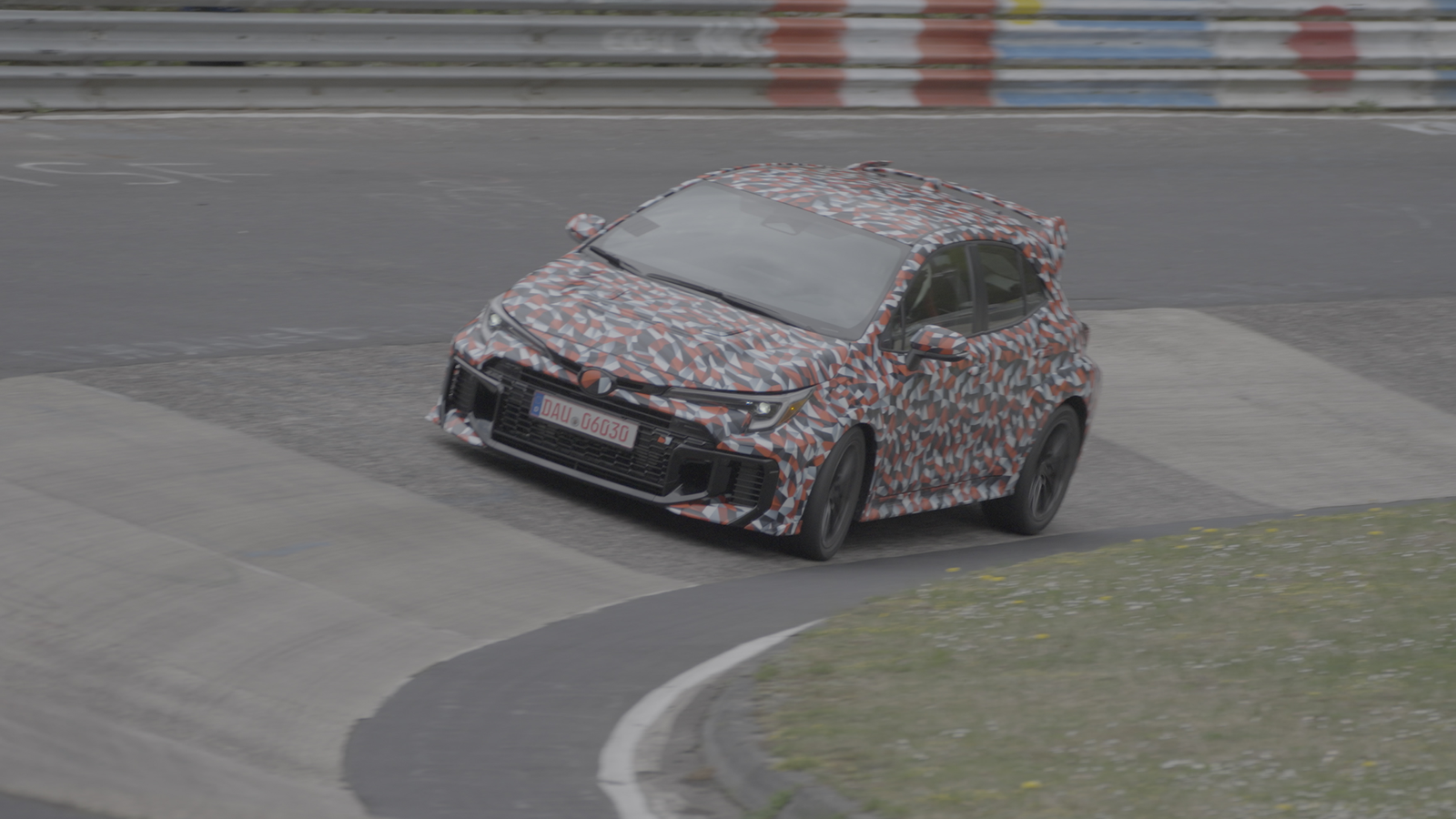
Published Aug 2, 2026, 7:30 AM EDT Based in the Motor City, Carl Anthony is the Automotive Lead at How-to-Geek and the host of AutoVision News Radio, a podcast that focuses on future vehicle technology, including next-generation ADAS innovations, electrification, and software-defined cars. A broadcaster by nature, he has appeared on popular podcasts and radio shows, including Wrench Nation, Cars Yeah, The Car Doctor, and Digital PR Explained. Carl’s frequent appearances on MotorMouth Radio (WHPC 90.3 FM) over the last decade have made him a trusted resource for car enthusiasts, while his hosting of the AutoSens Insights series continues to spotlight the latest automotive technologies. Prior roles include serving as a new vehicle launch and dealer trainer for Ford, Honda, Mercedes-Benz, and Volvo. Carl was a senior product specialist on Chevy's National Truck Team, an experiential marketing program that travels the United States, and a respected member of the FCA (now Stellantis) national auto show team, where he served as the resident expert for consumers on the Dodge Charger and Challenger. Before the automotive industry, Carl was a disc jockey, producer, and programmer at several popular Midwest radio stations, including KIWR, KEZO, KJAN, and KELO-FM. He is a graduate of Iowa Western Community College in Council Bluffs, where he dual-majored in the Electronic Media studies program, earning an Associate of Applied Sciences degree in both radio and television broadcasting. The Toyota Corolla turns 60 this year. It arrived in Japan in 1966 as a compact, affordable car for everyday driving, then crossed the Pacific two years later and went on to become one of the best-selling nameplates in automotive history (Toyota puts cumulative global sales past 57 million units). Its reputation for reliable, budget-friendly transportation has followed the Corolla name for six decades, and a recent cost analysis by my How-To Geek colleague Tyler Dupont found that the gas-powered Corolla costs less to own over 10 years than most EVs, once insurance, maintenance, and depreciation are factored in. However, none of that backstory fully explains what Toyota built most recently: something with an adjustable rear wing, no back seat, and a starting MSRP near $65,000. No, it’s not a Supra, but rather, the 2026 GRMN Corolla, the most extreme version of the GR Corolla Toyota has ever built for North America. Proven at the Nürburgring Driven by an alter ego GRMN stands for "Gazoo Racing tuned by Meister of Nürburgring." Toyota reserves the name for its most track-focused models, a nod to Chairman Akio Toyoda's history at the German circuit under his racing alter ego, Morizo. Morizo's rule for the badge is simple: if a car wears the GRMN name, it has to handle the Nürburgring. Toyota designed the GRMN Corolla to show it could meet that standard, developing it through extensive Nürburgring testing alongside Toyota's hydrogen-powered GR Corolla program in Japan's Super Taikyu endurance series. Production will be limited to 730 units worldwide, built at Toyota's Motomachi plant in Japan. It will arrive at dealers later this summer in two colors, Zero Gravity or Gravel. At $64,360, the GRMN Corolla costs more than double what a well-equipped standard Corolla runs. It's priced closer to a BMW M2 than anything most associate with the Corolla badge. Lighter in the back, stronger everywhere else The engineering behind the numbers Perhaps as expected, Toyota's changes to the GRMN Corolla read like a list of race-car priorities applied to a production car. Removing the rear seats sits at the top of that list. The two-seat cabin trims 66 lbs. from the car compared to the standard GR Corolla, giving the GRMN Corolla a power-to-weight ratio advantage. The GRMN Corolla runs the G16E-GTS, a 12-valve DOHC turbocharged 1.6-liter (1,618 cc) three-cylinder engine with 300 horsepower and port fuel injection. Toyota increased peak torque to 302 lb-ft., concentrating the gains in the 4,000 to 4,600 rpm range, the band drivers rely on most when accelerating out of a corner. Toyota engineers studied circuit-driving data and applied lessons from the hydrogen-powered GR Corolla's Super Taikyu campaign to how the GRMN Corolla responds to driver input. Toyota's GR-FOUR all-wheel drive system is standard on the GRMN Corolla. Up front, the GRMN Corolla uses a MacPherson-type strut setup with inverted monotube shocks and internal rebound springs. The rear features a double-wishbone multilink layout with monotube shocks and internal rebound springs. Toyota tuned the shock stroke to the millimeter at both ends to balance the car's ride during Nürburgring testing. Wheels are 18-inch matte-bronze forged aluminum units in a 10-spoke design, wrapped in 245/40ZR18 Michelin Pilot Sport Cup 2 tires. Manual transmission or nothing Meister of Nürburgring would approve The GRMN Corolla's only transmission is a six-speed manual with rev-matching. There's no automatic option, no paddle-shift substitute, and no way to order one without a clutch pedal. Compare that to BMW, which sent off the current M3 with a six-speed manual as a limited run, framed as possibly the last manual M3 ever built. Cadillac took a similar approach to scarcity with its 685-horsepower F1 Collector Series Blackwing, a manual-only sedan limited to 26 units, though Cadillac built that car to welcome in its Formula 1 program rather than say goodbye to anything. The GRMN Corolla splits the difference, you could say. It holds onto the last vestiges of the manual transmission, like the M2, while also staying true to its Motorsport roots, like the Blackwing. Moving into the world of normal Corollas, the 2027 Corolla Hatchback has a redesigned Dynamic Shift CVT that uses a physical launch gear to avoid the rubber-band feeling common to CVTs. Instead of relying on a belt-and-pulley system from the moment the driver's foot leaves the brake, the Corolla Hatchback uses an actual first gear, then hands acceleration duties off to the CVT's pulley system once it is moving. Drivers should notice a difference off the line. The 2027 Corolla Hatchback starts at $26,075 for the SE and $29,170 for the XSE (including destination), making it a little more affordable than the GRMN Corolla! Carbon fiber, suede, and a signature from Morizo The GRMN Corolla receives a host of carbon fiber elements, including the hood, front fenders, front side spoilers, and an adjustable rear wing (Toyota engineers adjusted the rear wing's five-step mechanism in one-degree increments during tests with professional drivers). Inside, the seats are finished in black and red Brin Naub suede and synthetic leather, with a flocked instrument panel to cut glare. A dash pad bears Morizo's signature, and each car gets a serial-number plate. Meanwhile, every GRMN Corolla comes with a one-year membership to the National Auto Sport Association and a complimentary High-Performance Driving Event. A Corolla that costs more than $64,000, seats two, and skips the automatic isn't the car that made the nameplate famous. However, it might be the Corolla that proves how far Toyota is willing to bend that reputation for the right customer.
Toyota built a $65,000 Corolla with no back seat—and it’s pure insanity
Full Article
Original Source
Read the full article at Howtogeek →KhanList aggregates and links to publicly available news content. We do not host full articles from third-party sources. Always verify important information with original sources.