
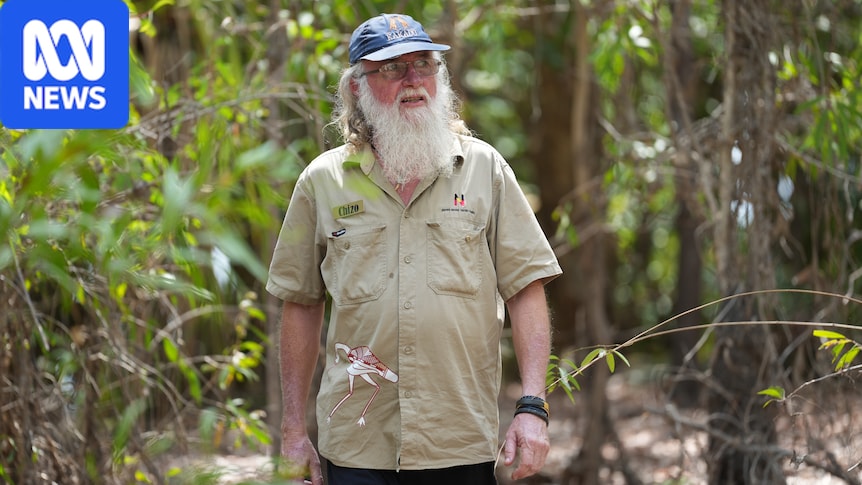
For almost a decade, Sean "Chizo" Chisholm has been showing sightseers around Kakadu National Park's most popular attractions in his four-wheel drive.While many visit the World Heritage-listed park, located about 3 hours south-east of Darwin, to view ancient rock art or take in spectacular sunsets at Ubirr, most of his passengers travel to see its cascading waterfalls.Sean "Chizo" Chisholm has been taking tourists around Kakadu National Park for almost a decade. (ABC News: Dane Hirst)With Jim Jim Falls remaining closed this dry season, the Never Never Tours owner said his company had wrapped up its "worst" season ever, with business down by 45 per cent."We took out 470 people last year; that was 97 carloads," Mr Chisholm said."We didn't even get the chance to look at [Jim Jim Falls] this year because the road infrastructure was gone from the big floods."Despite still offering day trips to the waterfalls near Jim Jim, Mr Chisholm said he was left out of pocket from $30,000 in customer refunds and had to lay off two staff members.Sean "Chizo" Chisholm says Never Never Tours issued thousands of dollars in refunds this year. (ABC News: Dane Hirst)He also said the state of the outback roads he travelled, including the road to Gunlom Falls, was "horrendous"."We spent a lot of money on cars this year, fixing them up, getting them towed back out to Darwin," he said.In June, Parks Australia confirmed Jim Jim Falls and Twin Falls would stay shut through the Top End's peak tourism season, while "critical road and infrastructure upgrades" were undertaken to repair flood damage from cyclones earlier this year."Traditional owners expressed their concerns for the safety of visitors to their country and have requested that the area remain closed until all road upgrade projects are completed," Parks Australia director Ricky Archy said at the time."Parks Australia respects and supports this decision."The decision prompted a stern warning from the NT's tourism minister and concerns from the sector, with tourism operators holding a roundtable discussion to try to prevent further closures in Kakadu.The wetlands of Kakadu National Park are home to a range of unique birds and wildlife. (ABC News: Dane Hirst)Kakadu Tourism, an Indigenous-owned group of local tour operators and accommodation providers, said recent weather coupled with ongoing cost-of-living pressures culminated in a "perfect storm" this peak season."We were bracing ourselves," director of sales and marketing Samantha Waldron said. "We knew it was going to be a challenging season. We had two cyclones last wet season, and Kakadu National Park was completely inundated with water, so we knew there would be delays to tourist sites opening."Obviously, we look at the fuel crisis, there's fuel scarcity and then people are concerned about the cost of fuel, so we knew that was then going to impact our drive market as well."Samantha Waldron says the cost of living has affected the local drive market. (ABC News: Dane Hirst)Ms Waldron said Kakadu Tourism's campgrounds had been "severely" affected by the severe weather, with sites sitting at 42 per cent occupancy between June and August."We were down by 10,000 visitors [to Kakadu National Park] just in the month of June and if we looked at our campground, which is really where we were most impacted, we were down by about 1,500 campsites across those three peak months," she said."We found that, with the announcement of Jim Jim being closed coming out on June 1, we saw that immediate impact and saw that drop."On-country experiences still accessibleMs Waldron urged both locals and people from interstate to visit Kakadu for more than just its bucket-listed waterfalls, saying the rock art, Indigenous culture and other natural landscapes within the park were accessible year-round.The cost and availability of fuel discouraged many tourists from driving to Kakadu National Park this dry season. (ABC News: Dane Hirst)"We don't want people sitting at home waiting for the waterfalls to open," she said."People can connect to country, they can go on our cultural tours and they can view the rock art and sit and watch the sunset."Senior custodian Mandy Muir said she believed the site closures pushed more tourists to cultural experiences instead, estimating her campsite's visitor numbers had almost doubled in a year.With several natural attractions shut this dry season, Mandy Muir saw more tourists take on cultural experiences instead. (ABC News: Dane Hirst)The co-owner of Kakadu Billabong Safari Camp said about 1,000 people had either stayed on-site or participated in immersive tours, such as crafting workshops, learning to cook traditional meals and educational boat cruises along billabongs filled with wildlife.Those numbers were not just important for her business, she said, but helped keep her culture alive while "walking in the balanda [European] world"."The [tourists] come from all walks of life, domestic and international, and I think about how far our stories are going and it just gives me this humbling feeling," she said."I have people here leave sometimes in tears because they've needed that time out from their busy lifestyles."For us and our communities … we're passing down the knowledge that our elders have passed down to us, and those are the stories we're sharing."Kakadu Billabong Safari Camp had an increase in tourists this year. (ABC News: Dane Hirst)This year, the Murumburr custodian said her business also opened its doors to 50 groups including high school students, who completed a series of projects on country, such as planting trees, building chicken coops and digging trenches.Ms Muir said it taught children the importance of "doing our part to care for Mother Earth" while "giving something back"."We get such a bad rap when some of our communities may be dysfunctional, so it's good [visitors are] seeing firsthand some of the great things that actually can really take place in the communities when we come together for a mutual cause," she said."I feel, if visitors come here, they're only looking at waterfalls and maybe seeing the art sites. "If they haven't gone and gotten an Indigenous guide, they're not hearing those real, connecting stories that make it, that keep this place the living cultural landscape that it is."Mandy Muir says workshops and experiences on country can help visitors connect to the natural environment. (ABC News: Dane Hirst)Parks Australia was unable to provide the ABC with Kakadu visitor numbers for the 2026 dry season, saying the figures had not yet been finalised.
Tourists pivot to cultural experiences as key Kakadu sites remain shut
Full Article
Original Source
Read the full article at Abc →KhanList aggregates and links to publicly available news content. We do not host full articles from third-party sources. Always verify important information with original sources.