
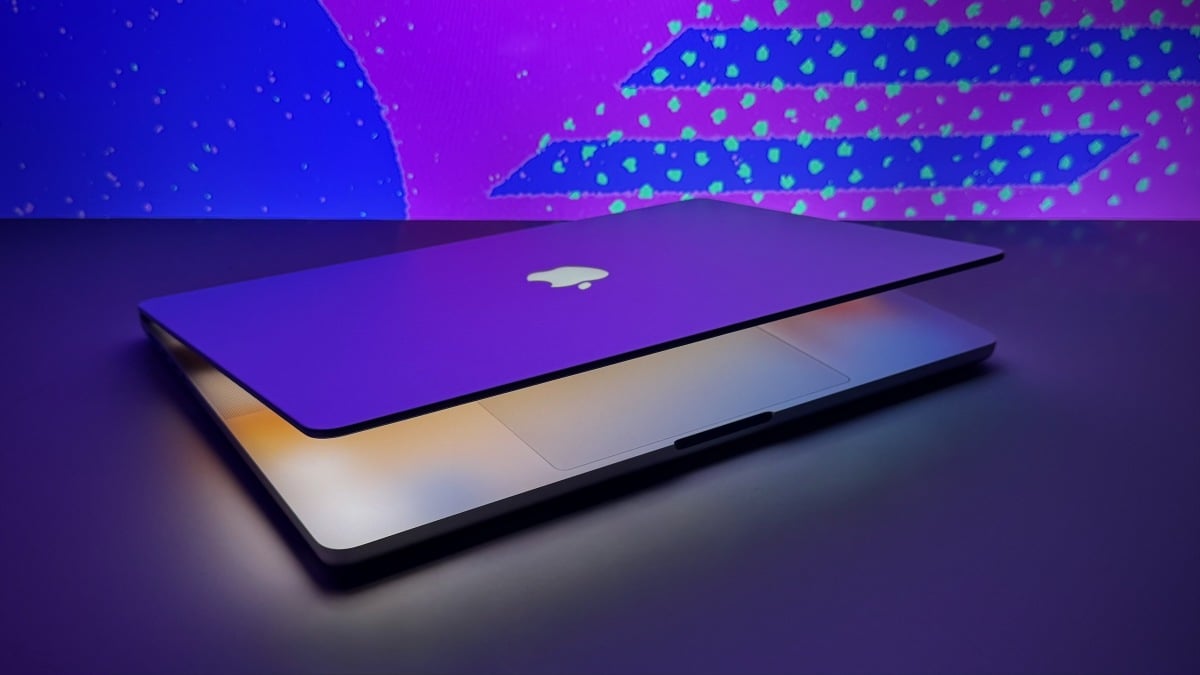
A Mashable Choice Award is a badge of honor, reserved for the absolute best stuff we’ve tested and loved. Table of Contents MacBook users have been waiting a long time for this one: After many years, Apple has finally relented and released a touchscreen laptop. But what's really exciting about this new Apple machine is the incredible tandem OLED display, which Apple has dubbed the PROLED XDR Display. The internet is split on whether "PROLED" is cheesy or not, but what isn't the internet split about?I'm still in the process of testing the new MacBook Pro, but I can tell you this: Apple has made an incredible laptop, and the company wasn't exaggerating when it promised a "groundbreaking" and "industry-leading" display.Now, if you're a laptop nerd, you might be rolling your eyes. Touchscreen laptops have been around for ages, and virtually all of Apple's competitors have long offered a high-end OLED display. Well, it shouldn't surprise you that Apple's version of an OLED laptop goes hard in every possible way.I'm loving this laptop so far, and I think it's the first true slam-dunk of the John Ternus era.MacBook Pro OLED review: Let's talk about the display Credit: Timothy Werth / Mashable Apple hasn't just made an OLED laptop; it's made a genuine reference-quality display, designed to meet industry standards for video editors, photographers, animators, 3D artists, and color graders. The PROLED XDR display is also the brightest laptop display ever made, with 2,000 nits of peak brightness for HDR content, racing past the MacBook Pro's Liquid Retina XDR display, which tops out at 1,600 nits. The top Windows competition maxes out at 1,300 nits. For non-HDR content, the PROLED offers up to 1,000 nits of sustained brightness.After spending just 72 hours with the PROLED, my eyes are hurting, and I'm genuinely worried the screen is too bright for my own good.I'm not going to waste time explaining exactly how tandem OLED technology works; instead, you'll have to trust me that it means a brighter display that lasts longer. The blacks on the display are deep, the colors pop, and the shadows and highlights provide incredibly detailed contrast. Photo on display by Paul Reiffer Credit: Timothy Werth / Mashable Previously, Apple reserved tandem OLED for the iPad Pro, and the M4 and M5 iPad Pros are famous for reference-quality displays. The iPad Pros also introduced Apple's ProMotion technology, powering an adaptive refresh rate up to 120 Hz. Tandem OLED combined with ProMotion is unmatched, and you don't really know what you're missing until you try it. Now, ProMotion and tandem OLED finally, finally, come to the MacBook Pro.This laptop absolutely slaps, and the incredible PROLED XDR display is the headline. It's stunning. Photo on display by Paul Reiffer Credit: Timothy Werth / Mashable The bad news? I do recommend paying $500 more for the 16-inch model. You'll want the extra screen space. This is a maximalist laptop, and I think size matters here.MacBook Pro OLED: What about the touchscreen?To be honest, I don't care about touchscreen. I think there's limited utility if your touchscreen laptop isn't a convertible that flips all the way around into tablet mode. The PROLED also lacks support for Apple Pencil and third-party styluses. So, after so many years talking smack about touchscreens, why has Apple given in?Maybe it's because kids born today expect everything to be a touchscreen. There are also 3D artists and animators working in Blender who will be happy to pinch and zoom to their heart's content. Pinch to zoom right on your MacBook's screen. Credit: Timothy Werth / Mashable Expect more developers to make use of Apple's new Gesture API in the months ahead. Credit: Timothy Werth / Mashable I tried out the touchscreen using software like Blender and Final Cut Pro. Some apps will have custom touchscreen interfaces and functionality, but it will take time for macOS developers to adapt to a touchscreen world. For now, anything you can do on the trackpad, you can do on the display. The touchscreen is responsive, and mostly works as you expect. I just don't really need or care about it.If I were a betting man, I would wager that the touchscreen won't stick around forever. However, the OLED ProMotion display is going to make a lot of Mac users jealous. I wouldn't be surprised if it becomes available as an option, like the Nano Texture finish is with certain Apple products.MacBook Pro with PROLED XDR Display: Performance On-device AI generated perfectly accurate subtitles for my video files. Credit: Timothy Werth / Mashable I did my best to stress-test this laptop, which runs macOS 27 Golden Gate, with the limited time I've had with it. Due to a shipping delay, I've only had three days with this laptop, so I haven't been able to conduct battery rundown tests or some of our other standard benchmarks. But when you have to condense a week's worth of testing into three days, you really appreciate just how much modern laptops have to do. I've been busy testing local AI performance, speakers, cameras, multitasking, file transfers, video and photo editing, Siri AI, the new touchscreen display, and the new OLED panel. So far, I'm impressed across the board. The best tech deal this week The Apple iPhone 18 Pro is free right now with T-Mobile Apple made stress-testing this machine difficult. My 16-inch review unit has 48GB of RAM and the M5 Pro chip, and it wasn't easy to slow it down. The high-powered M5 chips feature an 18-core CPU architecture, including six "super cores."For my stress test, I opened complex Blender files. I made Final Cut Pro export large 4K video files while simultaneously applying local AI effects such as stabilization, color adjustment, and generating subtitles to an entire project. I watched 4K HDR YouTube videos, used Siri AI, opened a massive 15.5MB Excel spreadsheet (with 16,000 rows in some tabs), and asked Gemma 4 to compose a sonnet in iambic pentameter about the majestic manatee.* With my 48GB of RAM and the M5 Pro chip, I was able to run a large local AI model, Gemma 4 26B-A4B, and set it to coding applications and composing my sonnet. Weirdly, the only task that really brought up the spinning wheel of death? That damn Numbers spreadsheet. Go figure.I also ran the latest Geekbench 7 benchmark test, and it logged impressive results:Single-core: 3,736Multi-core: 34,492Mashable has tested over 90 laptops in the last couple of years, and the PROLED is now the top multi-core scorer in our entire database, handily beating other Macs and Windows laptops with the Qualcomm Snapdragon X2 Elite chipset.If you're a superuser, you can also upgrade to the M5 Max chip and even more RAM. As we've noted before, a fully specced-out MacBook Pro PROLED will set you back $14,549.MacBook Pro PROLED: Design and build quality Credit: Timothy Werth / Mashable As you'd expect from a high-end Apple laptop, the design is both familiar and impeccable. There's a reason the Windows world has been copying the best MacBooks for decades. However, there are some key hardware and software changes on this laptop (it's the first to bring Dynamic Island from iOS to macOS), aside from the display. The laptop is also lighter and thinner than its forebears. The 14-inch version is half a pound lighter, the 16-inch model is 0.7 pounds lighter, and Apple shaved off half a millimeter and a full millimeter, respectively. Apple has also famously brought back the glowing Apple logo on the top cover, which dims and brightens as you adjust the brightness settings. That glowing apple has been missing since 2015, and it's a nice touch. Otherwise, this laptop feels a lot like other Apple laptops, with a familiar keyboard, trackpad, and Touch ID key.For super-super users, this laptop has three Thunderbolt 5 ports and supports up to three external displays. The laptop supports three external displays with three Thunderbolt 5 ports. Credit: Timothy Werth / Mashable The new touchscreen MacBook Pro OLED is thinner and lighter. Credit: Timothy Werth / Mashable Credit: Timothy Werth / Mashable The speakers sound incredibleI'm simultaneously testing the latest MacBook Pro with the M6 chip, and I was in the middle of writing a note about how much I love the speakers when I decided to do a side-by-side test with the MacBook Pro OLED. Apple enhanced the speaker system to provide deeper bass and better clarity, and you can hear the difference. This MacBook doesn't get quite as loud as I expected, but the sound it produces is incredibly clear and rich (it supports Dolby Atmos and spatial audio, of course ). Compared to the regular MacBook Pro, the audio just has more space to it. The opening chords of Radiohead's "Everything in its Right Place" have an otherworldly quality, as they should, and bass-heavy tracks like "Billie Jean" really hit you. I also queued up Master and Commander and Masters of the Air on Apple TV, and the combination of the display and audio quality should make other laptops tremble in their aluminum chassis.The verdict: A laptop worth splurging on The glowing Apple logo is back. Credit: Timothy Werth / Mashable Unfortunately, I'm not enough of a "Pro" to require a laptop like this, but for creators, professionals, and early adopters who need (or just want) the best possible display in a laptop, I think this MacBook Pro justifies its high cost. I've done a lot of complaining about prices in my tech reviews this year, but I think Apple has put enough into this laptop to make it worth the investment. You can order it at Amazon, Apple, and other retailers.The Apple touchscreen MacBook Pro with PROLED XDR Display launches on Nov. 6. The 14-inch model starts at $2,899, and the 16-inch model (the one I recommend for most people) starts at $3,399.One last note: We're still testing this laptop — we haven't finished our standard battery of tests. So, if you want to wait for Black Friday and see if this laptop goes on sale, that's not a bad idea. Unfortunately, there's no guarantee this won't sell out like the iPhone Duo did. The touch MacBook Pro OLED: By the numbersJust looking for a spec sheet? I've got that, too:Processor: Apple M5 Pro (18-core CPU) or Apple M5 Max (18-core CPU; 16-core Neural Engine.Memory: 24GB, 48GB, 64GB, 128GB of unified memory.Storage: 1TB up to 16TB SSDDisplay Panel: 14.2-inch or 16.3-inch PROLED XDR display with tandem OLEDDisplay Brightness: Up to 1,000 nits sustained brightness; up to 2,000 nits peak HDR brightnessRefresh Rate: ProMotion adaptive refresh rates up to 120HzColor & Contrast: 10,000,000:1 contrast ratio; 1 billion+ colors; native support for P3 wide color and Adobe RGB gamutsDisplay Extras: Anti-reflective coating; optional nano-texture glass availablePorts: 3 Thunderbolt 5 (USB-C) ports; 1 HDMI port; 1 SDXC card slot; MagSafe 3 charging dock; 3.5mm headphone jackWireless Connectivity: WiFi 7 with N1 wireless chip, Bluetooth 6Camera & Audio: 12MP Center Stage camera with Desk View support; six-speaker sound system with Dolby Atmos and Spatial AudioBattery: Up to 22 to 24 hours of video streamingWeight & Dimensions: 14-inch is 3.0 pounds; 16-inch is 4.0 pounds. Colors: Space Black and Silver.*I shared the manatee sonnet on my X profile.Want to learn more about getting the best out of your tech? Sign up for Mashable's Top Stories and Deals newsletters or get Mashable push alerts today. Frequently Asked Questions Unfortunately, you really should pay more for the 16-inch model. The device was built around the industry-leading tandem OLED display with ProMotion technology, and you'll want the extra screen space. Unfortunately, the 16-inch version starts at $3,399, while the smaller model costs $2,899. According to Apple, the 14-inch version has a 3,024 x 1,986-pixel resolution, and the 16-inch version has a 3,472 x 2,266-pixel resolution, and both have 254 pixels per inch. It also offers native support for P3 wide color and Adobe RGB gamuts, achieving more than 1 billion colors and a contrast ratio of 10,000,000:1. Like the iPad Pro before it, the PROLED XDR Display is powered by Apple's ProMotion technology, which features an adaptive refresh rate up to 120Hz. However, professional users can also select discrete refresh rates such as 47.95Hz, 48Hz, 50Hz, and 59.94Hz, per Apple. Timothy Beck Werth is the Tech Editor at Mashable, where he leads coverage and assignments for the Tech and Shopping verticals. Tim has over 15 years of experience as a journalist and editor, and he has particular experience covering and testing consumer technology, smart home gadgets, and men’s grooming and style products. Previously, he was the Managing Editor and then Site Director of SPY.com, a men's product review and lifestyle website. As a writer for GQ, he covered everything from bull-riding competitions to the best Legos for adults, and he’s also contributed to publications such as The Daily Beast, Gear Patrol, and The Awl.Tim studied print journalism at the University of Southern California. He currently splits his time between Brooklyn, NY and Charleston, SC. He's currently working on his second novel, a science-fiction book.
Touch Macbook Pro OLED review: The first slam dunk of the Ternus era
Full Article
Original Source
Read the full article at Mashable →KhanList aggregates and links to publicly available news content. We do not host full articles from third-party sources. Always verify important information with original sources.