
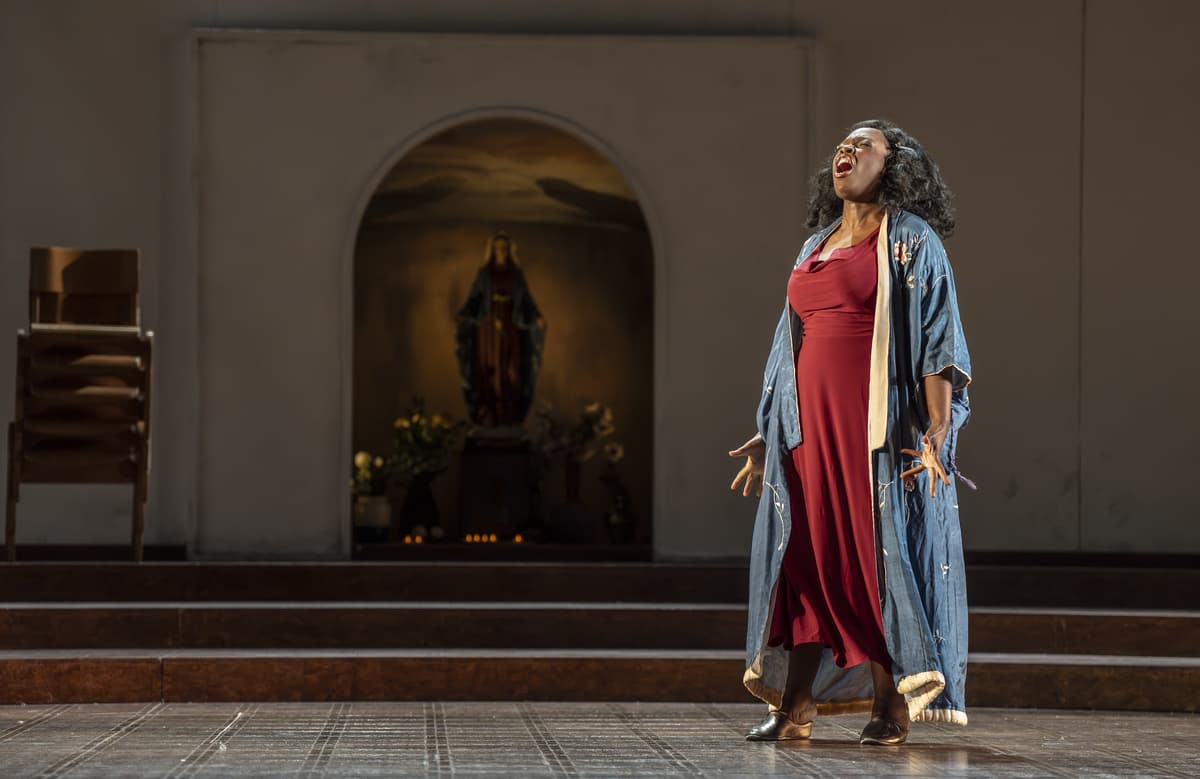
When it came to writing operas, exact chronology didn’t matter a great deal to Puccini, but the action in Tosca (first performed in 1900) can be dated with unusual precision: it unfolds in three acts over the afternoon and evening of June 17 1800 and the morning of June 18. That’s when Napoleon’s invading army liberated Rome from the tyranny of its Austrian occupiers. The opera isn’t really about that historical event, which becomes merely a backdrop to the sexually charged conflict between Cavaradossi, the would-be revolutionary artist; his lover Floria Tosca, an opera singer; and Scarpia, the predatory chief of police in an authoritarian regime.The sundry tensions, amorous and political, have invited many dramatic interpretations: in 1992, Plácido Domingo starred in a TV version, broadcast live, each act taking place at the actual location and time specified in the opera’s libretto. Others have taken a less literal approach. Several stagings have located the drama in pre-WWII fascist Italy, while Annilese Miskimmon’s new production for English National Opera takes us to “somewhere in Eastern Europe in the 1980s”: plenty of subtext there.Rosanna Vize’s single set depicts an awkwardly laid-out, split-level concert hall that has clearly seen better days. This particular regime seems to have it in for music: musicians are harassed, instruments are brutalised and broken, and in the final act are piled up in what looks like a funeral pyre.The Cast of ENO’s Tosca 2026Ellie KurttzAll this is dramatically viable but much of the action is ungainly, not entirely coherent. Crowds of people rush across the stage or wander aimlessly; a small army of men in black uniform strut around, waving nasty-looking guns, threatening an energetic chorus of kids (drawn from Marlborough Primary School) who try very hard to act unruly.Amid all this too-busy business, the ENO orchestra under Ben Glassberg delivers a spacious, finely detailed account, savage at times, at others luminous and lyrical. The singers, meanwhile, often struggle to impose themselves. As Tosca, Axelle Fanya produces moments of quiet vocal grace, but Chaz-men Williams-Ali’s Cavaradossi seems an unfocused presence. Both voices fray under pressure – and this being Puccini, there is pressure aplenty. The body language between them is clumsy, no surprise when they’re frequently many yards apart, expressing their passion at a distance across the vast Coliseum stage.The most impressive stage presence is Christopher Purves, who, without needing to snarl, makes Scarpia a figure of subdued menace, barely able to suppress his panting lust. Not for the first time, the villain of the piece is what sticks in the mind. That, and Tosca’s demise: inevitably – this is opera, after all – she must die and her death is spectacular and disturbing. Too much else feels cold and detached.
Tosca at London Coliseum: Too much feels cold and detached
Full Article
Original Source
Read the full article at Standard →KhanList aggregates and links to publicly available news content. We do not host full articles from third-party sources. Always verify important information with original sources.