
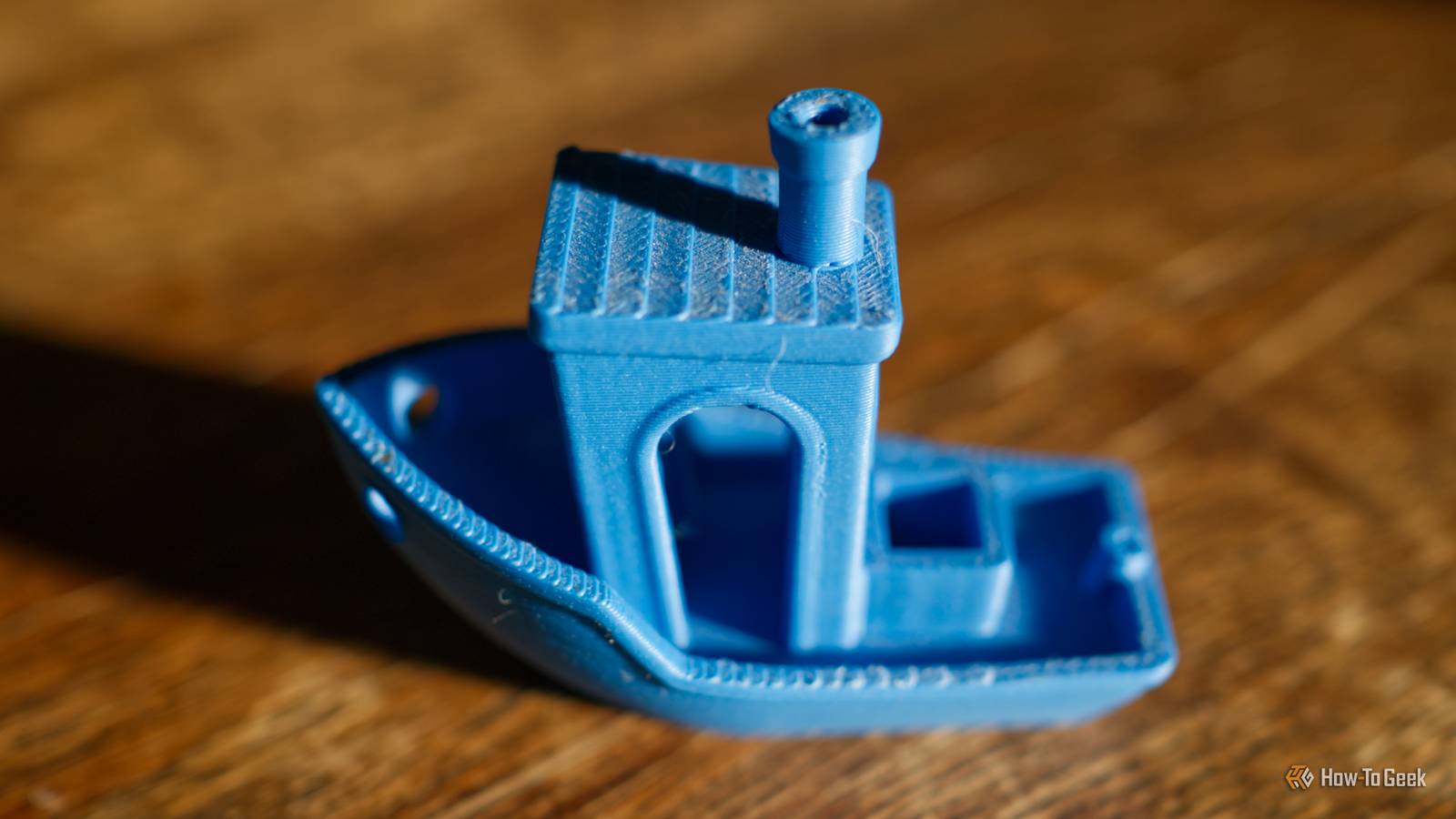
Credit: Tim Brookes / How-To Geek Published Sep 2, 2026, 6:00 AM EDT Tim has been covering technology for almost 20 years, in that time spanning a broad range of topics from security to product reviews. He is especially focused on the Apple ecosystem, productivity, and consumer advice. Over the years Tim has written thousands of articles, reviews, and round-ups in addition to producing video content and original photography. A graduate of journalism, he found his footing as a freelancer with a laptop and loves how he is able to work from practically anywhere. Now a Senior Editor for iPhone, Mac, and Smart Home at How-To Geek, Tim still loves to write. He can also be found crafting round-ups and productivity posts for the Zapier blog. Earlier in his career Tim spent nearly a decade as a writer and eventually Apple section editor for MakeUseOf. Tim currently lives in Brisbane, Australia. Outside of work he loves to hike and work out, play video games, and spend quality time with his wonderful partner and two cats Inka and Roger. Sign in to your How-To Geek account As the popularity of 3D printing has grown, the prevalence of so-called “torture tests” for 3D printers has waned. This is not a coincidence; these two trends are interlinked (and it’s a good thing). Here’s what’s going on. What torture-testing a 3D printer really means Beyond the Benchy “Torture testing” a 3D printer essentially means putting it through its paces to see what it’s really capable of. The aim isn’t to break the printer, but rather to reveal limitations in the printer’s abilities. The most well-known test of this kind is the 3DBenchy, which has become something of an unofficial mascot of 3D printing. Benchy was first released in 2015 and crammed several difficult tests into a form factor that resembles a cute boat. The large smooth hull is designed to test a printer’s ability to produce an overhang without supports. The symmetrical shape of the boat and perfectly horizontal sections are meant to induce warping. Small inclines are designed to reveal “stepping,” while text challenges the printer’s ability to reproduce fine details. While the Benchy remains the first thing that many new 3D printer owners create, it’s far from the only test of its kind. At the more challenging end of the spectrum is the Torture Toaster, a print-in-place model with hinged sides that should allow you to push down the side lever and see the toast pop up. Credit: Clockspring 3D / Patreon The print targets a different set of tests compared to Benchy. Bed adhesion is a challenge on account of limited contact points with the print bed, which means the print can slide off and fail. Elephant footing, where lower layers are compacted and spread out more, will prevent the parts from moving. Stringing not only looks bad but can stop your moving parts from working too. You’re still free to download and print these sorts of tests, but they’re no longer the big deal they once were. 3D printing evolved Printers are pretty great now Credit: Tim Brookes / How-To Geek Many of these tests were designed to reveal problems with your printer or print profile that you could fix to improve the quality of your prints. By modern standards, many of these tests are outdated. They had a lot more relevance when building your own 3D printer from off-the-shelf parts was more common, or when manual calibration was necessary. Newcomers to the world of 3D printing are better served by (and more likely to purchase) a modern printer from a brand like Bambu Lab. But even enthusiast brands like Prusa now handle routines like bed leveling and flow calibration automatically. These calibration processes fix a lot of the problems before they begin. The development of 3D printing ecosystems has also simplified other aspects. For example, if you buy Bambu Lab filament for your Bambu Lab printer, an RFID chip inside the spool notifies the printer what material you’re using. This means you don’t have to manually dial in settings like print temperature. Bambu Lab isn’t the only company doing this, with Prusa’s OpenPrintag standard working in much the same way. Even many of the maintenance routines designed to fix more difficult problems are now buried in a menu on the printer’s touchscreen display. For example, Bambu Lab printers walk you through every step of initiating a cold pull to clear a partial blockage. Modern 3D printers are a lot more capable than those that were around only five or 10 years ago, and that means high-quality printing and far fewer problems. Some torture and calibration prints endure Many of them just for “fun” Most 3D printer owners have a Benchy or two on a shelf somewhere, and there’s nothing wrong with that. Even though you don’t need to benchmark your printer, you still might want to do so. If you’re coming from a much older model, seeing the difference in a comparable print can show you how far these machines have come. While you might not want to print the aforementioned toaster, OrcaSlicer’s built-in set of calibration tools is one of the main reasons people still use the slicer. Models like the plain old Calibration Cube can help you diagnose any persistent issues or test filament for stringing, with the only cost being 5g of filament and 15 minutes of your time. More than ever, it feels like these tests are now most relevant to journalists and reviewers who put printers through their paces on an analytical level. You can watch these reviews for yourself on YouTube or peek at photos on the web; there’s little reason to run them yourself anymore. Modern printers can keep up, and print quality is no longer the main differentiating factor in terms of which printer to buy. Budget, which materials you want to print with, and the multicolor printing waste conundrum are more relevant now. 3D printer benchmarking may be outdated, but the Benchy world record is something every printer owner needs to see.
"Torture tests" used to be everything in 3D printing, here's why you don't hear about them anymore
Full Article
Original Source
Read the full article at Howtogeek →KhanList aggregates and links to publicly available news content. We do not host full articles from third-party sources. Always verify important information with original sources.