
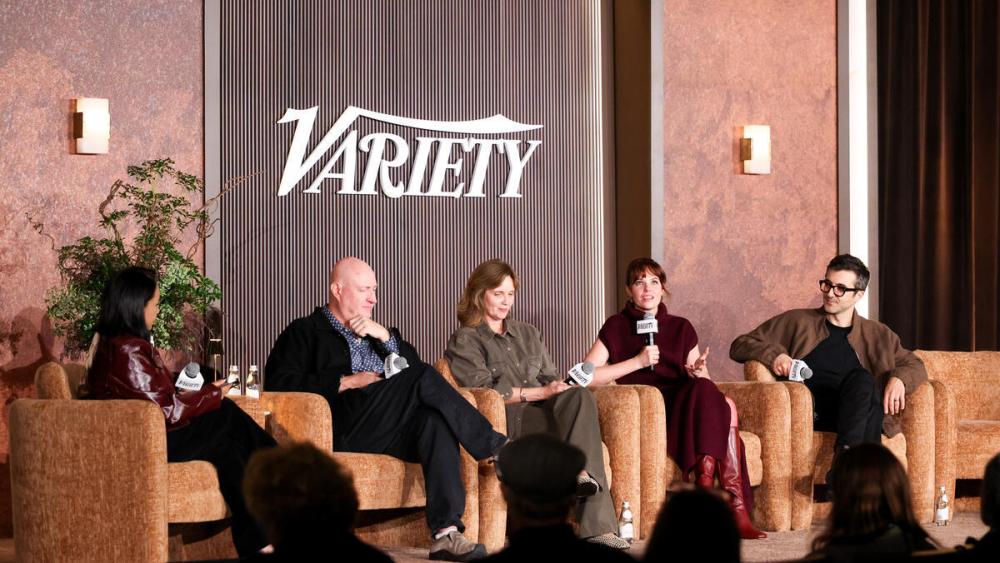
The writers and creators behind some of television’s most popular limited series joined Variety’s A Night in the Writers Room to discuss their creative processes behind adapting stories for television. Moderated by Variety’s senior artisans editor Jazz Tangcay, the limited series panel featured Nick Antosca of “Cape Fear,” Silka Luisa of “Blade Runner 2099” and Shawn Ryan and Eileen Myers of “American Hostage.” Each of the series highlighted during the panel were based on existing stories, whether it was a true-life event or a previously adapted narrative. For Antosca, the challenge was retelling the story of “Cape Fear” after two previous film adaptations. His goal was to make the new version feel fresh while preserving the elements that made the original films resonate with audiences. “The way I think about adaptations is, I want to create something that’s like the nightmare you have after you saw the original and went to sleep,” he said, earning a laugh from the audience. “You retained some ingredients, the visceral things, and then that mixed together psychologically with other new stuff that you bring to it. So you come out with something that feels, I hope, both familiar and surprising and strange.” Luisa faced a similar challenge when reimagining the “Blade Runner” franchise. Set 50 years in the future, the series required Luisa and her team to build on an established world while creating a story that felt distinctly their own. “American Hostage,” meanwhile, presented a different set of challenges, as it was based on a true story from 1977. Beyond extensive research consisting of 911 calls, newspapers and court documents, the creative team had to find a way to make the historic events resonate with modern audiences. Ryan shared that while the team felt an obligation to present an honest narrative supported by facts, creative judgement was used to fill in the gaps of what details remained unknown. Beyond the stories themselves, the panelists also discussed the importance of building the right writers’ room, which they agreed should consist of individuals who bring different strengths to the table. Ryan said his first guideline when assembling a writers room is recognizing his own weaknesses and finding people who can fill those gaps and offer different perspectives. “I certainly realize, as a showrunner, that we are missing out on so many perspectives. We are missing out on different life experiences,” he said. “I just learned [to ask], ‘How are these people going to fit in with each other? Where do I need help?’” Myers added, “In running a room, I always feel like, around that table, we’re on a boat together. We rise and fall together. And I do feel that best idea wins and also having an openness to people and their experiences.” The writers also agreed that chemistry is essential to a successful writers room, which should serve as a space where collaborators can experiment, fail and succeed together. “You’re putting it together like a band. It’s like somebody plays guitar, somebody writes for this character,” he explained. “Somebody writes for that character. Somebody brings the humor. Somebody has expertise in spycraft, and you’re thinking about all those things when you’re interviewing writers: How are these guys going to play the song? They can all be great, but if they’re the wrong alchemy, it’s not going to work.” That collaboration can extend to details audiences might not immediately notice, including episode titles. The panelists discussed how they approach naming episodes, with some titles serving as Easter eggs or nods to details that didn’t make it to the screen. For “American Hostage,” each episode is named after commercials and advertisements featured on WIBC in real life. Meanwhile, the first episode of “Cape Fear,” titled “Fingers & Toes,” references a moment from the 1962 film where Robert Mitchum’s character describes cutting off children’s fingers and toes. But writers can’t bring their visions to life alone. The panelists emphasized the importance of collaborating with department heads, who help translate the scripts into fully realized worlds. “When you find those people whom you have a shorthand with, they’re just worth their weight in gold,” Antosca said. “They become your closest collaborators.” Working closely with department heads was particularly important for “Blade Runner 2099,” given its visual storytelling and narrative that comes from outside the dialogue. Luisa explained that she finds it difficult to write a scene without knowing what the world around the characters looks like. “We had HODs [head of departments] from all over the world, craftsmen from all over the world, and each of them interpreted what was written differently,” Luisa said. “And I think we’re living in a time right now where the idea of human craftsmanship is being questioned, and to actually see people collaborate together in a room, and it’s so alive, I just feel so grateful to have had that gift. And I think when I watch the show, that’s the thing: I see everybody’s little voice on screen. It’s the magic.”
Top Limited Series Writers on the Importance of Episode Titles and Adapting Well-Known Films and True Stories: ‘You Come Out With Something Familiar and Surprising’
Full Article
Original Source
Read the full article at Variety →KhanList aggregates and links to publicly available news content. We do not host full articles from third-party sources. Always verify important information with original sources.