
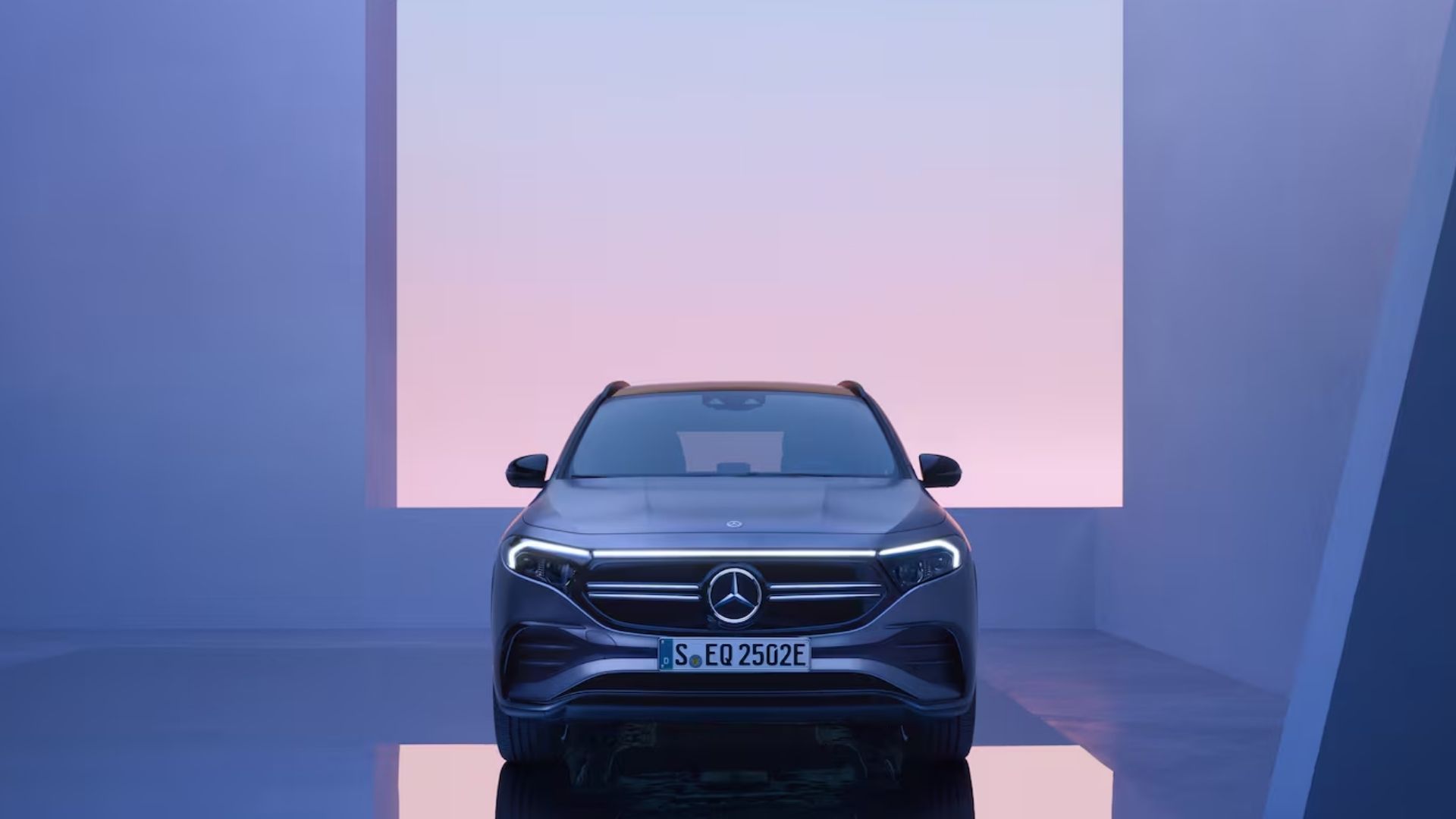
A new analysis of more than 500,000 independent electric vehicle battery tests has revealed which EVs retain the most battery capacity as they rack up mileage, and the results show that some batteries age considerably better than others. The study, conducted by Austrian battery diagnostics company AVILOO, examined 20 popular EV models using real-world battery health measurements collected between 2022 and 2026. The data comes from AVILOO’s global database of more than 1 million independent tests across North and South America, Europe, Australia, and Asia. Mercedes EQA leads after 150,000 km The study measures State of Health (SoH), which represents the percentage of a battery’s original usable capacity that remains. A battery at 95% SoH, for example, retains roughly 95% of its original range per charge. At 150,000 km (93,000 miles), the Mercedes-Benz EQA comes out on top among the 20 models, with a median battery SoH of 94%. The Hyundai IONIQ 5 follows at 93.8%, while the BMW i4 reaches 93.6%. The Hyundai Kona EV and Volvo XC40 Recharge round out the top five, with both retaining more than 92% of their median battery health at the same mileage. The IONIQ 5 is particularly notable because it starts at the top of the dataset at lower mileage. Its median SoH is around 97% at 50,000 km, before falling to 92.8% at 150,000 km. That means an IONIQ 5 reaching 150,000 km has, on average, retained nearly 94% of the usable capacity it had when new. Other strong performers include the Ford Mustang Mach-E and Polestar 2, both at around 92.5% median SoH after 150,000 km, followed by the Cupra Born and Volkswagen ID.3 at around 92%. How do Tesla batteries compare? Two of the world’s most recognizable EVs sit noticeably lower in the rankings. The Tesla Model Y records a median SoH of 90.3% at 150,000 km, down from 94.5% at 50,000 km in AVILOO’s detailed analysis. That corresponds to an estimated real-world range of roughly 379 km at 50,000 km and about 362 km at 150,000 km. The Tesla Model 3 performs somewhat worse, with a median SoH of 88.9% at 150,000 km. That doesn’t necessarily mean either Tesla has a poor battery. Both still retain the majority of their original capacity after roughly 93,000 miles. Rather, they illustrate how battery degradation can vary substantially between models. The Nissan Leaf ZE1 sits at the other end of the study, with a median SoH of 86.3% at 150,000 km. AVILOO highlights its relatively small 40-kWh battery as an important factor. Covering the same distance requires more charging cycles than it would with a much larger battery. The Leaf isn’t alone at the bottom. The MINI Cooper SE and Renault Zoe also record median SoH figures below 88% at 150,000 km. The biggest surprise isn’t the rankings The most important finding may be that two identical EVs can have very different battery health. AVILOO found that the gap between individual vehicles of the same model can reach 13.5 percentage points of SoH. The variation generally becomes wider as mileage increases. For the Tesla Model Y, for example, individual vehicles at 150,000 km can differ by up to around 11% in SoH. For the IONIQ 5, the spread exceeds 12%. In the Nissan Leaf, it reaches 13.5%. Those differences are more meaningful than they might sound. A 10% difference in battery health can translate into tens of kilometers of real-world range, potentially determining whether a used EV completes a journey comfortably or needs another charging stop. That means mileage alone isn’t a particularly good indicator of the condition of a used EV’s most expensive component. Why batteries degrade differently Mileage is only one part of the equation. AVILOO points to factors including battery chemistry, climate, charging behavior, and how long a vehicle remains at a high state of charge. Temperature can affect both battery degradation and charging behavior, which is one reason the study’s global dataset is useful. Its tests span multiple continents and a wide range of driving and climate conditions. The study also uses independent measurements rather than simply taking the battery-health figure displayed by the vehicle. AVILOO’s three-minute FLASH Test connects through the vehicle’s OBD port and uses a statistical model trained on hundreds of thousands of real used vehicles, incorporating factors such as mileage, age, cycles, cell-voltage spread, and energy measurements. Overall, the results are reassuring for EV owners. Even the lower-ranked models retain substantial battery capacity after 150,000 km, while the strongest performers remain above 93%. But for someone buying a used EV, the bigger lesson is more nuanced. The battery health of the specific car matters more than the average health of its model. Two EVs with the same badge and mileage can have very different amounts of usable life left in their batteries.Get the latest in engineering, tech, space & science - delivered daily to your inbox.Kaif Shaikh is a journalist and writer passionate about turning complex information into clear, impactful stories. His writing covers technology, sustainability, geopolitics, and occasionally fiction. A graduate in Journalism and Mass Communication, his work has appeared in the Times of India and beyond. After a near-fatal experience, Kaif began seeing both stories and silences differently. Outside work, he juggles far too many projects and passions, but always makes time to read, reflect, and hold onto the thread of wonder.
Top EVs retain more than 90% of battery capacity after 93,000 miles, study shows
Full Article
Original Source
Read the full article at Interestingengineering →KhanList aggregates and links to publicly available news content. We do not host full articles from third-party sources. Always verify important information with original sources.