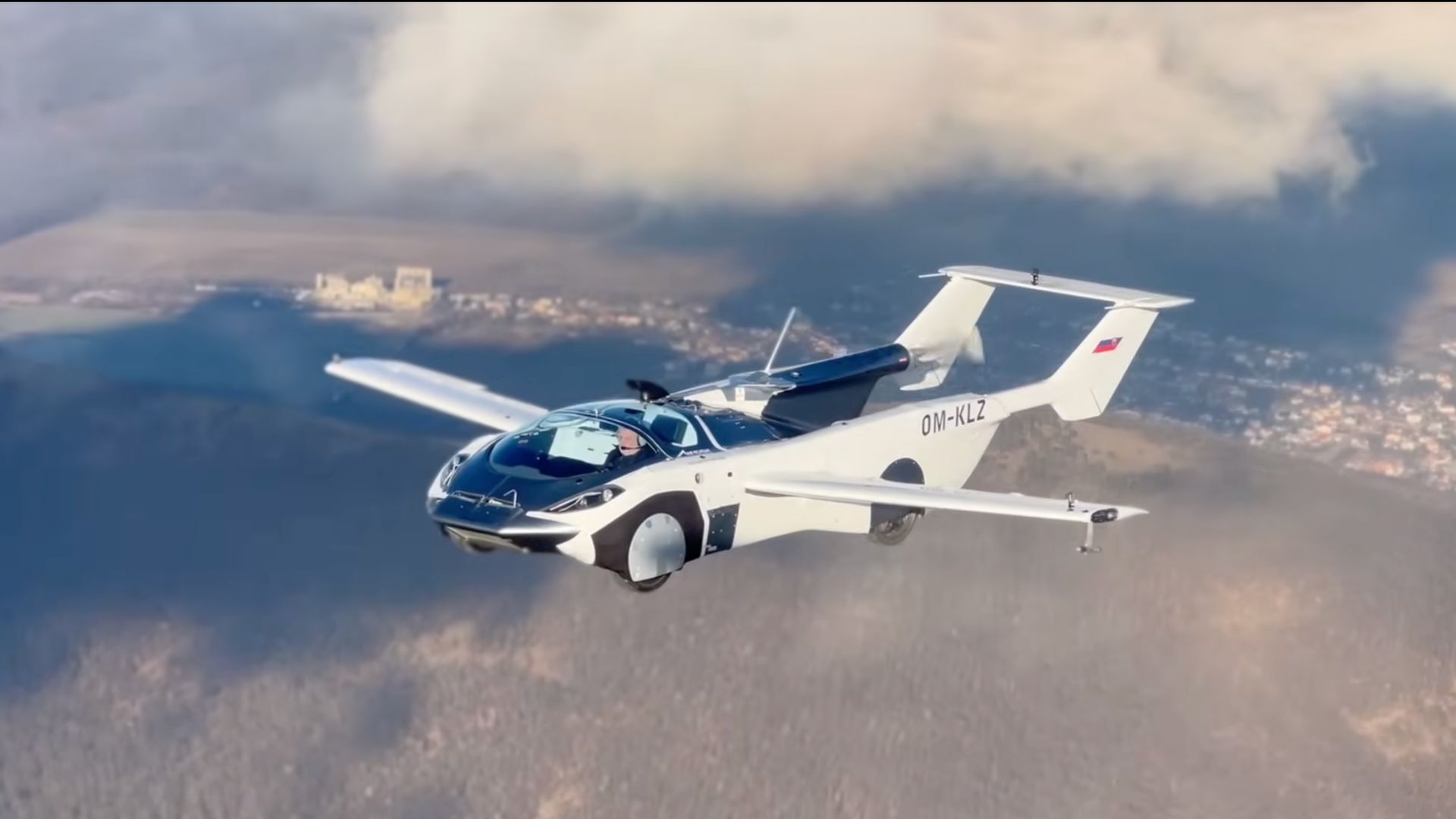
For decades, the idea of a flying car has lived somewhere between science fiction and engineering ambition. While battery-powered electric vertical take-off and landing (eVTOL) aircraft have dominated recent headlines, a growing number of developers are betting on hydrogen instead. Unlike batteries, hydrogen fuel cells and hydrogen combustion systems promise longer flight times, faster refueling, and significantly greater range. Advantages that could prove critical for the future of urban and regional air mobility. Most hydrogen-powered flying cars are still in development, and only a handful have progressed beyond concept studies. Nevertheless, these aircraft offer a glimpse into how hydrogen could reshape personal aviation over the coming decades. 1. Piasecki PA-890 The PA-890 is among the most mature hydrogen-powered VTOL projects currently under development. Created by U.S.-based Piasecki Aircraft, the aircraft is designed for regional transportation, cargo missions, and emergency response rather than short urban hops. Instead of relying solely on batteries, the PA-890 uses hydrogen fuel-cell technology to power its electric propulsion system. This approach aims to deliver substantially longer endurance while reducing refueling time compared to conventional battery-powered eVTOLs. The aircraft is intended to carry multiple passengers or cargo, making it one of the more practical hydrogen-powered designs under active development. 2. Sirius Jet Swiss startup Sirius Aviation AG attracted global attention when it unveiled the Sirius Jet, a hydrogen-powered eVTOL envisioned as a zero-emission personal aircraft. The company has proposed both business and regional variants capable of carrying several passengers while using hydrogen fuel cells to drive electric propellers. Sirius claims the aircraft could achieve ranges significantly beyond those of most battery-powered competitors, although the design remains in development and has yet to enter commercial service. If the project reaches certification, it could become one of the first hydrogen-powered aircraft targeted specifically at personal and executive transportation. 3. Klein Vision AirCar (Hydrogen Version) Unlike most aircraft on this list, the Klein Vision AirCar has already demonstrated real-world road and flight capability. The Slovak-developed vehicle has successfully completed thousands of kilometers of road driving and hundreds of test flights using a conventional engine. Building on that success, Klein Vision announced plans to develop a hydrogen-powered version capable of substantially extending range while reducing emissions. Rather than an eVTOL, the AirCar is a true roadable aircraft, transforming from a car into a fixed-wing airplane in under two minutes. Although the hydrogen-powered model remains under development, it represents one of the most credible efforts to combine hydrogen propulsion with a genuine flying car. 4. CityHawk Israel’s Urban Aeronautics is taking a different approach with its CityHawk aircraft. Instead of exposed propellers or large rotor systems, the aircraft employs an enclosed fan configuration designed to improve safety when operating in dense urban environments. The company has announced plans for a hydrogen fuel-cell version intended to increase range while maintaining zero in-flight emissions. CityHawk is envisioned for emergency medical services, air taxis, and government operations, with enough cabin space to transport passengers or medical personnel comfortably. Its compact footprint and enclosed propulsion system make it one of the more unconventional aircraft in the emerging advanced air mobility sector. 5. Dragonfly DF600 Hydrogen Concept The Dragonfly DF600 represents another effort to combine hydrogen propulsion with personal air mobility. Designed around hydrogen-electric propulsion, the concept seeks to overcome one of the biggest limitations facing battery-powered aircraft: energy density. By using hydrogen instead of large battery packs, developers hope to increase payload capacity, extend operational range, and shorten turnaround times between flights. Like many next-generation hydrogen aircraft, however, the DF600 remains in the concept and development stage, with certification and commercial deployment still several years away. Why hydrogen is attracting attention Hydrogen offers several advantages over conventional batteries for aviation. It contains far more energy per unit of weight, allowing aircraft to fly longer distances without carrying massive battery packs. Refueling can also take minutes rather than the extended charging times required for large electric batteries. Those benefits make hydrogen particularly attractive for regional aviation, emergency services, and commercial air taxis that need high aircraft utilization throughout the day. The technology, however, also presents major engineering challenges. Hydrogen requires specialized storage systems, dedicated airport infrastructure, and rigorous safety standards. Fuel-cell systems remain expensive, while producing sufficient quantities of low-carbon hydrogen continues to be an obstacle in many regions. For these reasons, most hydrogen-powered flying cars remain in the prototype or development phase rather than commercial operation. The road ahead Hydrogen-powered flying cars are unlikely to replace conventional automobiles anytime soon, but they represent an intriguing direction for next-generation aviation. As hydrogen production expands and fuel-cell technology matures, these aircraft could complement battery-powered eVTOLs by offering longer range, higher payloads, and quicker turnaround times.Whether hydrogen ultimately becomes the dominant energy source for future flying cars remains uncertain. But with manufacturers across Europe, North America, and Asia investing in the technology, it is increasingly clear that hydrogen will play an important role in shaping the future of personal and regional air mobility.Recommended ArticlesKaif Shaikh is a journalist and writer passionate about turning complex information into clear, impactful stories. His writing covers technology, sustainability, geopolitics, and occasionally fiction. A graduate in Journalism and Mass Communication, his work has appeared in the Times of India and beyond. After a near-fatal experience, Kaif began seeing both stories and silences differently. Outside work, he juggles far too many projects and passions, but always makes time to read, reflect, and hold onto the thread of wonder.
Top 5 hydrogen-powered flying cars, eVTOLs that are under development
Full Article
Original Source
Read the full article at Interestingengineering →KhanList aggregates and links to publicly available news content. We do not host full articles from third-party sources. Always verify important information with original sources.