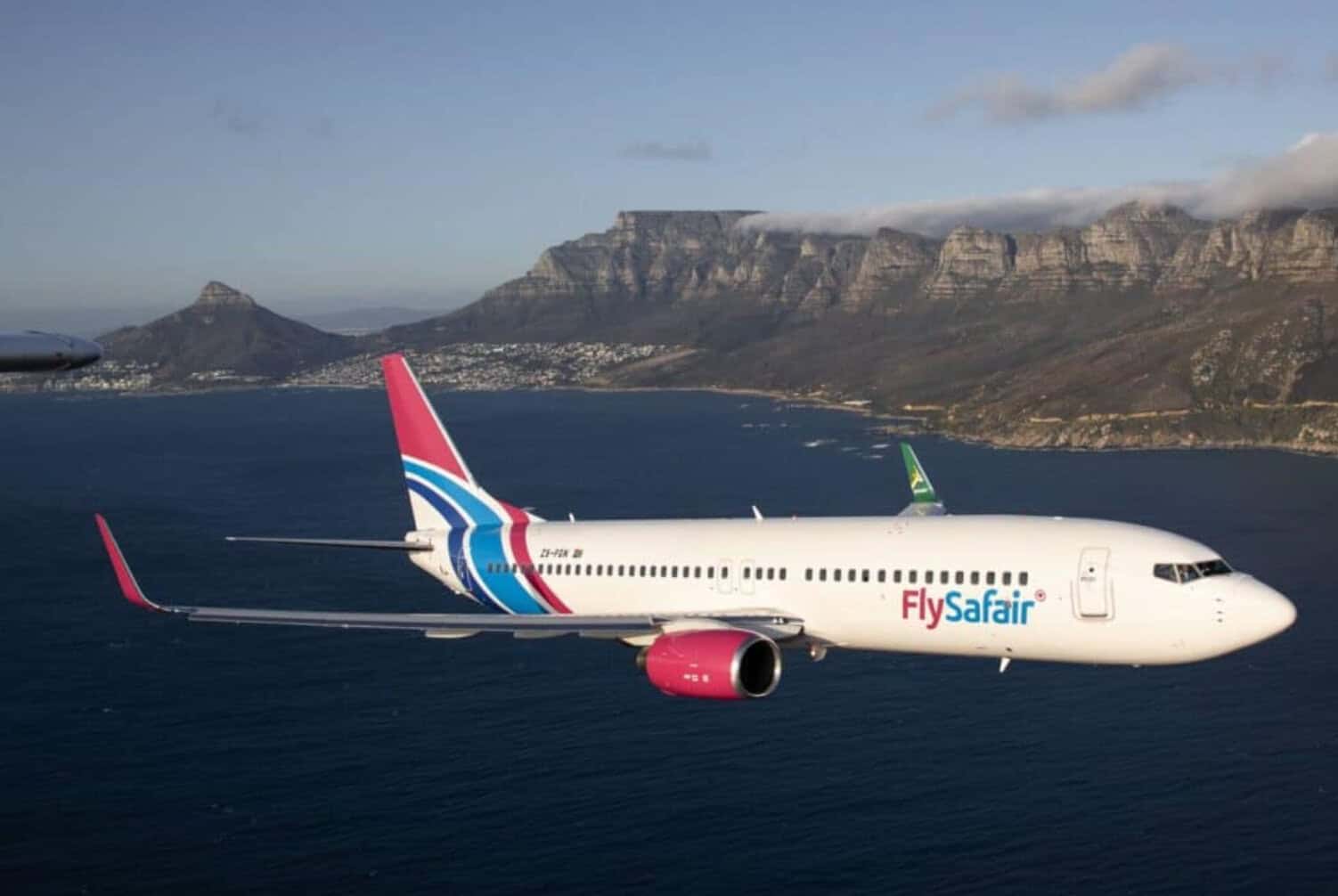
Airline commits to removing it, but warns that jet fuel prices are unlikely to return to pre-war levels. Low-cost airline FlySafair has committed to removing the surcharge it added to its ticket prices in March because of the increased cost of jet fuel the moment the market lets it, but warns that there will be a “new normal”. Jet fuel prices increased significantly because of the US conflict with Iran and disruption to oil shipments through the Strait of Hormuz. FlySafair chief marketing officer Kirby Gordon said on Wednesday that the airline itemises the surcharge on every ticket as a line item and reviews it weekly, adding that longer routes burn more fuel and therefore carry a higher surcharge. He said the surcharge reached its peak on 14 April and was adjusted downwards on 21 July. Typical FlySafair fuel surchargeAt peakAdjusted 14 April 21 JulyChangeCape Town to DurbanR830R378Down R452Cape Town to JohannesburgR822R375Down R447Johannesburg to MauritiusR1 429R652Down R777 Gordon said the airline wants to try and remove it as soon as conditions allow and that FlySafair hoped it would have gone by now. “We want to try and get it down to a reasonable base. There will be a new normal,” he said, adding that it is unrealistic to expect that jet fuel prices will get back to pre-conflict levels soon. He said the airline needs a stable environment where the geopolitical scenario stablises “wherever it’s going to stabilise” before it can make the call to remove it. Gordon said it is tough to know right now what will happen to jet fuel prices in the short term. “We’re thinking one minute everything is cool and then Donnie [US President Donald Trump] freaks and drops another bomb and then things change.” He said FlySafair is seeing the constriction in the Strait of Hormuz and its other concern is what happens to the rand against the US dollar over the next couple of weeks because the rand has weakened and is the airline’s other exposure. Impact on bookings He said the introduction of the surcharge had resulted in a 14% drop in demand for FlySafair tickets. Without line of sight of what its competitors’ numbers look like he therefore has to “talk from my reality”. Gordon said there is obviously an improvement in demand when the surcharge is reduced, while stressing that demand is seasonal. The problem FlySafair has is that because it serves such a broad spectrum of the market, if inflation spikes, the inflation on airline tickets does too. “We are still out of grasp of a level of consumer… who cannot give us anymore. That is still going to be around. It just diminishes our boardings and market.” Multi-level vulnerability to jet fuel price Gordon pointed out that the price of jet fuel has more than doubled over the past year, while the price of petrol has ‘only’ risen by about a third. He highlighted a number of factors that have increased the vulnerability of airlines to the jet fuel price: The number of crude oil refineries operating in South Africa declined from six to two between 2015 and 2026; 75% of South Africa’s fuel is now imported compared to 20-30% pre-Covid; 70% of Africa’s jet fuel imports arrive via the Strait of Hormuz; and 50-55% of FlySafair’s direct operating cost is fuel and is its single largest input cost. Gordon said before the US-Iran war began in February FlySafair’s landed jet fuel cost averaged R11.40 per litre. It went on to reach a peak of R30-plus per litre, and in July had come down to R18 per litre – still 60% higher than the pre-war price. He stressed that this is not a local pricing decision or profiteering but a global supply shock landing on a country that now imports most of its fuel. Airline is on the up Gordon said FlySafair now has 60% of the domestic airline industry seat capacity – a significant increase from about 24% pre-Covid following the demise of some airlines during the pandemic. He said there was the opportunity for FlySafair to increase its domestic seat capacity at that point and “the growth trajectory from here on out is pretty much [in line] with GDP”. “There has always been a strong correlation between that but obviously with that vacuum of supply in the market, it created the opportunity at the time to pounce, which we did but so did everyone at the time. For example, Airlink is much bigger.” Gordon said FlySafair is considering expanding the international routes it offers but the realistic options are narrower than in the Americas, Europe and much of Asia. He said FlySafair is considering adding new flights to Harare in Zimbabwe, a Johannesburg-Windhoek link following its establishment of the Cape Town-Windhoek route, and other capital cities in Africa. The airline will also consider using the planned Cape Winelands Airport. This article was republished from Moneyweb. Read the original here.
Too soon for FlySafair to ‘make the call’ on ticket surcharge
Full Article
Original Source
Read the full article at Citizen →KhanList aggregates and links to publicly available news content. We do not host full articles from third-party sources. Always verify important information with original sources.