
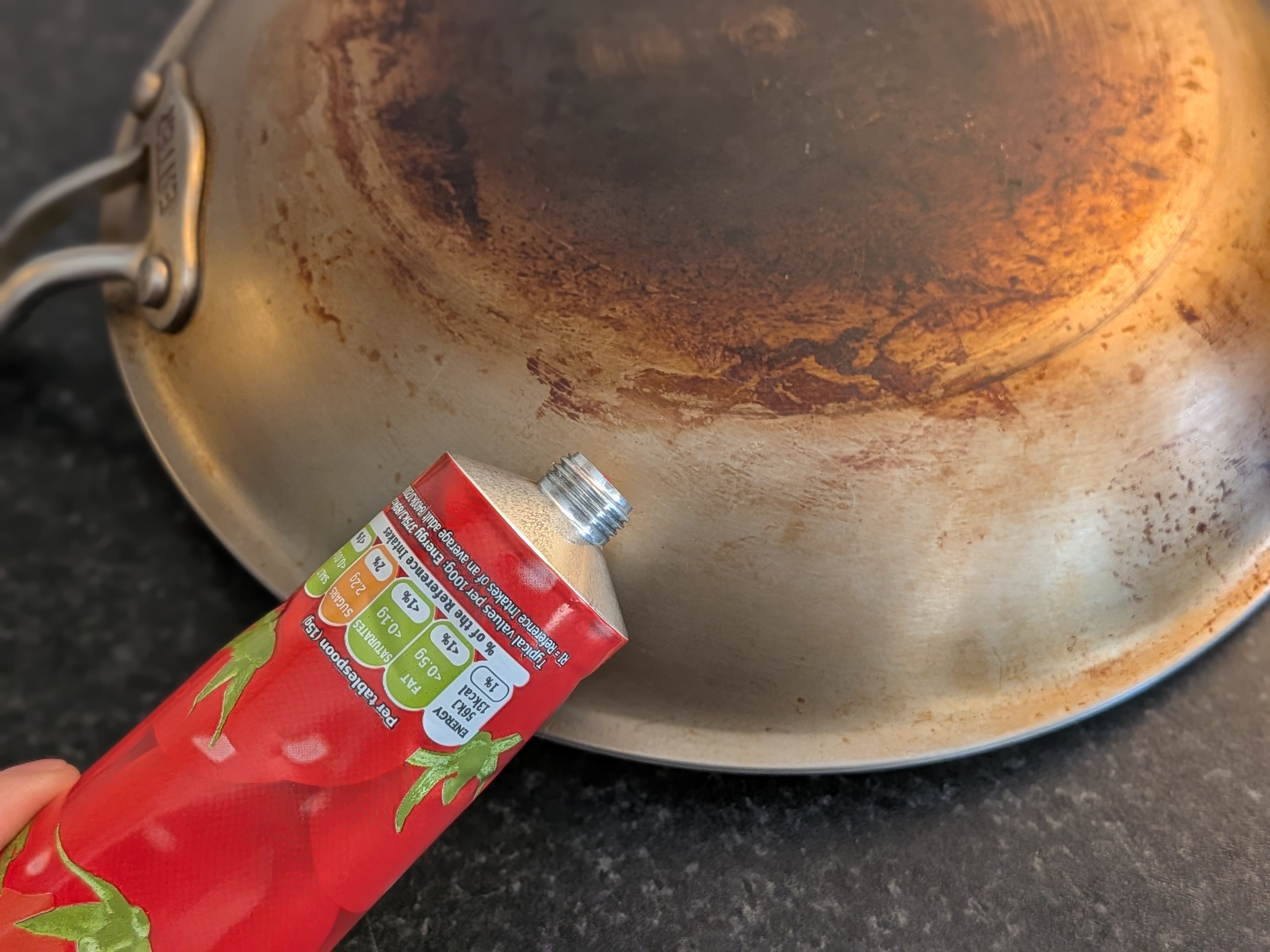
For every spill, splatter or spot, there seems to be a specific product promoted to make you believe nothing else could possibly handle the job. We already know that’s false, right? Pantry heroes such as white vinegar, baking soda and club soda are already staples in our regular rotation when we’re not sure which of the dozens of bottles under the sink to grab. 47 Kitchen Gifts for the Food Freak in Your Life Many other kitchen staples, however, can also handle certain types of dirty work. None of these are exactly an all-purpose cleaner (as may be obvious with staples such as tomato paste, below), but for specific jobs, in the absence of the perfect product, or to spite the industrial cleaning complex that would have you believe there is a perfect product, the solution or anecdote may already be lurking in your cupboards. Using that which you already have on hand is a win-win-win. You’ll feel like a mastermind, save money and avoid the tyranny of more and more plastic. “The most sustainable cleaner is usually the one already in your kitchen, says Julian Silva, founder of Plastno nontoxic cleaners, “because you skip buying another single-purpose bottle.” To use pantry products for cleaning and polishing, “It’s helpful to figure out why a certain product or method works in order to better determine other applications,” says Sofia Martinez, cleaning expert and owner of Sparkly Maid Austin. She also cautions, however, “Disinfecting is not the same as cleaning. Just because a product or method removes soil, provides shine or covers up odor doesn’t mean that the surface has been properly disinfected.” Don’t let these groceries fool you; they all make excellent cleaning agents.Pamela Vachon/CNET Silva, Martinez and other cleaning experts below explain why and share seven kitchen staples you probably already have on hand that can clean or polish. Olive oil: To shine and polish appliances Use a dab of olive oil to polish stainless-steel appliances.Alina Bradford/CNET Polishing and disinfecting are far from the same thing, but the kitchen staple you might have sitting right next to your stove can also add shine. “Olive oil can make fingerprints on stainless-steel appliances much less noticeable, because it creates an ultra-thin coating that changes how light reflects off the surface and disguises smudges,” says Raquel Perez, owner of Karen’s Green Maids in Chicago. You’re not going to want to use large quantities of oil to clean up the oil and other foodstuffs that spatter during cooking, obviously. “Only use a tiny drop,” Perez advises. “Rub it onto a microfiber cloth, and always test on a small, hidden area first. Too much will make it feel greasy.” Tomato paste: To polish metal pans If you use tomato paste to clean cookware, always spot-check a small area first.Pamela Vachon/CNET Tomato paste isn’t exactly something like baking soda, where you might confidently apply it to whatever and see if it works. “I would describe tomato paste as a very limited tarnish removal option, not an all-purpose cleaner,” says Martinez. In other words, don’t rub deeply colored, concentrated tomatoes on your cutting boards and countertops. However, it might do the trick for polishing stainless steel, copper pots and pans, or brass fixtures. “Its acidity can help loosen some oxidation,” she says, “while its thick consistency helps the paste stay in contact with the surface.” As with just about everything here, try a small amount on an out-of-the-way spot first. Bread: To soak up leftover oil and shards of broken glass A humble nub or slice of stale bread can be used to pre-degrease a pan before washing.Pamela Vachon/CNET Soaking up excess oil with bread is the kind of hack that deserves its own headline. (See here.) You can also use it in place of a broom when something shatters. “Soft bread is great for broken glass because the crumb grabs the tiny shards a broom misses,” says Silva. “Carefully pick up the big pieces first, then press a slice over the area and toss it right after.” Make sure to press, not rub, as rubbing can cause bigger problems and small scratches. Disposing of it right away, and deep in the trash, is also crucial so nobody (including pets) mistakes it for something they could eat as a snack or croutons. Flour: To scour a stainless steel sink Flour can scour grime out of the sink and give a polished lookPamela Vachon/CNET Your sink may be the basin you use for rinsing and cleaning, but grime and soap residue can build up in certain places and require cleaning. For a quick fix that requires less elbow grease and leaves your stainless steel sink shiny, turn to your baking supplies. The shiny results speak for themselves.Pamela Vachon/CNET “Sprinkle a little flour over a clean, dry sink and rub it around with a soft, dry cloth or paper towel to remove residual grime and give it a polished look,” says Sham Zemichael, owner and operations manager of Costina Cleaning Services. Conditions must be right in order to begin here, though. “Note that this can backfire if you do it over a damp sink,” he says. “You’ll be left with a flour slurry and more grime than there was before. I use it as a finishing touch on washed and completely dried sinks, and I also recommend keeping the flour away from the drain to avoid it clumping in there.” Cream of tartar: For buffing scratches on ceramics Cream of tartar is mildly acidic, so it can buff out gray marks.Pamela Vachon/CNET Grey marks on ceramics often come from metal silverware. Cream of tartar might be one of those baking supplies that sits in the back of your cabinet for years (decades?) because it’s used only for highly specific baking projects. If you’re not regularly stabilizing egg whites in your kitchen or using it as a baking soda sidekick, try using it up before the best-by date by giving it another purpose. Voila! “Most of those gray ‘scratches’ on ceramic plates and sinks are actually metal left behind by forks and knives, since the glaze is harder than the cutlery,” says Silva. “Cream of tartar mixed into a paste with a little water is a gentle, mildly acidic abrasive, so it rubs that metal off without hurting the glaze.” It won’t fix a true scratch, but it will give old ceramics a smart look when they just need a little glow-up. Potato and baking soda: To remove rust from cast iron Small amounts of oxalic acid inside potatoes help loosen rust buildup,Getty Images Seasoning cast iron is a process unto itself, giving its heavyweight, heat-retaining base what is essentially a nonstick surface. Even if you consistently give your cast iron the white-glove treatment in care and cleaning, little rust spots can still appear here and there. You don’t always have to start over with the full seasoning process when this happens, however. “My favorite way of cleaning light surface rust on cast iron is dipping a half-cut potato in baking soda and rubbing it over the rusty patches,” Zemichael says. “The small amounts of oxalic acid inside potatoes help loosen rust buildup, and the baking soda acts as a mild abrasive for a cleaner finish,” he says. “It doesn’t work for stubborn rust, though. I simply use it for new spots when they appear.” Mayonnaise: For treating water ring stains in wood Mayo makes a surprising foil for water rings on wood.Pamela Vachon/CNET For kitchen tables or coffee tables that have been begging you to use coasters, you may be able to minimize water rings with what you have on hand for sandwiches. “Mayonnaise can help with water ring stains in some types of wood,” says Perez. “Before trying this solution, find out what type of wood finish your table has and how deep the water-ring stain goes,” she says, whether it’s just in the finish or goes deeper. “That will affect how you should try to remove it and avoid making the situation worse.” The vegetable oil in full-fat mayonnaise can help displace the moisture that’s locked inside the finish. Apply a thin coating to the ring and let it sit for at least 15 minutes or overnight, covered with plastic wrap. Wipe with a clean, dry cloth after the mayo has absorbed the moisture. White or hazy rings are worth trying this on, but darker rings might be beyond help. “The mayo can affect the appearance of the stain, as opposed to removing it,” says Perez, and you could be left with a greasy area around the stain if it’s not completely removed.
Tomato Paste, Mayo and 5 More Foods You Can Use for Cleaning
Full Article
Original Source
Read the full article at Cnet →KhanList aggregates and links to publicly available news content. We do not host full articles from third-party sources. Always verify important information with original sources.