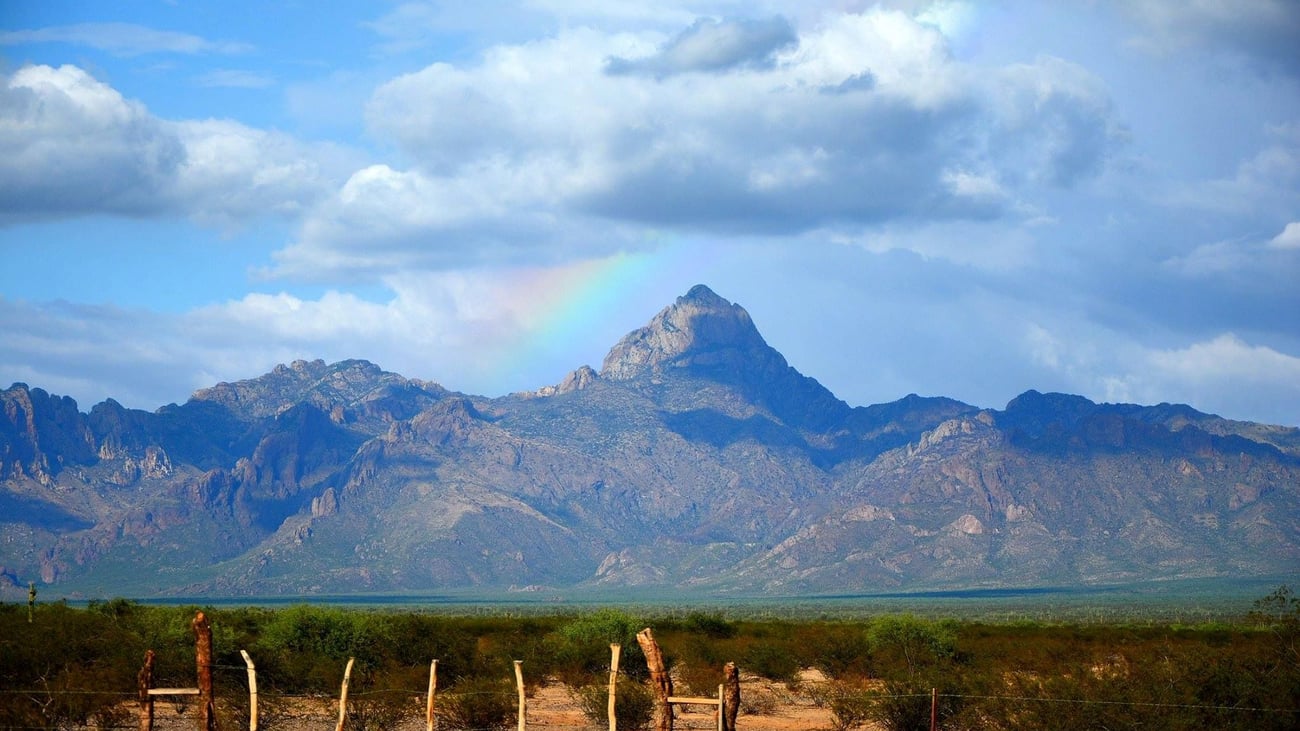
The nation warns any construction would likely require the blasting of several sacred mountain ranges that span the border between Arizona and Mexico, such as the Baboquivari Mountain.WASHINGTON (CN) — A federal judge appeared unconvinced Wednesday that he should preliminarily block the Trump administration’s effort to add 62 miles of border wall across the Arizona-Mexico border that would cut through the Tohono O’odham Nation Reservation.Senior U.S. District Judge Richard Leon said the tribe’s request was “extraordinary” and suggested no judge had ever ruled in a case like this, noting the weighty national security interests the government claims require a wall to gain “operational control” of the southern border.The Tohono O’odham Nation is the largest Indigenous nation located along an international border and historically made up large swaths of southern Arizona and Sonora, Mexico. That status makes it unlikely any case law could directly apply, as any similar reservation is either significantly smaller or on the Canadian border.The Tohono O’odham Nation sued the Trump administration June 16, seeking a preliminary injunction to block the Department of Homeland Security’s construction, which it was informed of on May 15 without any request for the nation’s consent.On June 26, U.S. Customs and Border Protection awarded a contract to SLSCO Ltd. to construct the border wall project, referred to as the “Tucson 5 Wall Project,” using funds from last summer’s “One Big Beautiful Bill.”According to the Tohono O’odham, the border wall project would “unilaterally alter” the reservation’s boundaries and result in the destruction of sacred mountain ranges such as the Baboquivari Mountain — the home of the creator god I’itoi — separate O’odham communities and families, interfere with religious rituals and destroy sacred plant and wildlife populations.Riyaz Kanji of Kanji & Katzen, representing the nation, urged Leon to grant a preliminary injunction to prevent the construction and said it amounted to a “true, unbridled trespass” on the nation’s sovereignty and on its land.“This is a blatant and unprecedented disregard for the nation’s rights,” Kanji said, slamming the government’s conduct as a return to a long history of federal agents changing Indigenous reservations’ boundaries without tribal or congressional consent.The George W. Bush appointee’s concerns centered on a 1907 Proclamation by President Theodore Roosevelt that established a 60-foot strip of land along the southern border as a “public reservation,” which has allowed the federal government to erect certain structures for border security. In 2004, the government and tribe constructed 52 miles of vehicle barriers within that zone.Kanji argued the government would be unable to construct large portions of a 30-foot wall within that 60-foot zone, in part because four mountain ranges straddle the border, or would otherwise require significant blasting that would easily bleed into the reservation.He further drew a comparison between Leon’s recent cases regarding the White House ballroom, noting that while this case differed in the construction of a wall versus the demolition of the East Wing, the harm to the nation’s sovereignty and the potential for significant demolition would be irreparable.The nation argues Homeland Security’s unilateral decision clearly violates 28 U.S. Code 258, which requires any change in the boundaries of a reservation to only be done via an act of Congress, not simple agency action.Justice Department attorney Adam Gustafson urged Leon to reject the nation’s requested preliminary injunction, arguing Congress had approved the project via the One Big Beautiful Bill and warned leaving just the vehicle barrier in place would result in a “funneling effect” at the reservation’s southern border.Speaking outside the E. Barrett Prettyman Courthouse following the hearing, Tohono O’odham Nation Chairman Verlon Jose emphasized the nation’s long-standing responsibility to care for the wildlife in the Sonoran Desert that migrates throughout the region, on either side of the border.“Our mission is to protect everything that the creator has given us,” Jose said. “When the nation agreed to the vehicle barriers, it was so important to listen to the elders who said, if we put something up, it had to be environmentally friendly; it cannot stop the migration of the animals because that’s the biggest part of our life.”Over 60 threatened and endangered species regularly migrate across the border, including the highly endangered jaguar, Sonoran pronghorn and the Mexican gray wolf.“The migration of animals has everything to do with who we are and why we’re here,” Jose added. “It wasn’t about the domestic animals — it’s about the wildlife. We speak for them as well; we speak for the four-legged, we speak for all those animals who can’t speak for themselves.”The Tohono O’odham Nation was supported by a packed courtroom that included representatives from the Salt River Pima-Maricopa Indian Community and the Gila River Indian Community.Subscribe to our free newslettersOur weekly newsletter Closing Arguments offers the latest about ongoing trials, major litigation and rulings in courthouses around the U.S. and the world, while the monthly Under the Lights dishes the legal dirt from Hollywood, sports, Big Tech and the arts.Additional Reads
Tohono O’odham Nation faces uphill battle in blocking early phases of border wall construction
Full Article
Original Source
Read the full article at Courthousenews →KhanList aggregates and links to publicly available news content. We do not host full articles from third-party sources. Always verify important information with original sources.