
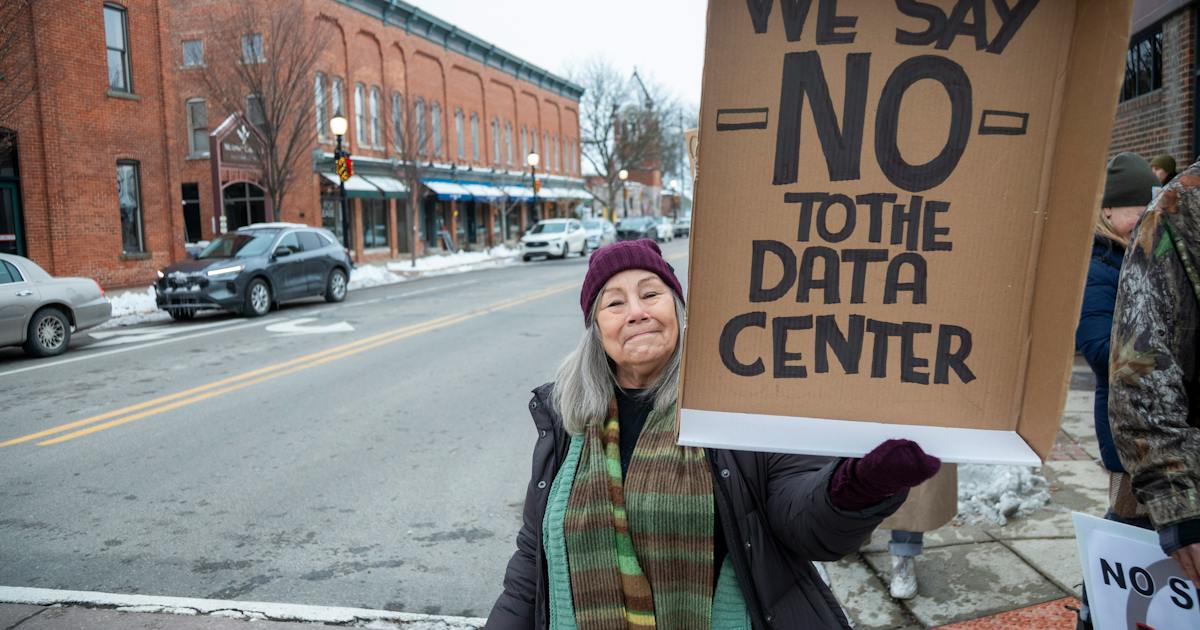
For years, I have looked for any excuse to redirect a conversation toward the impacts of artificial intelligence. But when I launched my campaign for Congress last December, I committed to not bringing up the topic for the first few months. I wanted to focus on the skyrocketing costs of groceries, health care, rent, and childcare to build the trust needed to raise concerns about AI.I was wrong. In my first week on the trail, voters asked me about AI at every event we held. With intensity in their voices, parents were asking me how to protect their kids from addiction and self-harm and to protect their aging parents from increasingly sophisticated scams. Educators are wondering what skills are still worth teaching kids when “Nafta on steroids” is hurtling toward us. More than a few pastors have suggested the devil is at work through AI. And, yes, voters are raising more and more concerns about the potential for existential risk (“x-risk”). At a farmers market this summer, a 73-year-old watermelon grower from Halifax County, during a conversation about the suffocating costs of fertilizer and diesel, said, “Yeah, this war is killing us. But what about these rogue bots? Seems like they might just kill us all.” At a town hall in Pittsylvania County this month, one-third of all questions were about AI—over half, if you include questions about data centers. The American people are hungry for a serious national strategy on AI. So far, neither party has offered more than table scraps. The most obvious explanation for this gap is to follow the money. Big Tech has built a nine-figure war chest full of carrots and sticks. When state Assemblyman Alex Bores wrote New York’s AI safety law and ran for Congress, tech giants promised to make an example of him (their words!), and Leading the Future and affiliated PACs spent more than $8 million to beat him in his primary. They have already shown that they will bankroll campaigns of those who bend the knee. Certain tech titans spent handsomely on Donald Trump’s reelection, and he handed them the pen to write whatever executive orders gave them carte blanche.But hundreds of listening sessions with Americans across political, income, and racial divides suggest a deeper divide between how the people and the powerful are thinking about AI. When I was a visiting scholar with Stanford’s Cyber Policy Center, conversations started with your “P(doom)”—a shorthand term for the percent likelihood you believe that AI will cause a catastrophic event—and went from there to predictions of thresholds and timelines for superintelligence. AI symbolized something revolutionary and without precedent, which it is. Among tech leaders, AI conversations focus almost entirely on x-risk, and the split is between the accelerationists (mostly the investors profiting from AI who bet big on Trump and federal preemption) and the AI safety crowd (mostly those actually creating the technology who are demanding fail-safes, guardrails, and more). This clash matters, and it is escalating rapidly, but the people fighting it often fail to understand this as one major battle in the larger war over the future of AI. Back home, Americans experience AI as an accelerant of realities already present in their lives that neither party has had the courage to face. Most people are experiencing AI as an adrenaline shot to automation trends that have been displacing human jobs for years. AI makes it even harder for parents to protect kids from dopamine and screen addiction, depression, and worse. AI is accelerating climate change, as well as the erosion of privacy and civil liberties. It has flooded what’s left of the public square with polarizing disinformation and slop. AI is supercharging speculative market swings and private equity’s power to squeeze even more wealth from Main Street and the middle class. And America’s system of legalized corruption, known as campaign fundraising, makes it easy to translate this unprecedented concentration of wealth and data into political power. I sincerely appreciate those inside the tech world who have spent years calling for federal action on x-risk. But their observation bias has made it harder to build the broad coalition needed to deliver those reforms. They elevate the very real risk they understand better than the rest of us, often to the exclusion of risks the rest of us know from lived experience—risks that could destroy our livelihood and lives, our agency and democracy, our planet, and even our most intimate spaces.It is not lost on most Americans that the powerful people who have reaped the largest benefits from these trends are also the most evangelical about accelerating them. If those trends have increased your wealth or power, the logical conclusion would be to let AI rip. If you have been part of the 90 percent of Americans who have spent decades watching the gains go somewhere else, few things sound more out of touch with reality than these avatars of AI optimism wanting to pour fuel on the fire.Voters are not asking for anything unreasonable. They want four basic things.First, most Americans have the common sense to oppose anyone having the power to build a machine for private profit that creates the risk of human extinction. Nobody elected these companies, and they should not control the fate of humanity.This month, the chief scientist of OpenAI wrote that “no one is prepared” for what is coming; the CEO of Anthropic called on the industry to slow itself down; the CEO of OpenAI agreed; and more than a thousand employees of the AI companies signed a petition asking the federal government to help pace the frontier. Congress should treat this like the emergency it is and set national safety standards this month—or be voted out in November to make room for leaders who will. And the tech leaders expressing such concern with one hand should stop using the other to defeat the candidates demanding such reforms. The second request from the American people is knowing that products they buy are reasonably safe for them, their kids, and their aging parents. When folks around here buy a lawnmower, they can reasonably assume it will not blow up or chop off their leg because of regulations and liability laws that incentivize the company to produce a safe product. If we can expect that from a mower, common sense suggests we should have at least that for the most powerful tool ever put in human hands. Sometimes the exception proves the rule: Washington exempted the big internet and social media companies from that kind of liability, and families and entire countries are still paying for that choice. Congress must move to set national guardrails and liability standards that create the right incentives inside the companies to value safety.Third, people want a say in the decisions that shape their lives. They want agency over how and when technology enters their lives, whether that is protecting privacy or preventing data centers and transmission lines. Americans have a well-founded animosity toward unchecked power and a 250-year commitment to the inalienable right of being governed only with the consent of the governed. Fourth, and perhaps most challenging, is that Americans want jobs, they want their kids to have jobs, and they want those jobs to pay enough to support a family without going into debt. For two generations, automation, globalization, and private-equity speculation—blessed by leaders in both parties—have shrunk the middle class in size and in its share of national income. If paychecks had grown with the economy since the late 1970s the way they did in the decades after World War II, the typical full-time worker would be earning about $32,000 more a year. Where AI accelerationists say, “Don’t worry, automation has been around for years,” the American people are shouting back: We are worried precisely because we have seen what automation has been doing to our jobs and paychecks for years.These midterms are the first American election in which AI is a defining issue. In polls of competitive House districts this spring, a new federal agency to monitor AI drew 75 to 83 percent support, including two-thirds to 85 percent of Republicans. President Trump and this Congress chose the opposite direction, siding with the accelerationists in almost cartoon-villain fashion.While the American people are demanding protections from AI, Trump and his allies in Congress made three audacious attempts to give the AI companies a decade of carte blanche. After several tech titans bankrolled Trump’s reelection, their first priority was to roll back the modest but real safety rules put in place by the Biden administration. That was just the beginning. Their “Holy Grail” was called “federal preemption,” and it would shield AI companies from state liability and regulation for 10 years. After both red and blue states had passed laws protecting kids, Trump’s proposal would make it illegal for states to regulate AI—without providing any national standards to replace these important efforts.The Senate stripped the ban out, 99–1, with the encouragement of attorneys general from 40 states. Undeterred, Trump delivered Big Tech’s return on political investment by executive order: the Justice Department directed to sue any state that puts up guardrails and liability related to AI, and the federal funds appropriated to expand rural broadband held hostage until states back down. Congress should not preempt states from writing their own rules on AI at the industry’s request. Let Virginia protect Virginians.I am running for office in an area that has experienced generational economic setbacks before. When I first represented Southside Virginia in Congress, the smokestacks of Dan River Mills had just come down. For a century, that mill wove the sheets America slept on—14,000 jobs at its peak, in a city of 40,000. By 2006, the last of the work had moved overseas. Families lost paychecks and pensions, young people left to find jobs, and a proud city was told its best days were behind it. Folks in Southside sometimes refer to AI as “Nafta on steroids.” More accurately: AI is the new globalization, and federal preemption is the new Nafta. It is the test people will remember for a generation about which leaders reached for water and which for gas when their town was on fire. Workers in the 1990s did not expect President Clinton or the Republicans in Congress to stop globalization, but they have never forgiven them for accelerating it. People around here have never forgotten the smug certainty of those who stood to profit, personally and politically, from those votes, as they claimed that every factory worker would become a programmer and China would become a liberal democracy. It is that same smug confidence from a similar chorus of naïve geniuses that echoes through today’s evangelists of acceleration. Imagine how it lands with people I know who have a three-ring binder of certificates from every retraining program they were told to complete, while each new job paid less and lasted fewer years than the one before. This is why the American people are not just demanding safety. They are demanding a seat at the table. They do not believe that the people who got rich off decisions that made them poor should be trusted to set the rules for something likely to change every aspect of life. We need immediate action to prevent catastrophic, personal, and localized harms. These will prove to be defining issues of this election: regulations, liability, and data centers. The next election will be defined by which presidential candidate has the most serious answer to the much harder questions of how we protect human agency and human employment in the era of AI. The politics of AI are not yet coded as red or blue. For all that is new about AI, it elevates principles that are as timeless as they are universal—that legitimacy only comes from the consent of the governed or the inalienable rights to life, liberty, and the pursuit of happiness. The people I meet—the ones with the three-ring binders—have accumulated far more wisdom than the wealth amassed by the monotone disrupters. We are prepared to know exactly what is coming, and this time they intend to be at the table when the decisions get made. In November, they will be.
To Wary Working People, AI Preemption Is the New Nafta
Full Article
Original Source
Read the full article at Newrepublic →KhanList aggregates and links to publicly available news content. We do not host full articles from third-party sources. Always verify important information with original sources.