
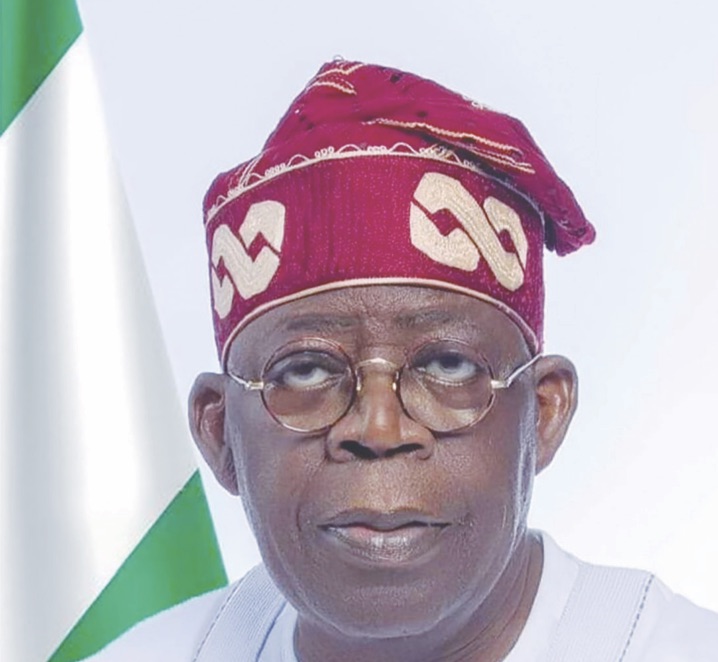
ADEOLU AGBARANBE argues that the President is committed to lessening economic pressures on the citizenry For millions of Nigerians, the price of transportation is not an abstract economic statistic. It determines whether a worker can afford to get to work, whether a student can attend school, whether a trader can reach a market and whether a family can stretch an already pressured household budget to the end of the month. That is why President Bola Ahmed Tinubu’s latest intervention on transportation deserves attention beyond the familiar political arguments surrounding his administration. In his September 19 update on the National Affordable CNG Transit Programme, the President asked Nigerians to expect measurable reductions in transportation costs from October 1. More importantly, he directed state governments to ensure that savings generated by cheaper energy actually reach commuters through lower fares. That instruction captures an important dimension of leadership: listening to the economic pressures people experience every day and looking for structural ways of reducing them. Tinubu’s message was not simply that the government was purchasing buses or subsidising fares. It was that Nigeria should build a transportation system capable of becoming cheaper because the energy powering it is cheaper. That is a fundamentally different proposition. Nigeria’s transportation crisis cannot be separated from the country’s energy challenge. For decades, road transportation has been heavily dependent on petrol and diesel, leaving commuters and transport operators vulnerable to changes in fuel prices. The President’s CNG strategy seeks to alter that equation by exploiting an energy resource Nigeria possesses in abundance: natural gas. The Federal Government says more than 120,000 vehicles have been converted to CNG during the past three years, while the country now has more than 400 certified conversion centres and more than 90 CNG refuelling stations. Those figures do not mean the transportation problem has been solved. They do, however, illustrate an attempt to move beyond temporary relief towards infrastructure that could support lower transport costs over time. That distinction matters. A government can reduce fares temporarily through subsidies, but when the underlying cost structure remains high, the relief may become increasingly expensive to sustain. A transportation system that uses a less costly domestic energy source, supported by conversion facilities, refuelling infrastructure and financing mechanisms, offers the possibility of addressing part of the problem at its source. That appears to be the strategic thinking behind the administration’s CNG programme. Perhaps the most revealing part of Tinubu’s latest statement is his instruction that the savings must reach ordinary Nigerians. The President cited examples from several states. In Borno, he said CNG-powered and electric public transport services are carrying passengers for between N50 and N100 on routes where commercial operators charge N300 to N600. In Kaduna, he said 100 CNG buses provided free transportation on major routes and carried approximately 3.2 million passengers during their first year, with reported savings of more than N3.5 billion for commuters. In Oyo, according to the President, the Lagos-Ibadan fare fell from approximately N8,000 to N3,200 following the initial deployment of CNG buses. Adamawa reportedly recorded reductions of up to 50 percent, while the Enugu-Nsukka fare fell from N2,500 to N1,500 after the deployment of 100 CNG buses. Plateau, Tinubu said, is carrying about 13,000 commuters daily on government-supported buses at N200, compared with more than N500 commercially. The same principle is evident in Abuja. Through a partnership with the National Union of Road Transport Workers, the President said passengers using CNG-converted commercial vehicles on selected routes are receiving a 40 percent fare reduction. Area 1-Gwagwalada, for example, reportedly fell from N1,500 to N900, while Nyanya and Wuse routes fell from N700 to N420 and N400 to N240 respectively. For a worker making two trips every day, even a modest reduction can become significant over a month. Leadership is sometimes described in grand terms, vision, courage, transformation and reform. But there is another, quieter dimension: paying attention to the things that determine how ordinary citizens experience the economy. Transportation is one of those things. A worker does not experience macroeconomic reform in the language of fiscal consolidation. A student does not measure economic recovery through a statistical report. A trader does not experience energy policy as an academic concept. They experience it through the amount they pay to travel. Tinubu’s emphasis on transportation therefore reflects an attempt to connect national policy with household reality. His administration had already announced CNG as part of its response to the economic effects of fuel-subsidy reform. In 2023, the Federal Government established the Presidential CNG Initiative with the stated objective of reducing energy and transportation costs while developing conversion centres, supporting mass transit and encouraging domestic manufacturing and technical employment. The policy has since expanded. In March 2026, the Presidential Initiative on CNG was expanded to include electric vehicles, with the government saying the broader initiative would coordinate a national clean-mobility strategy and accelerate CNG and EV infrastructure. The President also directed that conversion kits become more accessible and that financing structures be developed to reduce the upfront burden on vehicle owners. That evolution suggests that the administration is not treating transportation affordability as a one-off intervention. Tinubu has also made clear that he does not favour returning to the previous petrol subsidy system, arguing that it consumed substantial public resources while leaving Nigeria exposed to international oil-price movements. Instead, he is calling for faster development of domestic alternatives. A subsidy can provide immediate relief, but a structural reduction in the cost of transportation requires changes in the underlying economics of mobility. If Nigeria can use its domestic gas resources to power buses, taxis, trucks and other vehicles, then some of the money previously required to purchase imported petroleum products can potentially remain within the domestic economy. Tinubu has asked states to work with transport unions and commercial operators, accelerate conversion and fleet deployment, provide necessary infrastructure and, above all, ensure that energy savings reach commuters. That is a message that puts the citizen at the centre of the programme. Agbaranbe writes from Abuja
TINUBU’S PATH TO AFFORDABLE TRANSPORTATION
Full Article
Original Source
Read the full article at Thisdaylive →KhanList aggregates and links to publicly available news content. We do not host full articles from third-party sources. Always verify important information with original sources.