
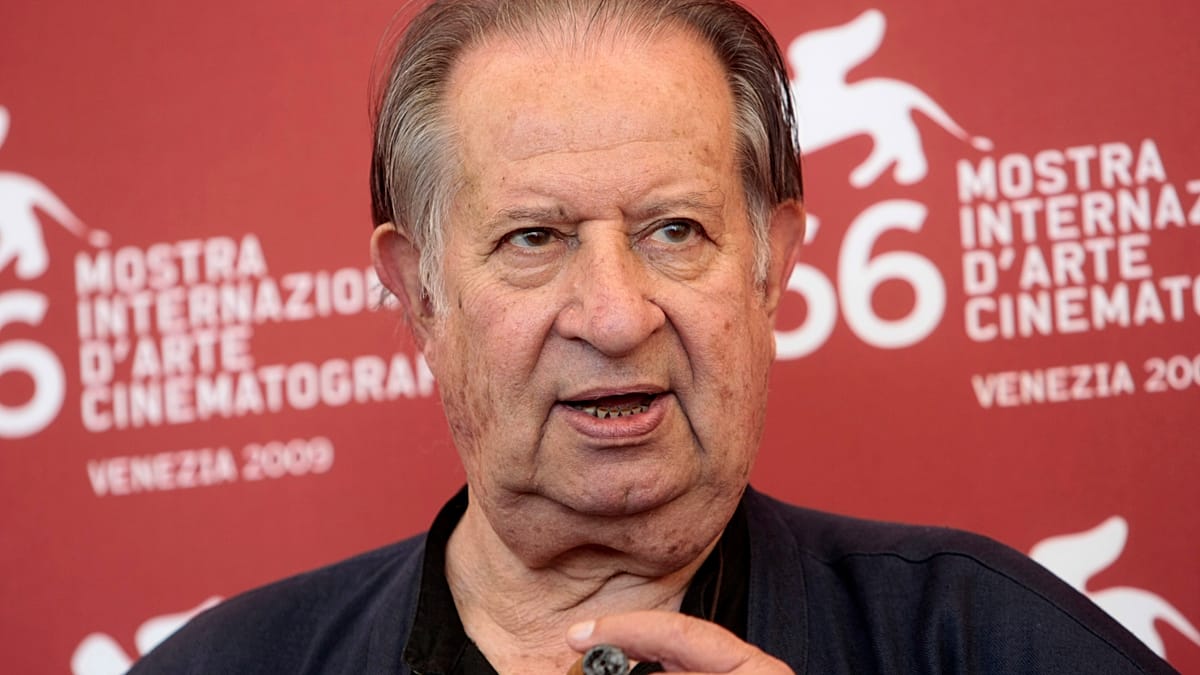
He freed desire, shattered taboos and turned it into art. Tinto Brass, the director who brought Italian erotic cinema to a wide audience, leaves this to his public: liberation from inhibitions and the celebration of Eros. ADVERTISEMENT ADVERTISEMENT Between experimentation, scandal and films that became cult favourites, Brass bids farewell to his audience: the director has died in Rome at the age of 93. Born in Milan on 26 March 1933, he spanned more than half a century of cinema. In recent years he lived in Isola Farnese, on the outskirts of Rome. At his side was his wife Caterina Varzi, whom he married in 2017 and who curated his archive. His first wife, Carla Cipriani, known as Tinta, died in 2006. "It is a difficult moment, of deep sadness and regret," Varzi told Adnkronos in the hours following the director's death. From Rossellini to erotic cinema Brass's artistic journey began far from eroticism. After graduating in law, he moved to Paris, where he came to cinema through editing at the Cinémathèque. Back in Italy, he worked with Roberto Rossellini as editor on "L'India vista da Rossellini" and as assistant director on "Il Generale della Rovere". His debut behind the camera came in 1963 with "In capo al mondo", a film about youth unease that ran into censorship. Brass changed the title to "Chi lavora è perduto" but continued to explore experimental language and uncomfortable themes with works such as "Col cuore in gola", "L'urlo", "Nerosubianco" and "La vacanza". The erotic turn took shape in the 1970s. In 1975 he directed "Salon Kitty", about the relationship between sex, power and money. Four years later came "Caligola", a troubled production at the centre of legal battles and seized for obscenity. Cult films In the 1980s Brass opened the season of his best known titles. "La chiave", with Stefania Sandrelli, paved the way for "Miranda", with Serena Grandi, and "Capriccio", with Francesca Dellera. After a break with "Snack Bar Budapest", he returned to erotic cinema with "Paprika", starring Debora Caprioglio, and "Così fan tutte", with Claudia Koll. These were followed by "L'uomo che guarda", based on the novel by Alberto Moravia, "Fermo posta Tinto Brass", "Monella", "Senso '45", "Fallo!" and "Monamour". Beyond directing, Brass also worked as an actor, collaborated with the magazine Penthouse and published the booklet "Elogio del culo". The final farewell in Venice Last September Brass had wanted to be in Venice for the restored 4K screening of "Col cuore in gola", shown at the pre-opening of the Film Festival. A fever and his health conditions had however forced him to give up the trip from Isola Farnese. It was Varzi who read out the message he had entrusted to his wife during the evening at the Lido. "There is no starting point and no end point, there is only the point where I am," the director had written, thanking the Biennale, the Centro Sperimentale di Cinematografia-Cineteca Nazionale and everyone who had contributed to the restoration. On that occasion Brass also received the Pietro Bianchi Award, presented by the National Union of Italian Film Journalists. "I, who have always given little weight to official recognition, will hold on tight to this one, there will be no other opportunity," he said. Brass expressed one last wish on the occasion of his 90th birthday: "When I die I want my ashes to be scattered in the Venice lagoon". A wish that could now accompany his final journey.
Tinto Brass, maestro of Italian erotic cinema, dies in Rome aged 93
Full Article
Original Source
Read the full article at Euronews →KhanList aggregates and links to publicly available news content. We do not host full articles from third-party sources. Always verify important information with original sources.