
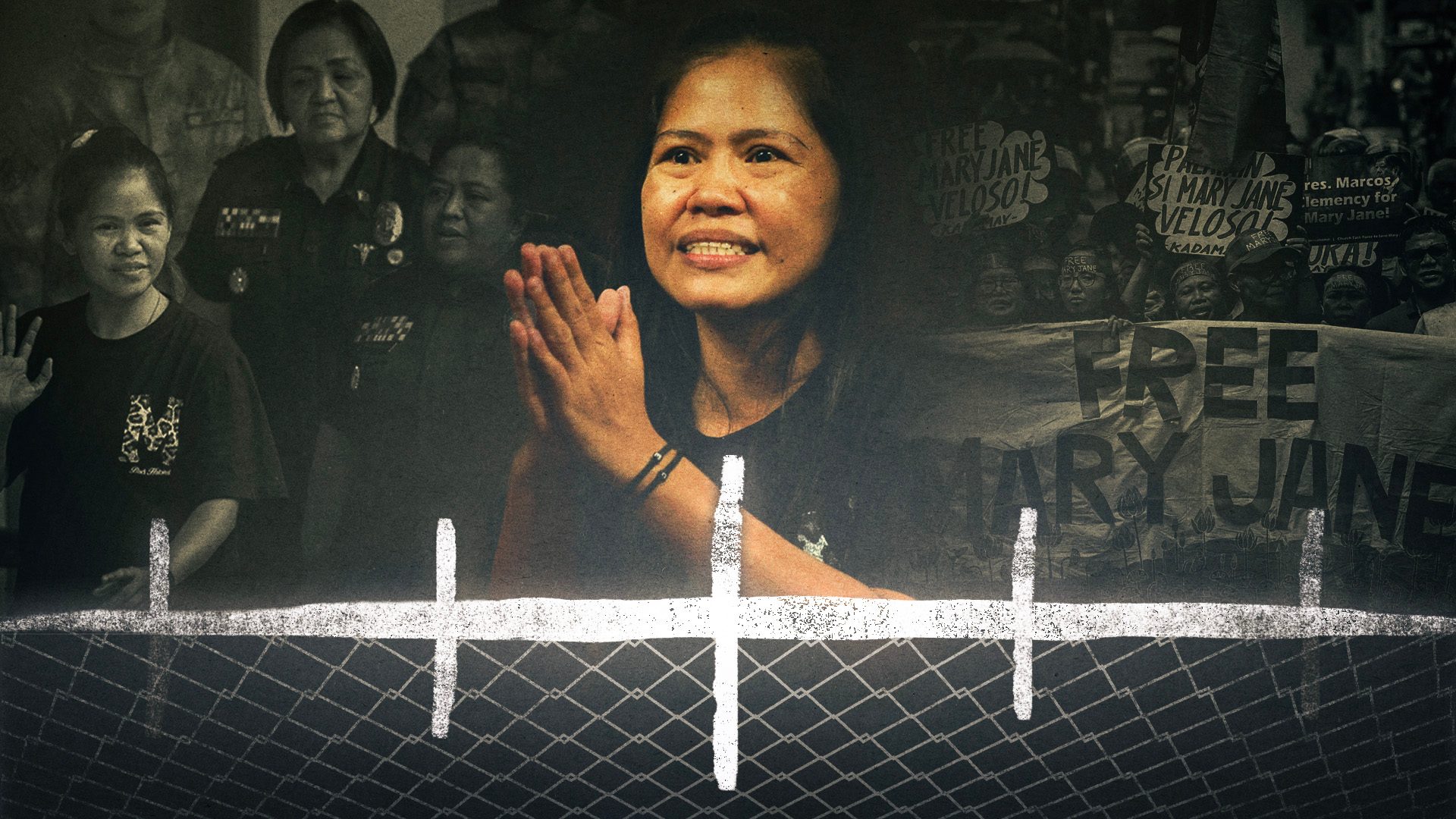
Mary Jane Veloso, a former overseas Filipino worker, was sentenced to death in Indonesia for drug trafficking in 2010. She was granted a last-minute reprieve from execution in 2015 and was later transferred to a Philippine prison in 2024. President Ferdinand Marcos Jr. granted Veloso absolute pardon on September 24, 2026. This is AI-generated. Read the article for full context. Report any errors. Former overseas Filipino worker (OFW) Mary Jane Veloso left the Philippines for a job in Malaysia in 2010. She instead found herself in Indonesia — behind bars and on death row — after being accused of smuggling drugs. Sixteen years later, she will soon walk free. This is after President Ferdinand Marcos Jr. confirmed on Friday, September 25, that he had granted her absolute pardon for the drug trafficking conviction decided upon by an Indonesian court in 2010. Her pardon marks the end of a nearly two-decade ordeal spanning three presidents and years on death row. Here’s a look back on how her case unfolded: December 31, 2009 Veloso returns to the Philippines after prematurely ending her two-year contract as a domestic worker in Dubai. She says it is because she was nearly raped. For the next three months, she attempts to apply for jobs in other countries through her agency, but to no avail. April 18, 2010 Maria Cristina Sergio, Veloso’s neighbor in Talavera, Nueva Ecija, offers her a job as a domestic worker in Kuala Lumpur, Malaysia. April 21, 2010 Veloso and Sergio arrive in Malaysia, only to find that the job she was promised is no longer available. Both stay in Malaysia for three days, during which Sergio and her boyfriend give Veloso a brand-new suitcase to use plus $500. She later says that the suitcase seemed heavy, but its compartments were empty. She packs her belongings in the suitcase and leaves for Indonesia. April 25, 2010 Veloso arrives at the Adisucipto International Airport in Yogyakarta, Indonesia, where authorities find 2.6 kilograms of heroin wrapped in aluminum foil hidden inside the lining of her suitcase. The drugs are later estimated to have a street value of $500,000. She is arrested for drug trafficking and taken into custody. May 12, 2010 Veloso’s parents find out that she has been jailed, weeks after Sergio had assured them that Mary Jane arrived safely in Malaysia. The family confronts Sergio, who tells them to “keep silent, don’t tell anyone, and don’t approach the media” if they want to keep Mary Jane and the rest of their family out of grave danger. August 2010 Veloso’s family decides to report her case to the Department of Foreign Affairs and media outlets. They repeatedly request for updates and ask for help from other authorities like the National Bureau of Investigation, Philippine National Police, Philippine Drug Enforcement Agency, Office of the Vice President, and Malacañang. October 4, 2010 The trial for Veloso’s case begins in the District Court of Justice of Sleman in Yogyakarta with Indonesian public prosecutor Sri Anggraeni recommending life imprisonment. Veloso is represented by a court-appointed pro bono lawyer apparently recommended by the Indonesian police themselves. (READ: What you should know about the case of Mary Jane Veloso) October 11, 2010 The Sleman District Court convicts Veloso of drug trafficking and sentences her to death by firing squad. October 22, 2010 The Philippine embassy in Jakarta reportedly files an appeal for Veloso with Yogyakarta’s Appeals Court. October 2011 The late former president Benigno “Noynoy” Aquino III makes his first attempt to appeal for clemency on behalf of Veloso to then-Indonesian president Susilo Bambang Yudhoyono. At the time, Indonesia had a moratorium on executions, so the request was not acted upon. October 20, 2014 A new Indonesian president, Joko “Jokowi” Widodo, assumes office. Shortly after, he announces that he will start rejecting all clemency requests from drug convicts on death row, citing Indonesia’s illegal drug situation being in a state of emergency. January 2015 Jokowi rejects a batch of clemency appeals, including Aquino’s second attempt to appeal for Veloso by seeking a judicial review of her case. The Indonesian Supreme Court rejects this, and Jokowi would later urge the Philippines to respect his country’s laws. February 9, 2015 Jokowi goes on his first state visit to the Philippines, during which Aquino raises Veloso’s case. Later that same month, her family visits her in jail in Yogyakarta. March 3 to 4, 2015 The Sleman District Court holds a two-day trial, where lawyers argue that Veloso deserves a case review because she wasn’t given a capable translator. March 25, 2015 The Indonesian Supreme Court rejects the case review request. April 23, 2015 The Philippine government attempts to file a second petition for judicial review. Four days later, the Indonesian Supreme Court denies the application. The DFA later announces that charges have been filed against Veloso’s alleged recruiter Sergio, her boyfriend who allegedly handed Veloso the suitcase where the drugs were found, and an African accomplice. April 25, 2015 Veloso’s execution date is set for April 29, 2015. At the same time, global campaigns to stop her execution are mounted. (READ: #SaveMaryJane: A cause worth fighting for during the glorious days of social media) April 28, 2015 Sergio voluntarily surrenders to the Nueva Ecija Provincial Police. Aquino makes a last-minute phone call to then-Indonesian foreign minister Retno Marsudi, asking Indonesia to turn Veloso into a state witness who can help pin down a drug trafficking syndicate, which allegedly includes her recruiters. April 29, 2015 Indonesia grants Veloso last-minute reprieve from her death sentence, just 11 hours before she is scheduled to be shot by firing squad. This would allow her to testify against her recruiters, although she would remain in detention. September 12, 2016 A few months after then-Philippine president Rodrigo Duterte assumed office, Jokowi reveals to reporters that Duterte told him to “go ahead” if Veloso were to be executed. Then-presidential spokesperson Ernesto Abella later clarifies Duterte’s statements, saying that he had said, “Follow your own laws, I will not interfere.” (READ: Duterte said he will not interfere with Indonesian laws – Palace) January 30, 2022 Veloso’s recruiters are found guilty of illegal recruitment and life imprisonment. This is separate from the trafficking case pending in Indonesia. November 20, 2024 After more than 14 years in detention, Veloso is allowed to return to the Philippines, as Indonesian President Prabowo Subianto agrees to transfer her case back home. Indonesia also gives President Ferdinand Marcos Jr. the discretion to grant Veloso clemency. While this means she is spared from death row — since the Philippines has no such penalty — she could not walk free just yet. (READ: Once Mary Jane Veloso returns, no release yet, but safe from death penalty) December 18, 2024 Veloso arrives in Manila after 14 years away from home, but is then detained at the Correctional Institution for Women in Mandaluyong City. Despite pleas for her freedom from advocates and supporters, Marcos says he would leave the decision on clemency requests to legal experts. The embattled OFW would remain behind bars for nearly two more years. September 25, 2026 Marcos confirms that he granted Veloso absolute pardon the day before. It is a form of executive clemency granted after conviction and extinguishes the person’s criminal liability from the case. The Parole and Probation Administration says this type of pardon also restores a person’s civil and political rights and cancels the penalty for conviction. – Rappler.com
TIMELINE: Mary Jane Veloso’s case and road to freedom
Full Article
Original Source
Read the full article at Rappler →KhanList aggregates and links to publicly available news content. We do not host full articles from third-party sources. Always verify important information with original sources.