
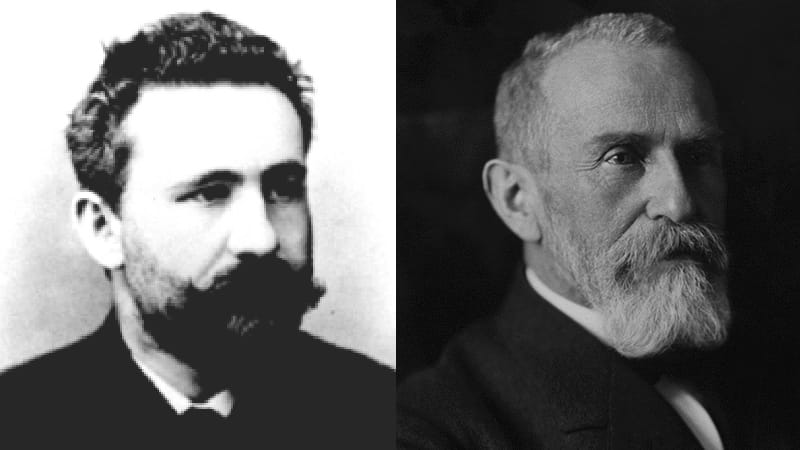
Recently, a group of experts in schizophrenia held a symposium at the Schizophrenia International Research Society European Congress in which they proposed changing the name of the condition to “positive and negative disorder.” This proposal is, if anything, worse than the term it would replace: Both “positive” and “negative” symptoms are themselves vague and easily misunderstood. The problem is that most clinicians, and many experts too, do not have a clear understanding of what schizophrenia or bipolar disorder mean, both in their historical roots and in their scientific evolution. “Schizophrenia” has nothing to do with Emil Kraepelin’s concept of the disease. And “bipolar disorder” has nothing to do with Kraepelin’s concept of that disease either.Nassir Ghaemi, MD, MPHPsychiatry would benefit from following neurology’s example when it comes to naming complex conditions: using historical names that anchor clinicians to the original clinical descriptions. Terms like “Alzheimer’s disease” and “Parkinson’s disease” are essentially uncontroversial; their meaning has simply been refined as more has been learned. Psychiatry’s terminology has taken a different path, and two diagnoses in particular — schizophrenia and bipolar disorder — illustrate why a return to eponyms would serve the field better.These considerations are not meant primarily to reduce stigma; I don’t think we need to fool the public by fiddling with names. Less stigma would be a side benefit, but it should not be the main purpose. The main goal should be to have terms that generate accurate concepts about the real nature of a disease. The real problem is that we psychiatric clinicians are fooling ourselves by misunderstanding the nature of our main diseases. Manic-Depressive Illness vs Bipolar Disorder Let’s begin with manic-depressive illness. It is not the same as “bipolar disorder” as described in the Diagnostic and Statistical Manual of Mental Disorders (DSM); it is in fact the opposite. It is often falsely claimed that DSM is “neo-Kraepelinian”. Rather, in relation to mood illness, it is anti-Kraepelinian. It could be termed “neo-Leonhardian” instead, since it accepted the views of Karl Leonhard, an opponent of Kraepelin’s school. Leonhard was the person who popularized the terms "bipolar" and "unipolar" and argued, incorrectly, that they are different diseases. This mistake was accepted by DSM-III in 1980 and has become worshipped biblically since then. Kraepelin took a different, and more coherent, view of mood disorders than we do today. He defined manic-depressive illness as encompassing mood episodes of any kind — depressive, manic, or both — in the same patient over time. This differs sharply from the current definition of bipolar disorder, which requires the presence of both mania and depression, whereas Kraepelin’s manic-depressive illness could include either pole on its own. In other words, Kraepelin’s manic-depressive illness encompassed what we today separate into bipolar disorder and unipolar depression, the latter now folded into the broader and the overly vague DSM concept of major depressive disorder. This has practical consequences. The term “bipolar disorder” is misleading in that it does not correspond to what Kraepelin originally described. Further, scientific research suggests that the distinction between bipolar disorder and unipolar depression introduced by DSM-III in 1980 is not well supported by differences in genetics, course of illness, or biological markers. Kraepelin’s original view — that these presentations reflect one underlying condition, manic-depressive illness — appears to be the more accurate one. The term “manic-depressive illness” is sometimes misunderstood, however, because many assume it requires manic symptoms or episodes, which it does not. For that reason, I would propose the term “Kraepelin disease” for manic-depressive illness, encompassing what today is separately labeled bipolar disorder and unipolar depression.Dementia Praecox vs Schizophrenia The original phrase was “dementia praecox,” by which Emil Kraepelin meant a range of psychotic symptoms that began in adolescence (“praecox”), and remained present chronically throughout life, with gradual worsening of function (“dementia”). Before Kraepelin, different psychotic states were identified (hebephrenia, catatonia, paranoia), which he pulled together into the single dementia praecox diagnosis. Kraepelin’s view was that the specific symptom variations didn’t matter: They all started in adolescence, were chronic, and involved worsening function; they were the same illness.Kraepelin put forward these views in the 1890s. Within two decades, though widely accepted, they were transformed by the Swiss psychiatrist Eugen Bleuler, a prominent leader in academic psychiatry. Bleuler, the mentor of Carl Gustav Jung, was influenced by Freud and applied Freudian ideas to psychosis. Bleuler felt that symptom differences in Kraepelin’s dementia praecox mattered, specifically that the flatness of affect of these patients was central to the illness. They had a splitting (“schizo”) of their affect from the thoughts in their head (“phrenia”), hence the new diagnostic term. These psychotic symptoms were auditory and tended to be in the third person, with a running commentary on the patient’s behavior. Bleuler’s schizophrenia was much broader than Kraepelin’s dementia praecox. No longer did patients need to develop the illness in adolescence; it could be diagnosed in a middle-aged person for the first time. Nor need it be chronic; the symptoms could go away and come back later. Nor was a decline in function required; some patients recovered completely and permanently. For most of the 20th century, Bleuler’s concept held sway until the 1970s, when researchers showed that Bleuler’s definition, then the status quo in American psychiatry, led to the diagnosis of schizophrenia in manic states that might last only a few days, preceded and followed by complete normality. Similarly, psychotic symptoms that occurred only during depressive episodes were mislabeled schizophrenia. Since new treatments were then available — the neuroleptics — but carried serious long-term risks, such as tardive dyskinesia, it was important to know who needed long-term treatment for psychosis, and who did not. The classic US-UK Diagnostic Project identified the overly broad sweep of Bleulerian schizophrenia and led to the return to a “neo-Kraepelinian” definition in the West, codified in 1980 in DSM-III. Again, there was a requirement for chronic decline in function, which ruled out brief psychotic symptoms during affective episodes. This return to a Kraepelinian view did not lead to a change in diagnostic label, though. Bleuler’s “schizophrenia” phrase continues to be used, even though it is meant these days to reflect something closer to Kraepelin’s dementia praecox. Given the origins of the terms, dementia praecox and schizophrenia, it would be more rational to use the name “Bleuler disease” for what we now call schizophrenia. An eponym avoids this problem entirely. “Bleuler disease” would be historically accurate, would not commit the field to imprecise descriptive language such as “positive and negative symptoms,” and would not carry the anachronistic baggage of “schizophrenia” itself. Notably, Austria already uses an equivalent term — Morbus Bleuler— for this condition.Toward Greater Diagnostic Clarity Converting these categories to their historical sources — Kraepelin disease and Bleuler disease — would bring clarity to two problems at once: the questionable validity of the DSM’s bipolar disorder/major depressive disorder distinction and the long-standing vagueness of the term “schizophrenia.” The table below summarizes the proposed changes. Current DSM TermProposed Historical TermRationaleSchizophrenia Bleuler disease Restores the original eponym (derived from Eugen Bleuler) and avoids the vague, misleading connotations of “schizophrenia” and of proposed replacements such as “positive and negative syndrome.” Austria already uses the equivalent term, “Morbus Bleuler.” Bipolar disorder/major depressive disorder Kraepelin disease Reflects Kraepelin’s original concept of manic-depressive illness, which included any mood episode — manic, depressive, or mixed — as a single condition. Genetic, course-of-illness, and biomarker data have not supported the bipolar/unipolar split introduced by DSM-III in 1980. Adopting eponyms of this kind, together with a broader move away from purely descriptive labels, would do much to encourage clinicians to understand both the history of the field and the more accurate, evolving scientific basis of these diagnoses. Nassir Ghaemi, MD, MPH, is founder of Psychiatry Letter, and a lecturer on psychiatry at Harvard Medical School, Cambridge Health Alliance, in Boston. Dr Ghaemi is also an employee at Bristol Myers Squibb. The views presented here are his own and do not necessarily reflect those of his employers.
Time to Rename Schizophrenia and Bipolar Disorder?
Full Article
Original Source
Read the full article at Medscape →KhanList aggregates and links to publicly available news content. We do not host full articles from third-party sources. Always verify important information with original sources.