
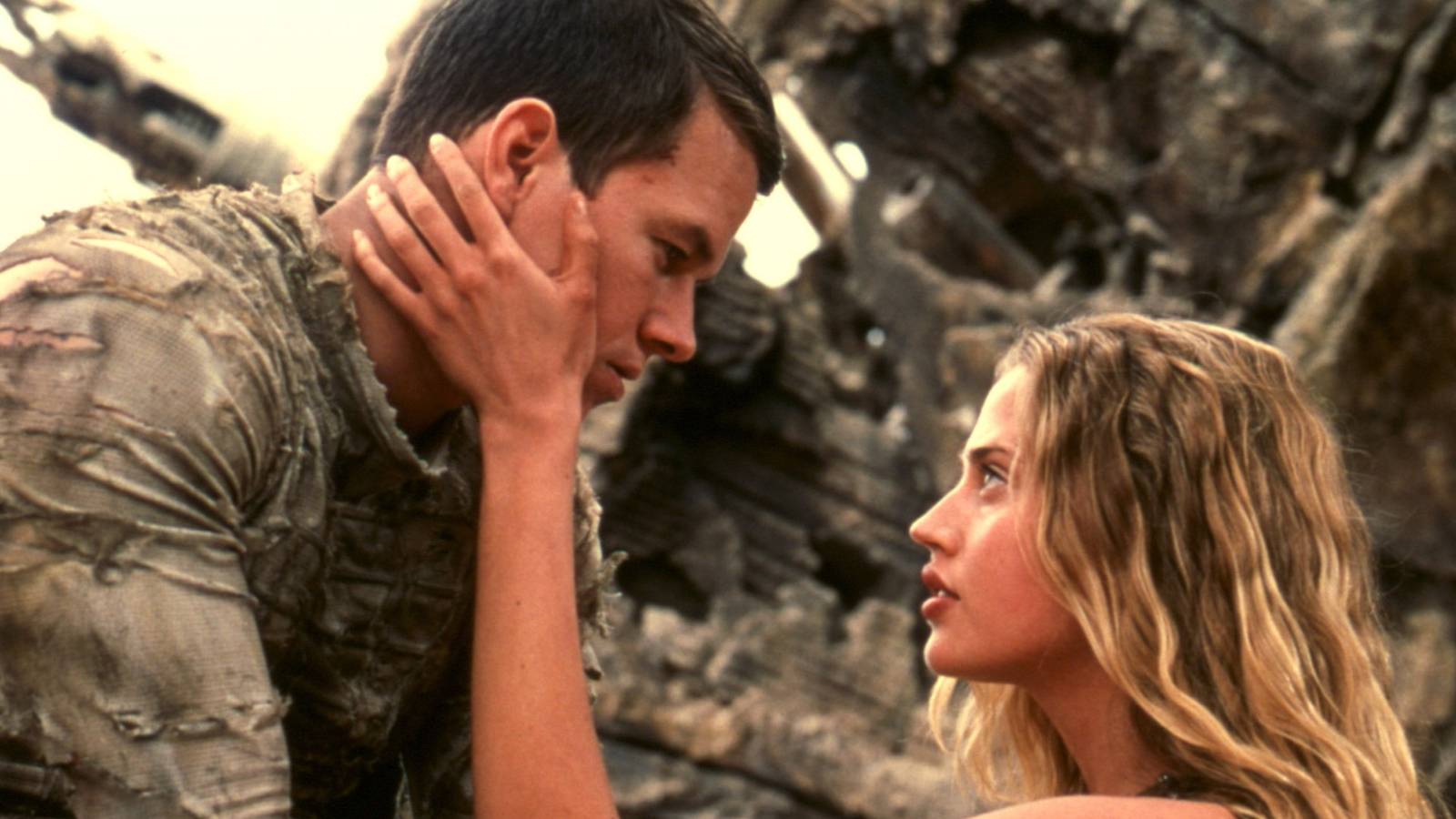
Published Nov 14, 2026, 9:45 AM EST Karlis has been obsessing over television and movie news since he first learned how to read. He has worked in tech, as a musician, and in journalism with a well-rounded knowledge base of pop-culture throughout the eras. He claims that he has memorized the entire Internet Movie Database, and to date no one has been able to refute this. Holding a Bachelor's Degree in Religion and Culture from Wilfrid Laurier University, Karlis loves to examine the intersections of popular science-fiction and culture. His latest novel MASS. is available now on Amazon and examines a world where obesity has become a federal crime. Tim Burton was one of the most exciting voices in Hollywood filmmaking throughout the 1980s and 1990s, but a big shift in the director's style and reputation alike can be traced directly to his 2001 release. Following some of the best Tim Burton films, the director waded into some unfamiliar territory throughout the 2000s, meeting with mixed success. Burton crafted a unique style for himself in the earlier part of his career. He infused humorous and entertaining stories with a grim and macabre edge, drawing comparisons to writers like Edward Gorey with his work on films like Beetlejuice as well as The Nightmare Before Christmas, which he produced. Beginning with Pee-wee's Big Adventure, and moving into superhero storytelling with the two Michael Keaton-starring Batman movies, Burton's distinct voice was initially quite clear. From Edward Scissorhands to Ed Wood, the director's signature style could be easily spotted, as he infused his stories with an accessible gothic sheen. All of that changed in 2001, when Burton worked on a major remake film that would go on to shape much of his career. And while that phase still seems to be impactful on the popular filmmaker today, it also appears that a brand new era of Tim Burton could still be just ahead. Tim Burton Shifted Into Studio Filmmaking With Planet Of The Apes While Tim Burton was often viewed as an auteur director in the early part of his career, 2001's Planet of the Apes remake signified a career pivot for the visionary filmmaker. Starring Mark Wahlberg and Tim Roth, the remake of the 1968 classic was a big hit, earning $362.2 million globally. Despite this strong performance, however, the 20th Century Fox film was not well liked. It holds a 42% approval rating with critics on Rotten Tomatoes, and its audience response is even weaker, currently sitting at only 27%. Criticisms for the film included its weak characters and its superficial, action-oriented approach to what should have been more thoughtful material. Although the film was not as big of a cultural smash as 1989's Batman, which earned over $400 million worldwide, it performed much better than many of Burton's other projects. All of this coincided to create opportunities for Tim Burton to continue working on an increased scale, with much larger budgets. Notably, Planet of the Apes was not well received, and its production has since come to be seen as signaling a pivotal moment for the filmmaker. In the years that followed, Burton would continue working on big-budget projects, including remakes and other reimaginings, that would fail to garner the same kind of acclaim as his early work. What Went Wrong With Tim Burton's Planet Of The Apes 1968's original Planet of the Apes is bold, thoughtful science fiction, tackling ideas about racism and humanity's capacity to destroy itself. Richly textured and well crafted, with effective costuming, the film was co-written by The Twilight Zone co-creator Rod Serling, and the material clearly shows his influence. 2001's Planet of the Apes, conversely, is a product of studio machinations. After decades of back-and-forth attempting to put together a new installment in the popular franchise, a remake was hastily decided upon by the studio, and Burton was attached to oversee the project over the finish line. Considering that the movie didn't finish filming until April 2001, only three months before it released in theaters, the final result is surprisingly strong. All of this contributed to showing what a strong hand Burton was at shepherding projects through difficult timelines, in a fashion that likely wound up being an asset to his being able to find consistent work. Despite this, decent performance at the global box office, and a clear setup for further stories in the film's closing scene, a sequel to Planet of the Apes was canceled. The franchise would lie dormant for a decade afterward, before returning to cinemas in 2011 with the fantastic Rise of the Planet of the Apes. Tim Burton's 21st Century Output Failed To Compare To The 1980s & 1990s Unfortunately, the workmanlike attitude that Planet of the Apes required from Burton didn't allow him to play to his creative strengths. Continuing to work on this scale, the director had much less room to effectively imbue his films with real imagination over the following decades. Burton's remakes of Charlie and the Chocolate Factory and Alice in Wonderland found success, with the latter being the biggest hit of his career, but were generally considered hollower than his early projects. Other movies, like Dark Shadows and Miss Peregrine's Home for Unfortunate Children, were also considered disappointing. Rather than being especially bad, the issue with these films was that they felt insubstantial and ordinary. While injected with a little bit of Burton's gothic style, the resulting movies from the director began to feel like shallow and generic works that only used Burton's signature style as a superficial flourish around the edges. Tim Burton Is Back On Track In The 2020s MovieStillsDB Fortunately, things have turned around for Burton in recent years. Wednesday contributed significantly to this, with the Jenna Ortega-starring series going on to become Netflix's most-watched English-language show ever in its first season. The series was strong and entertaining, while retaining the texture of Burton's early works. This naturally led into Beetlejuice Beetlejuice, a sequel Burton had been wanting to make for decades. The Beetlejuice sequel was a box office hit, and felt like an authentic and satisfying successor to the original. With both of these victories in hand, it appears that Burton is finally getting back to making the kinds of projects that he excels at. And the director has since become involved in all kinds of interesting films in various states of development. The future looks bright for Burton. He has been working on developing a remake of Attack of the Fifty Foot Woman, which is currently set to star Margot Robbie, that could channel much of the science fiction action, horror, and comedy of Mars Attacks! if it moves into production soon. The director has also discussed making more animated movies, as well as working with Kazuo Ishiguro on a post-World War II Japan-set project. Hopefully, whichever of these get made turn out much stronger than Burton's Planet of the Apes remake, and resemble the more exciting works from Burton's early career. Release Date July 27, 2001 Runtime 120 minutes Director Tim Burton Writers Lawrence Konner, Mark Rosenthal, William Broyles Jr. Producers Richard D. Zanuck
Tim Burton's $362M Sci-Fi Blockbuster Was The End Of An Era (& He's Only Just Recovered)
Full Article
Original Source
Read the full article at Screenrant →KhanList aggregates and links to publicly available news content. We do not host full articles from third-party sources. Always verify important information with original sources.